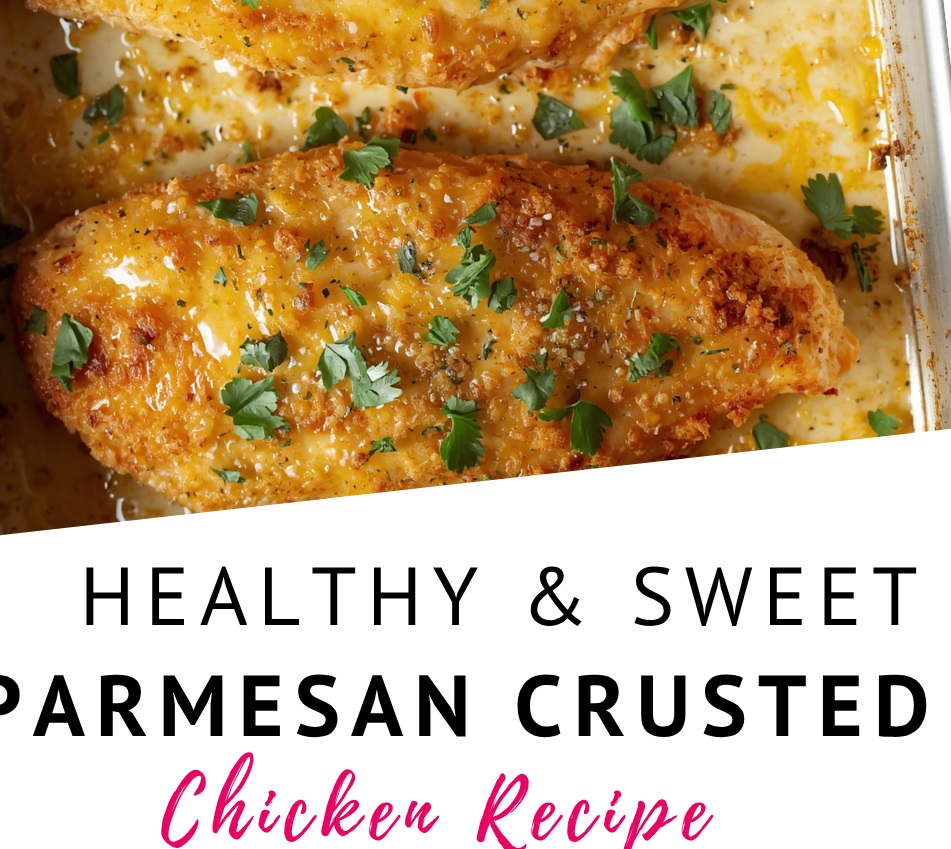
Crispy, cheesy, and juicy—baked instead of fried.
This is the kind of meal that makes me feel like I’m eating out at home. The Parmesan crust gives you that satisfying crunch, while baking keeps things simpler and less messy. It’s perfect for busy weeknights when I want something that tastes special but doesn’t take forever. Plus, there are easy variations depending on what you have on hand, from egg-based coatings to butter-lemon or olive oil dips. If you love a crunchy exterior and tender chicken inside, this guide will help you nail it every time.
Key Takeaways
“Parmesan crusted chicken baked” means chicken coated in Parmesan + breadcrumb crunch and cooked in the oven (not deep-fried).
A “wet dip” (egg, butter/lemon/garlic, or oil/garlic) helps the Parmesan-breadcrumb crust stick and bake up crisp.
For extra crispness, I toast the breadcrumbs and bake on a wire rack so air can circulate.
Cook to 165°F internal temperature, since oven temperatures and chicken thickness can change timing.
Flipping halfway helps the crust brown evenly and look great on both sides.
Quick Answer
To make baked Parmesan crusted chicken, I season the chicken, dip it in a wet layer (usually egg, or sometimes melted butter/lemon/garlic or olive oil/garlic), then press it into a mix of Parmesan + breadcrumbs (often with Italian-style seasonings). I bake on a wire rack in a hot oven (commonly 425°F for thinner cutlets or 400°F for a steady middle option) until the chicken reaches 165°F. For best crunch, I often toast the breadcrumbs first and flip halfway.
What You Need
Item
Purpose
Notes
Chicken cutlets, filets, or thin chicken breasts/thighs
Main protein
Thinner = faster, more even baking
Eggs (1–2, depending on batch)
Wet layer for crust adhesion
Some recipes use egg + heavy cream for extra coating
Heavy cream (optional)
Adds richness to the wet coating
If you don’t have it, egg alone works fine
Melted butter (optional)
Alternative wet layer
Great for flavor; can pair with lemon/garlic
Lemon juice (optional)
Bright flavor in butter dip
Adds tang without overpowering Parmesan
Garlic (optional)
Aroma + flavor
Use fresh garlic or garlic powder depending on preference
Olive oil (optional)
Alternative wet layer
Works well with garlic for a lighter coating
Breadcrumbs or panko
Crunch base for the crust
Panko tends to crisp nicely; toasting helps
Parmesan cheese (finely grated)
Flavor + browning
Freshly grated melts/flavors better
Italian seasoning (optional)
Classic “Italian-style” flavor
You can swap with oregano + basil
Garlic powder (optional)
Boosts savory taste
Common in many baked Parmesan crust recipes
Paprika (optional)
Color + gentle smokiness
Adds depth without heat
Parsley (optional)
Fresh, herby finish
Works well in the dry crust mix
Salt + black pepper
Seasoning
I always season both the chicken and the crust mix
Cooking spray
Prevents sticking
Especially helpful for wire rack or baking dish
Wire rack (optional but recommended)
Better crisping
Airflow makes a big difference
Meat thermometer
Food safety + perfect timing
Target: 165°F in the thickest part
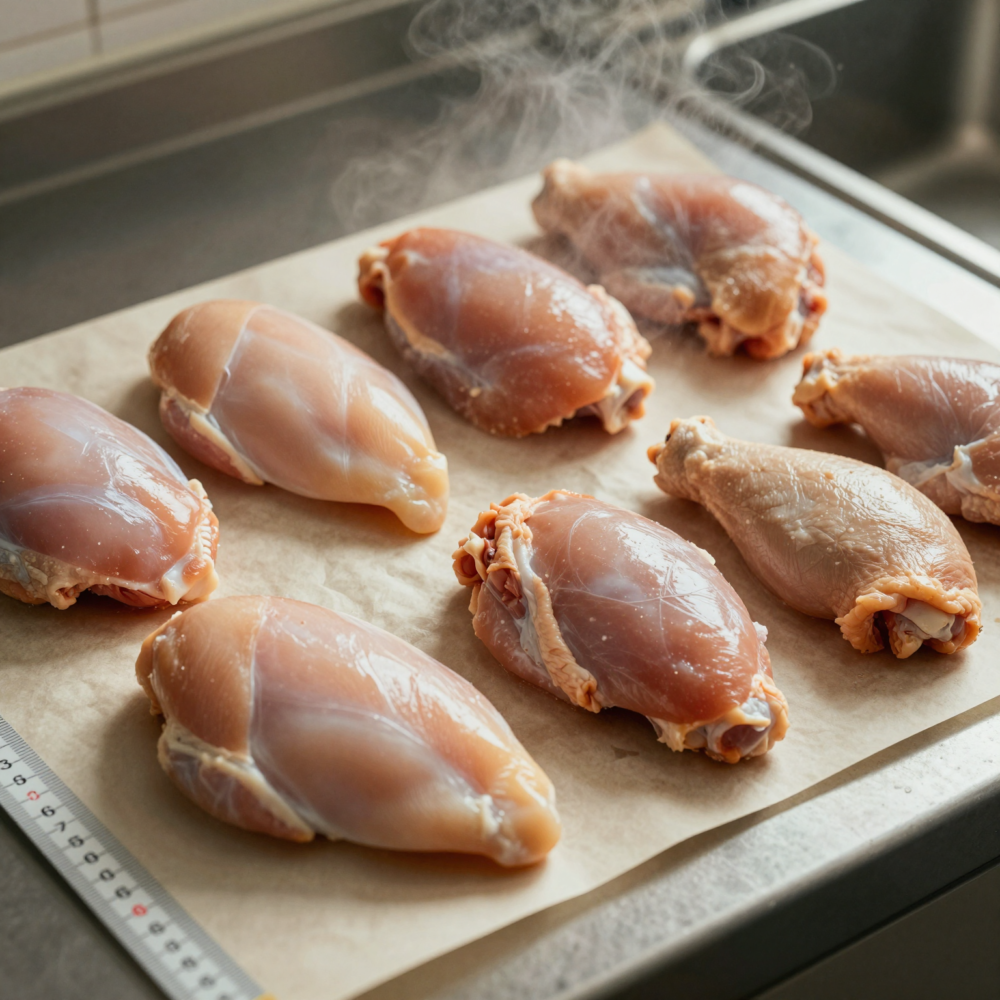
Step 1: Choose Your Chicken Cut (Thickness Changes Everything)
I get the best results when I match the chicken cut to the cooking method. If I’m using thin cutlets or filets, I can bake them hotter and faster—usually around 425°F—and they’ll crisp up without drying out. If I’m using thicker chicken breasts, I either lower the temperature slightly or increase bake time, and I still rely on the thermometer to finish correctly.
If my chicken is thicker than I want, I take a couple minutes to pound it a bit thinner. This helps it cook evenly and keeps the crust from getting too dark before the inside is done.
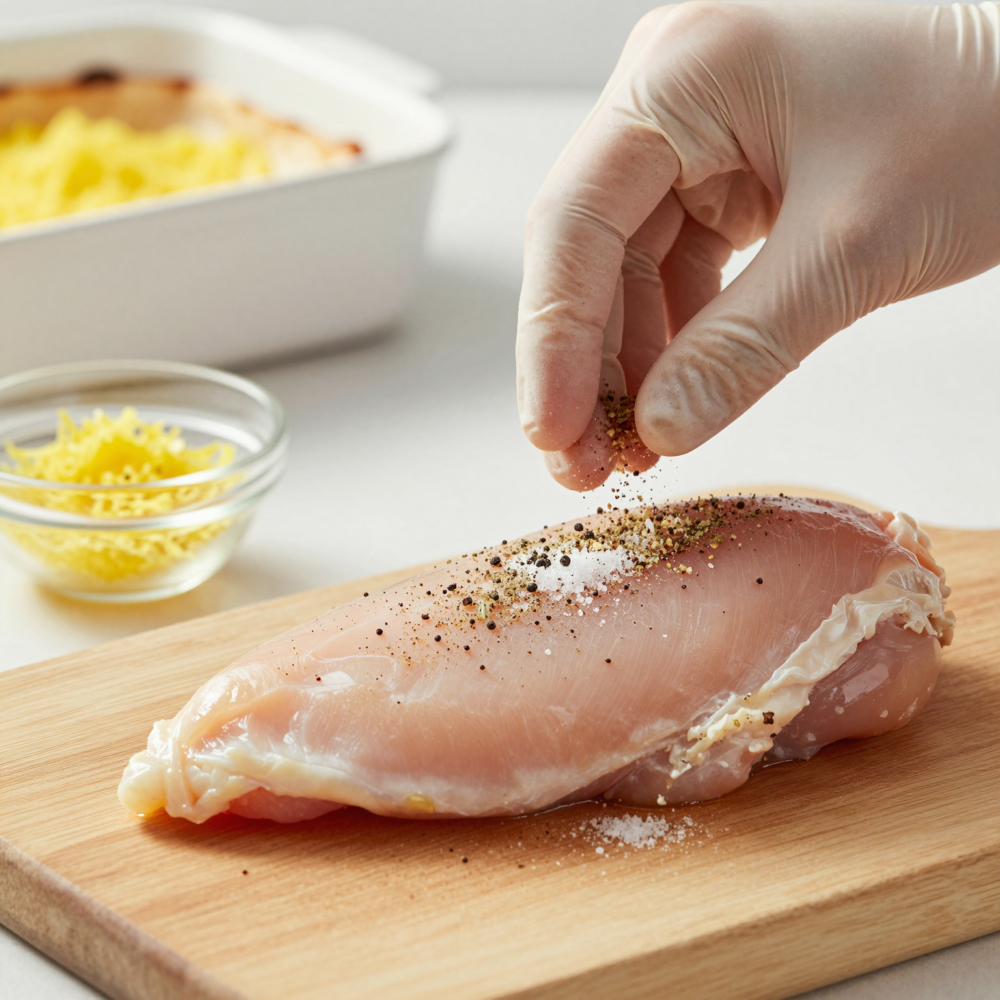
Step 2: Season the Chicken Before Coating
I like to season the chicken first so the flavor doesn’t stop at the crust. A simple mix of salt and black pepper works great. If I want extra flavor, I add a pinch of garlic powder or Italian seasoning right on the chicken.
This step matters because the crust is flavorful, but the chicken itself still needs its own seasoning to taste fully “finished.”
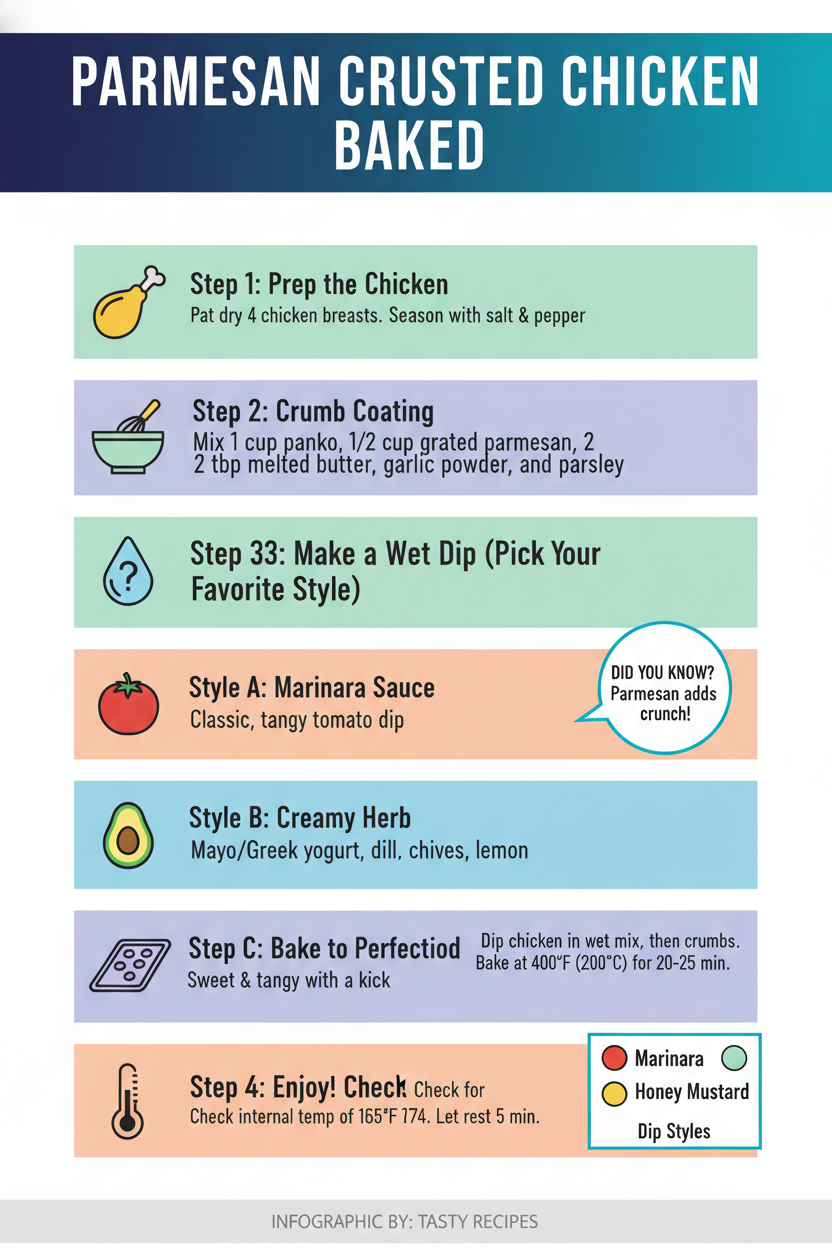
Step 3: Make a Wet Dip (Pick Your Favorite Style)
Most baked Parmesan crust recipes use a wet layer that helps the crust stick. Here are three approaches I use depending on what I’m in the mood for:
Egg-Based (classic, super sticky)
I whisk egg (and sometimes heavy cream) until smooth. This creates a strong coating, so the breadcrumbs and Parmesan cling really well.
Butter + Lemon + Garlic (bright and rich)
I melt butter and mix in lemon juice and garlic. Then I dip the chicken in it. This gives a flavorful crust with a slightly more savory, buttery vibe.
Olive Oil + Garlic (simple and flavorful)
I mix olive oil with garlic (fresh or powder). It’s lighter than the egg dip, but it still helps the crust adhere.
No matter which wet dip I choose, I keep the process consistent: dip, then coat right away.
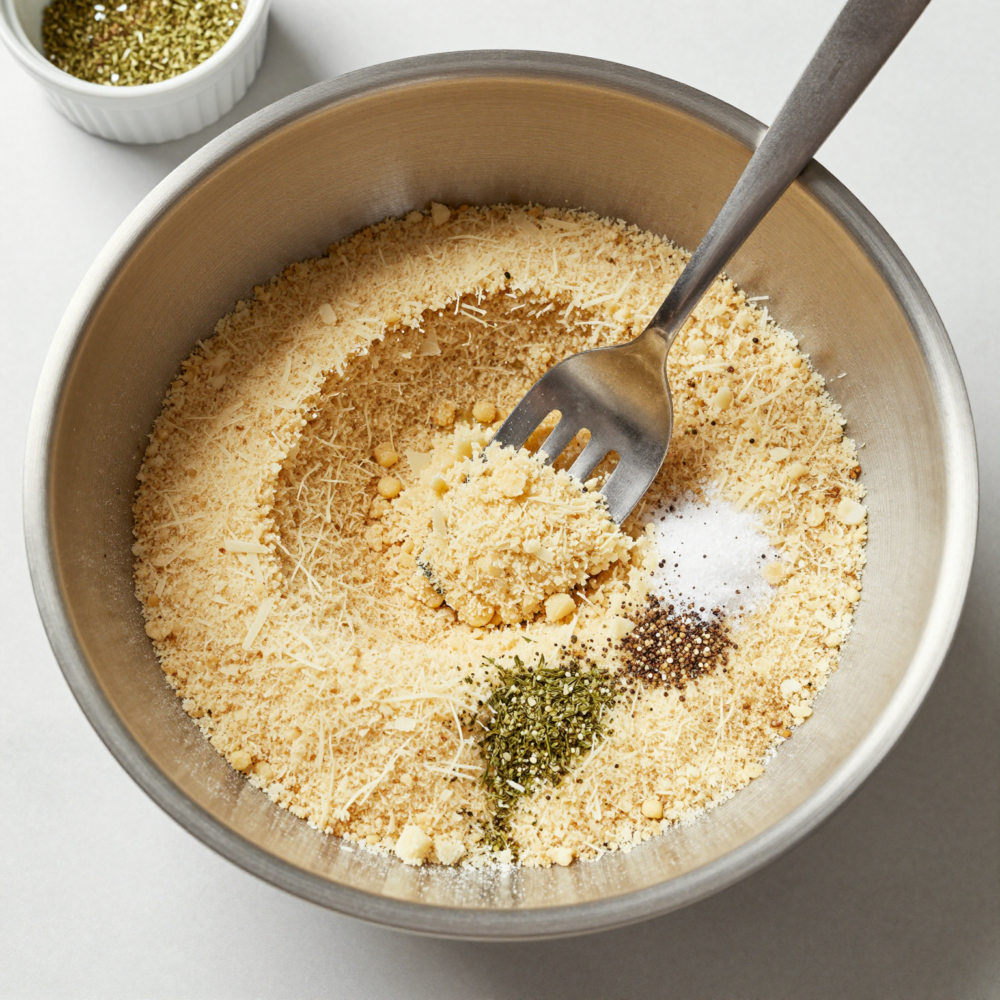
Step 4: Build the Dry Parmesan Crust Mix
Now I make the crunchy part. In a bowl, I combine:
Breadcrumbs or panko
Finely grated Parmesan
Italian seasoning (or oregano/basil)
Optional: paprika, parsley, garlic powder
Salt + pepper
Optional upgrade: toast the breadcrumbs
One of my favorite “restaurant trick” moves is to toast the breadcrumbs before mixing them into the crust. Toasting helps them crisp up more in the oven, so the crust comes out crunchier instead of soft.
I toast until they smell fragrant and slightly golden, then cool them briefly before coating.
Step 5: Coat the Chicken Like I Mean It
This is where the crust becomes even and crunchy instead of patchy.
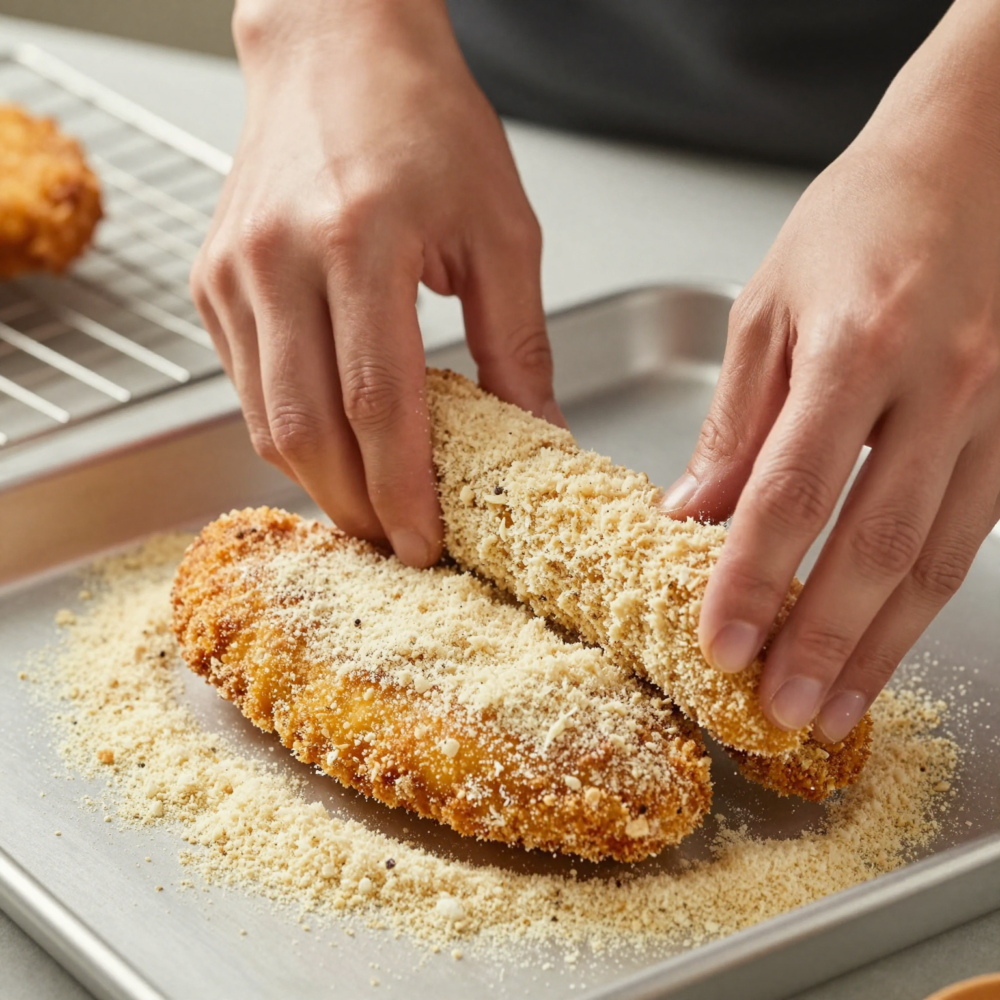
Dip seasoned chicken into the wet dip.
Immediately press it into the Parmesan breadcrumb mix.
Press gently but firmly so the crumbs fully grab onto the chicken.
Place it on a prepped baking surface.
If I have time, I let the coated chicken sit for a few minutes while the oven heats—this helps the crust “set” a little.
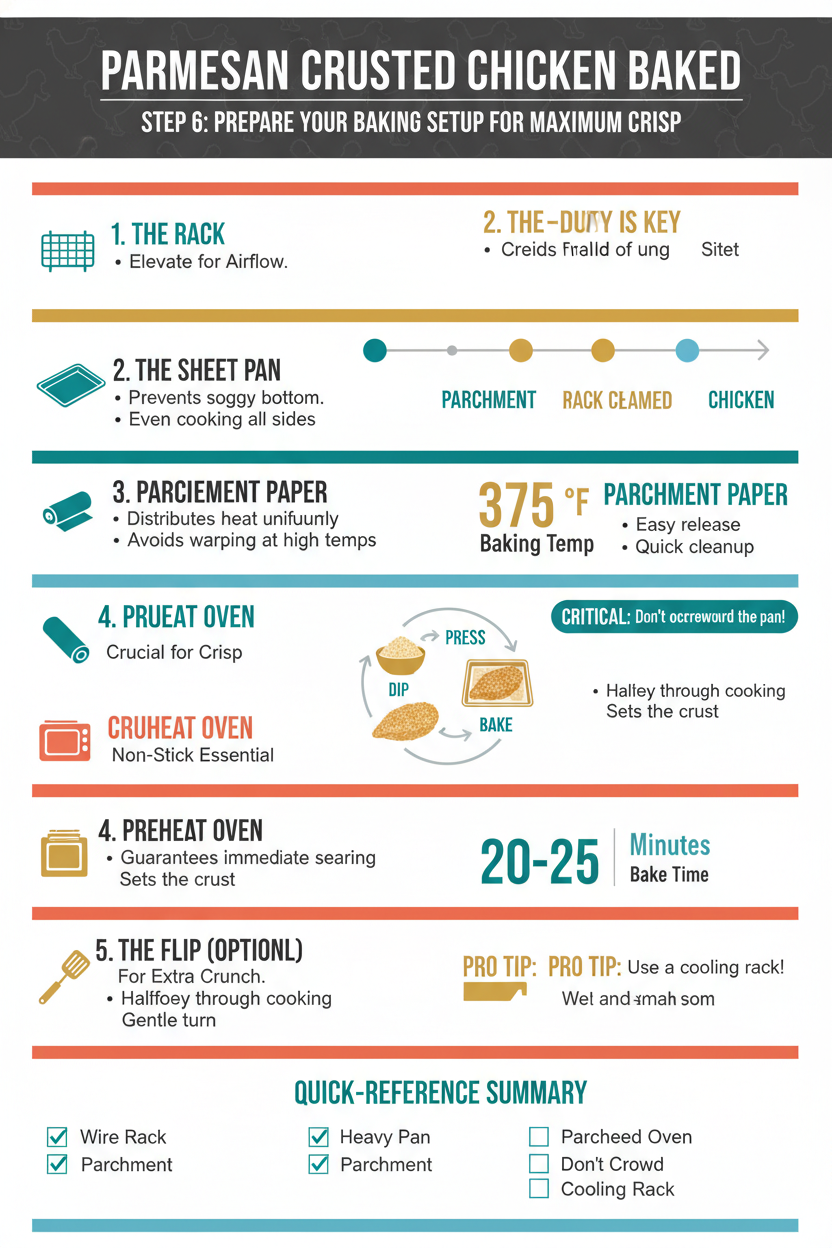
Step 6: Prepare Your Baking Setup for Maximum Crisp
I bake on a wire rack whenever I can. Here’s why: air circulates under and around the chicken, so the bottom doesn’t steam. To use it, I:
Set the wire rack over a baking sheet (for easy cleanup)
Spray the rack lightly with cooking spray
Arrange the coated chicken with some space between pieces
If I don’t have a rack, I can use a sprayed baking dish. It still works, but I usually get slightly less crunch on the bottom.
Step 7: Bake at the Right Temperature (Then Flip)
Baked Parmesan crust chicken is forgiving, but temperature and timing help you hit that perfect balance of crisp and juicy.
Option A: Hot and fast (great for thin cutlets)
425°F
Bake about 18–20 minutes
Flip halfway for even browning
Finish until internal temp hits 165°F
Option B: Medium hot (common middle-ground)
400°F
About 15–20 minutes
Flip halfway if you want more uniform color
Again: stop when it reaches 165°F
Option C: Lower and longer (works for thicker pieces)
350°F
35–40 minutes
Keep checking with a thermometer
Flip halfway (my go-to)
Flipping at the halfway mark helps the crust brown evenly and keeps the chicken from looking “one-sided.” I always do this when my timing allows.
Step 8: Use a Thermometer for Doneness (165°F Is the Goal)
This is the biggest key to success. Oven times vary based on chicken thickness, whether it’s cold from the fridge, and your exact oven.
I always check the thickest part of the chicken and pull it when it reads 165°F. If I cut too early without checking, I risk undercooked chicken—or I bake too long trying to guess.
If you don’t have a thermometer yet, I strongly recommend getting one. It’s the difference between “good” and “reliably perfect.”
Step 9: Rest Briefly, Then Serve While It’s Still Crunchy
I let the chicken rest for about 3–5 minutes before serving. This helps the juices settle, so the chicken stays tender.
And here’s a practical tip: Parmesan crust tastes best right away. If I have leftovers, I store them and reheat gently so the crust doesn’t go totally soft.
Tips
For extra crunch: toast your breadcrumbs and bake on a wire rack.
Don’t overcrowd the pan: air needs space to circulate for crisping.
Press crumbs on gently: loose coating leads to bald spots and uneven browning.
Use finely grated Parmesan: it blends and browns more evenly than larger shreds.
Keep a close eye near the end: Parmesan can go from golden to too dark quickly.
If crust browns too fast: loosely cover with foil and continue baking until the chicken reaches 165°F.
If crust isn’t crisp enough: bake a little longer (and/or increase to 425°F next time), and keep using a wire rack.
FAQ
Can I bake Parmesan crusted chicken without egg?
Yes. I can use a butter/lemon/garlic dip or an olive oil/garlic dip as the wet layer. Egg helps the crust stick more strongly, but these alternatives still work well and add great flavor.
What’s the best breadcrumb to use—regular breadcrumbs or panko?
I like panko because it tends to crisp nicely. Regular breadcrumbs still work, especially if I toast them first.
Why does my crust look dry or not crunchy?
Usually it’s one of these:
The chicken was overcrowded on the pan (not enough airflow)
The breadcrumbs weren’t toasted (less crisp potential)
The chicken needed more time or a slightly higher temperature
The coating wasn’t pressed on firmly enough
Why is my chicken not cooked through if the crust is already browned?
That usually means the chicken is thicker than the bake time expects. Next time, I either:
Pound the chicken thinner, or
Bake at a lower temp longer, or
Check internal temp early with a thermometer and adjust time
Can I freeze baked Parmesan crusted chicken?
Yes, once it’s cooked and cooled. I freeze in a shallow container or bag. When reheating, I prefer an oven or air fryer to help bring back some crisp. Microwaving often softens the crust.
How do I prevent the Parmesan from burning?
I keep an eye near the end and use a thermometer. If needed, I cover with foil after it reaches the color I want but the chicken still needs time to finish.
Conclusion
Baked Parmesan crusted chicken is one of those meals that feels fancy without frying, and once I dial in the coating and bake setup, it comes out crispy on the outside and tender inside every time. The key is simple: a solid wet dip to help the crust stick, a Parmesan-breadcrumb mix you’re confident in (toasting helps a lot), and baking until the chicken hits 165°F—not by guessing. Whether I’m using egg for maximum adhesion or butter/lemon/garlic for extra flavor, the method stays the same and the results are reliably delicious. If you try this approach once, you’ll probably find yourself making it on repeat—because it’s crunchy, comforting, and totally worth the effort.
Sarah Anderson . J
I’m the mom behind Wise Mom Blogger, where everyday creativity meets real-life motherhood. I share easy DIY crafts, cozy knitting and crochet projects, beginner-friendly sewing ideas, and family-tested recipes—plus quick baking hacks that make homemade feel doable on busy days.