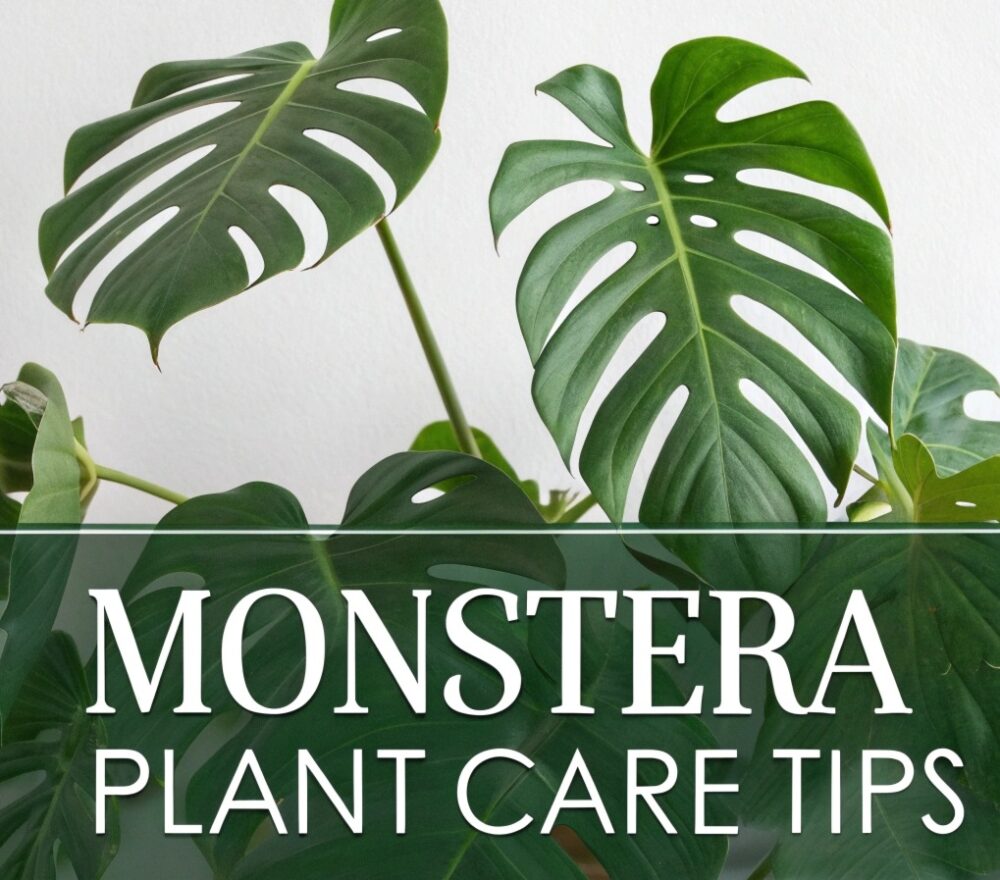
Your Monstera doesn’t need magic—just the right conditions to stretch, grow, and split into those gorgeous fenestrated leaves. Get the foolproof care guide I wish I had when I first bought my Monstera, with simple steps you can follow right away. From lighting that helps your leaves develop splits to watering habits that prevent root trouble, I’ll show you exactly what to do. This guide helps you avoid the most common “why is my Monstera sad?” problems and gives you quick fixes you can try today. If you want big, healthy growth that looks like it belongs in a jungle, keep reading—I’ve got you.
Quick Answer
I keep my Monstera thriving by giving it bright, indirect light (often near an east or north window), watering only when the top part of the soil dries, using a chunky, airy potting mix, and keeping humidity and temperature steady.
Key Takeaways
- Bright, indirect light usually leads to faster growth and more fenestrations (the leaf “holes”).
- Too much harsh direct sun can scorch leaves; too little light slows growth and reduces splitting.
- Placement near an east or north window is a reliable starting point, especially with sheer curtains for diffusion.
- A consistent light schedule (often 12–14 hours near a window with diffusion) helps your plant stay balanced.
- If your home is low-light, you’ll still get growth—you just need to adjust expectations and placement.
1. Know What “Good Monstera Light” Looks Like
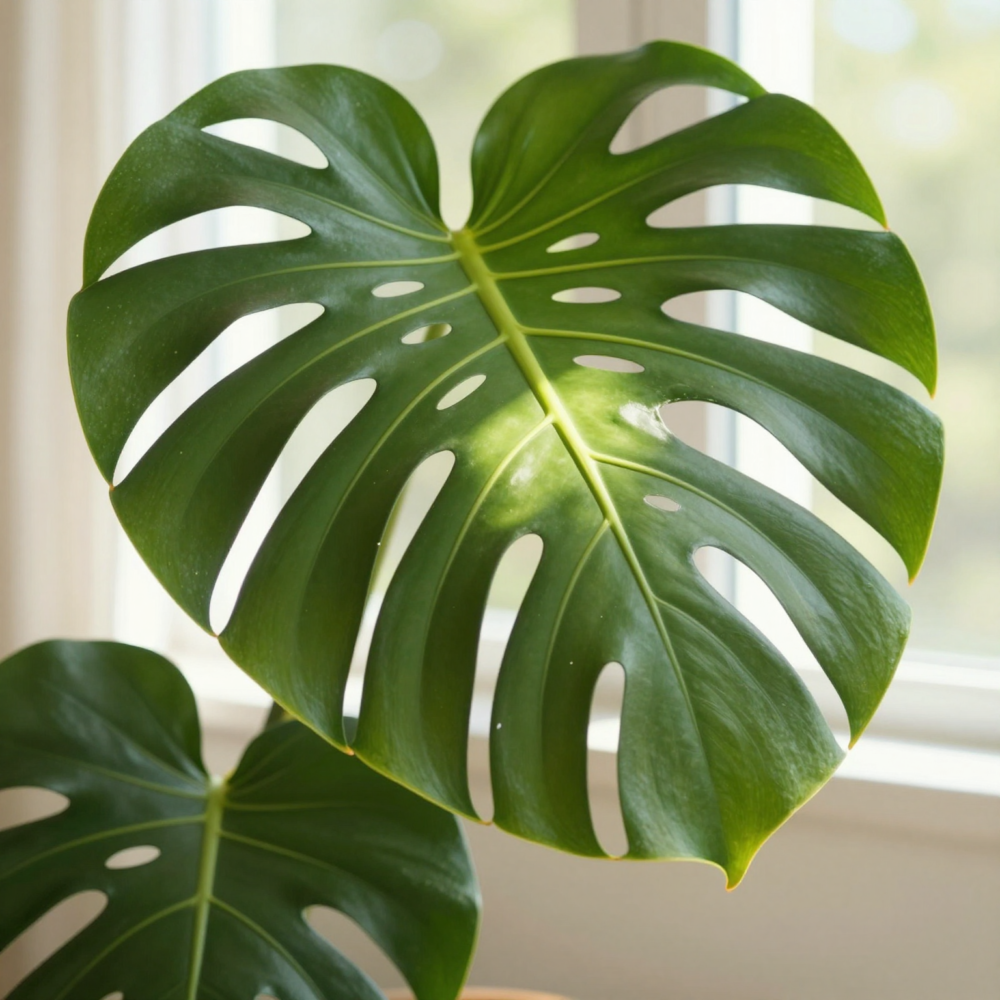
When I say “good light,” I’m talking about bright, indirect light—where the plant gets strong illumination but the sun’s rays don’t hit the leaves like a spotlight. That’s what helps Monstera produce more vigorous growth and those classic fenestrations over time.
If your Monstera could talk, it would probably tell you: “Don’t leave me in the dark, but please don’t burn me with direct sun.” So I aim for light that feels bright if I stand near the window (but not harsh or sizzling).
A helpful mental check: if I can read comfortably near the plant without turning on extra lights, it’s often a good sign. If I can barely see, it’s probably too dim for steady growth.
2. Best Light Levels for Monstera (Intensity Matters)
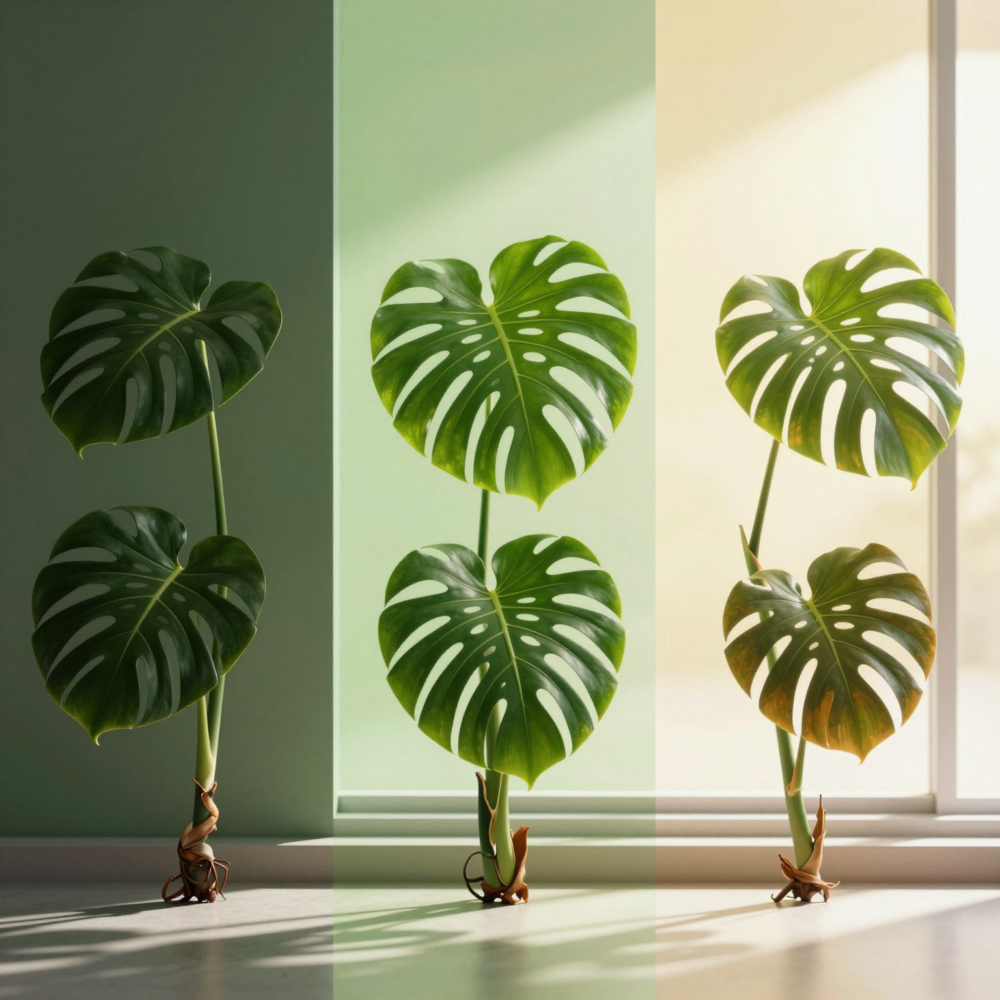
I’ve found that Monstera care becomes way easier when I stop guessing and start thinking in “light intensity.” Most guides agree Monstera thrives in bright indirect light, and that brighter light generally means bigger leaves with better fenestrations.
Some care references even recommend measurable targets. For example, aiming for around 100 FC minimum (foot-candles) and ideally ~400 FC for strong growth can be a solid benchmark if you have a light meter. If you don’t, you can still get the same outcome by placing your plant near the right window and using diffusion (like sheer curtains).
Here’s the practical takeaway from my experience:
- More bright, indirect light → faster growth + more leaf splits
- Low light → slower growth + smaller leaves + fewer fenestrations
So if your Monstera isn’t splitting, I usually don’t immediately blame the soil or fertilizer—I check light first.
3. Where to Place Your Monstera Indoors
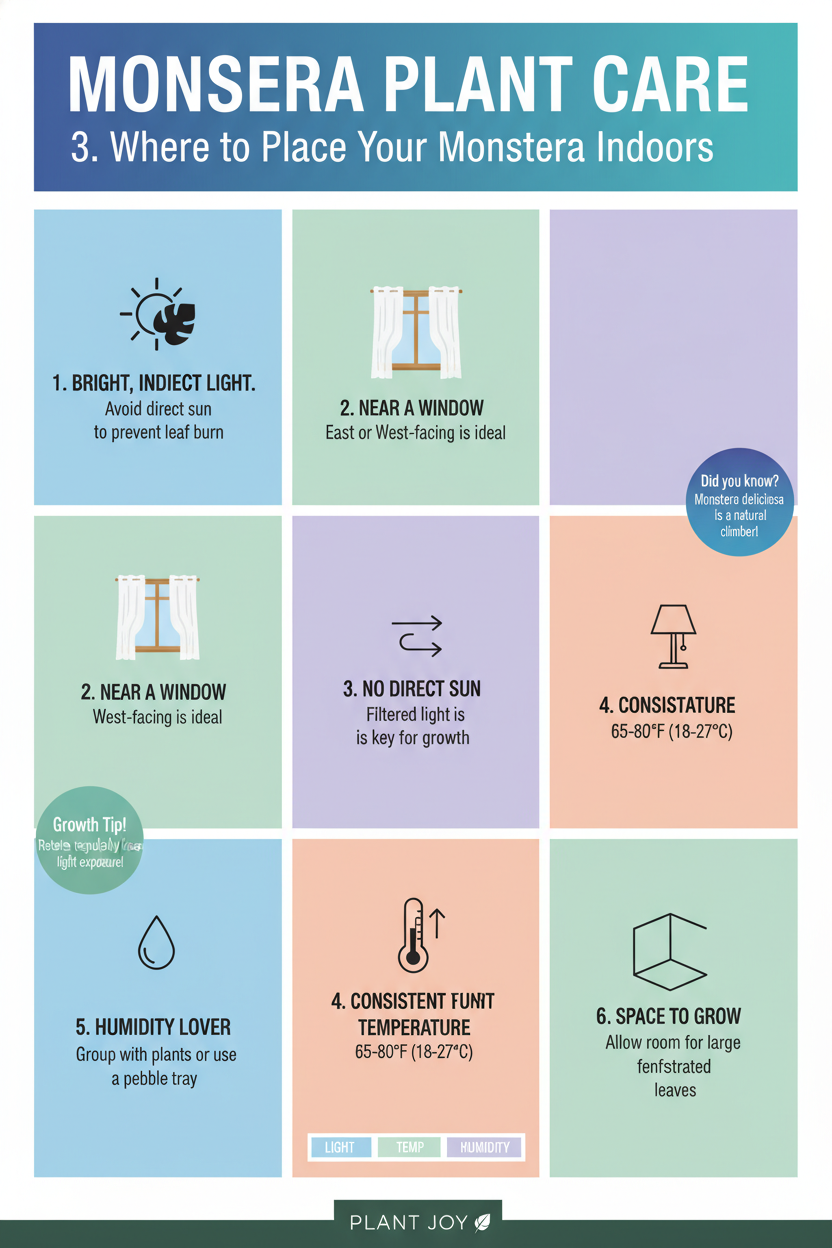
Indoor placement is one of the biggest “wins” in Monstera plant care. I usually start with window orientation because it sets the tone for the light quality.
In many care guides, north- or east-facing windows are commonly recommended starting points. East light is often gentler because it’s morning sun—less intense than afternoon rays. North light is usually indirect and steady, which is great if your home doesn’t get a lot of sun.
If you want the simplest method I use:
- Put your Monstera near the window
- Use a sheer curtain to soften light
- Keep it close enough that the leaves benefit from the brightness, not just the room’s general lighting
If your plant is currently in a darker corner, moving it even a few feet can make a noticeable difference over a few weeks.
4. Use Sheer Curtains for Softer, Safer Light
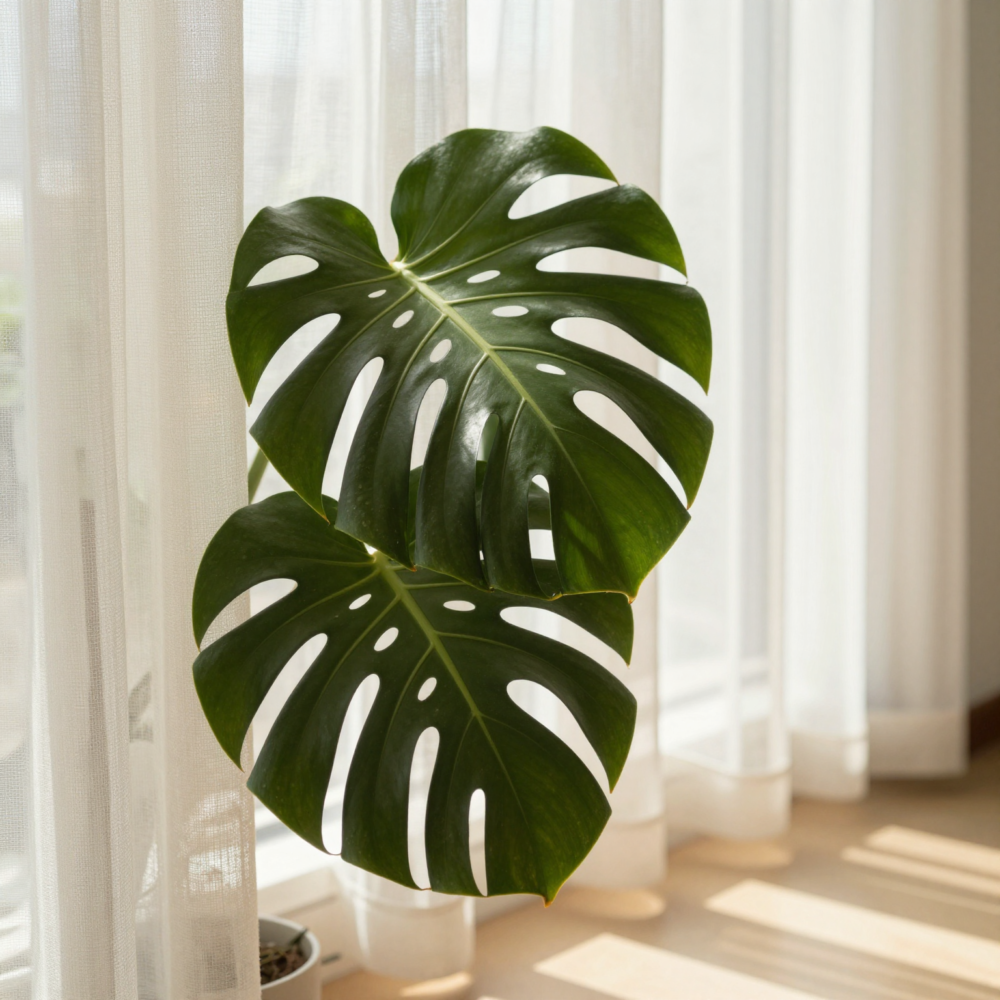
Direct sun is where things can go wrong. Even if your Monstera tolerates some sun, it’s easy to overdo it and end up with scorch marks.
That’s why I love the “diffuse it” approach. Sheer curtains act like a light filter, turning harsh rays into bright indirect light. This gives me the growth benefits without the burn risk.
If you’re unsure whether your window is too strong, start with a test: place the Monstera near the window but behind or beside a sheer curtain, then observe the leaves. After a couple of weeks, you’ll know if your plant is happy.
5. Direct Sun vs. Indirect Light (How to Avoid Leaf Scorch)
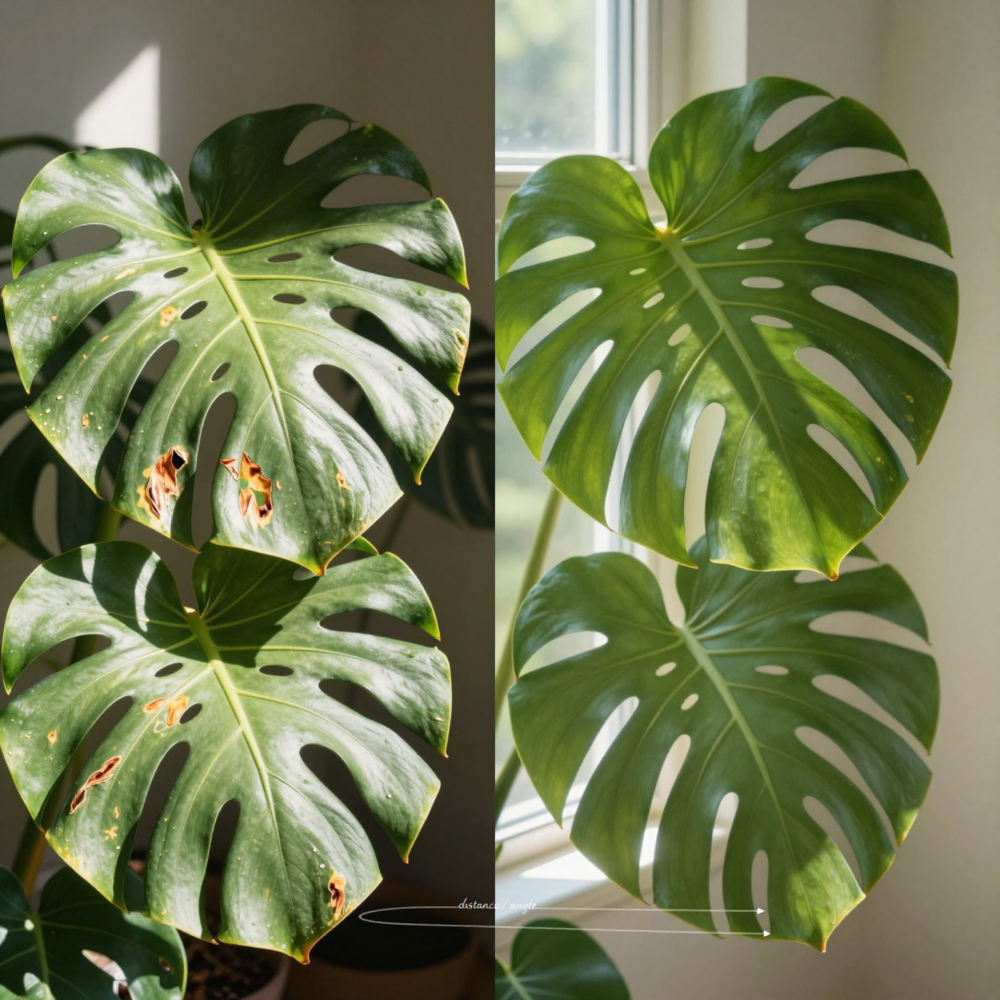
This is the part I pay the most attention to because leaf scorch is frustrating—and it’s often preventable.
In most Monstera care guidance, the general rule is to avoid direct sun because it can scorch leaves. Some sources note that Monstera may handle limited direct light (like a little morning sun), but the risk rises fast if it’s strong or prolonged—especially afternoon sun.
Signs you’re giving too much light
- Brown, crispy patches on leaves
- Fading or bleached-looking areas
- Leaves that look “stressed” even if watering is correct
Signs you’re giving too little light
- Slower growth
- Smaller leaves
- Less fenestration (fewer splits/holes)
- A plant that looks like it’s trying but can’t quite “reach”
My strategy is simple: I don’t chase perfection immediately. I aim for bright indirect first, then adjust based on leaf response.
6. How Long to Light Each Day (Daily Duration Counts)
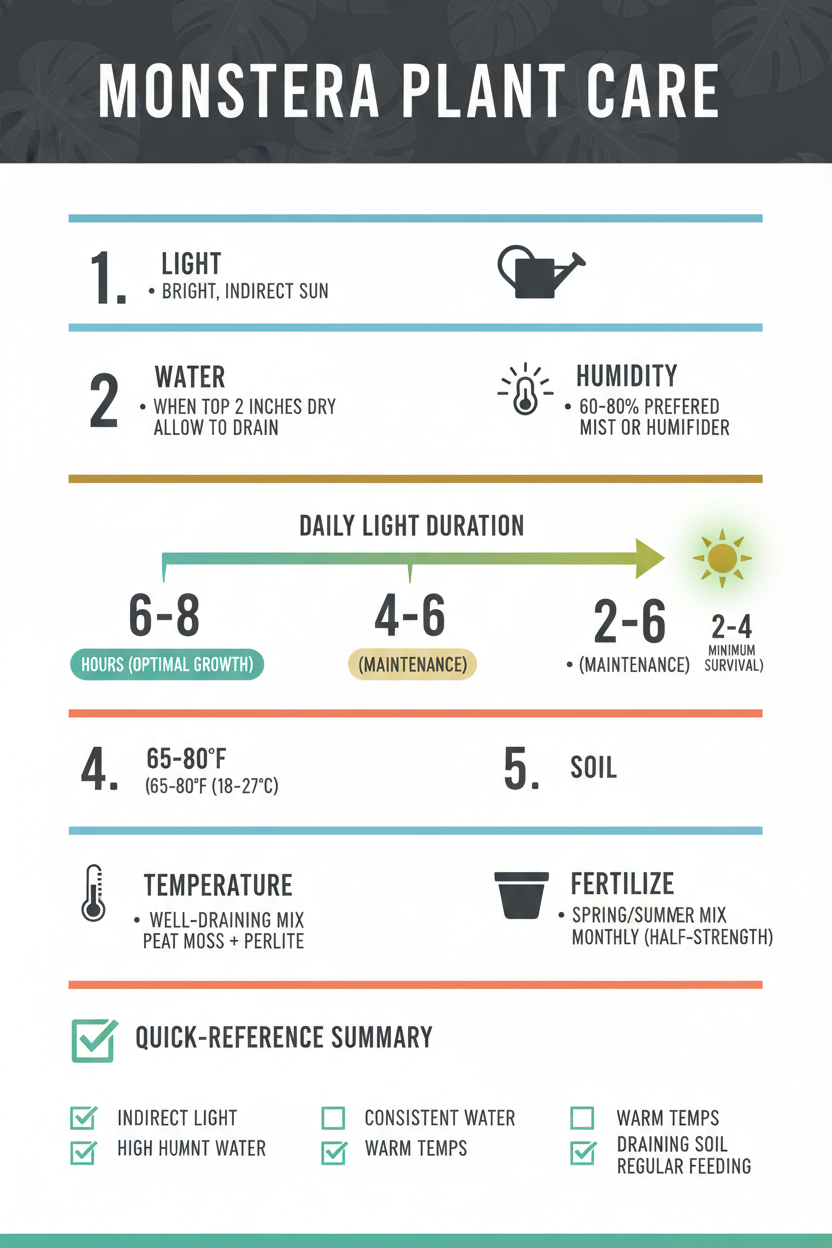
Monstera doesn’t just need the right kind of light—it also needs enough time under that light. Many recommendations point to a longer daily exposure when the plant is near a window with diffusion.
A common practical target is 12–14 hours daily of window access with bright indirect conditions. You don’t need to measure the hours perfectly for it to help, but consistency matters.
Also, I prefer morning light over afternoon light when possible. Morning sun is usually easier on leaves. Afternoon sun can be much hotter and more intense, even if the window is the same.
If your Monstera seems to sit at an angle to the light, I also rotate the pot every week or two so growth stays even.
7. Adjusting for Low-Light Homes (What to Expect)
Not every home is naturally bright. I get it—some people live in apartments with limited window access, and that’s okay. Monstera can still survive in lower light, but here’s what changes: growth slows down.
In lower light conditions, I expect slower growth and smaller leaves. Fenestrations may be less dramatic or take longer to appear. That doesn’t mean your Monstera will fail—it just means it’s not getting the energy it needs to do its best leaf “math.”
Practical low-light upgrades I use:
- Move your Monstera to the brightest spot you can find (even if it’s not “ideal”)
- Use diffusion (sheer curtains) if you’re near a strong window
- Keep an eye on leaf size and growth speed so you know whether you need to move again
- Reduce stress from other care errors (like overwatering), because low light makes plants drink less
If your home is dim, the biggest improvement you can make is often simply relocating the plant closer to a window.
8. Outdoor Lighting (If You Take Monstera Outside)
I love the idea of taking Monstera outdoors in warm weather, but lighting is still the key. Indoors, we rely on window light. Outdoors, sunlight is stronger and less forgiving.
Many care guidelines suggest dappled light or partial shade rather than direct sun. Think: “filtered through leaves” vibes, not “full noon sun.”
Before placing it outside, I check two things:
- How intense the sun is at that time of day
- Whether the leaves might get hit directly
Heat and light intensity can increase fast outside, even if it doesn’t feel like it at first. So I start with a shaded spot and move gradually if the plant seems happy.
9. Quick Light Checklist (At-a-Glance)
If I’m helping someone troubleshoot fast, I run through this checklist:
9.1 Placement
Near an east- or north-facing window with bright light.
9.2 Diffusion
Use sheer curtains or any method that softens harsh rays.
9.3 Duration
Aim for consistent daily access to bright light (often 12–14 hours near a window setup).
9.4 Optional Measurement
If you have a meter, consider ~100 FC minimum and ideally ~400 FC for strong growth.
9.5 Watch-and-Adjust
Look at leaves over a couple of weeks and fine-tune placement if needed.
10. Troubleshooting Light Problems Like a Plant Detective
When my Monstera doesn’t look right, I don’t panic—I narrow down the cause. Light symptoms are often pretty clear if you know what to look for.
For example:
- If growth is slow and leaves are smaller, I suspect low light.
- If leaves show scorch or crispy edges, I suspect too much direct sun.
- If it’s growing but not splitting, I usually increase brightness first (still indirect) rather than jumping to fertilizer.
I also remember that changes take time. Moving a Monstera one day won’t transform it overnight. I give it about 2–4 weeks to show the effect of better light conditions.
Common Mistakes
- Placing Monstera in a dark corner and expecting quick fenestration. Lower light can slow growth dramatically.
- Putting it in direct afternoon sun. Even “a little sun” can scorch leaves if it’s strong and prolonged.
- Ignoring curtains/diffusion. Bright indirect light matters, and sheer curtains help you get it safely.
- Moving it constantly without giving it time to adjust. I recommend making one change at a time and observing results.
- Assuming all problems are watering problems. Sometimes the watering routine is fine—the light is the real issue.
- Expecting instant results. Leaf splits develop over time, especially from consistent, proper light exposure.
- Forgetting that east light is often gentler. If you can choose, morning light usually has a lower scorching risk than afternoon light.
FAQ
How much light does a Monstera need?
I aim for bright, indirect light. Near a window is best, often with east or north placement as a starting point. If you want measurable guidance, many references suggest ~100 FC minimum and up to ~400 FC for strong growth.
Can Monstera survive in low light?
Yes, Monstera can tolerate lower light, but growth will slow. Expect smaller leaves and fewer fenestrations, especially at first.
Is direct sunlight ever okay?
A small amount can be okay, especially morning light, but the general safe approach is to avoid harsh direct sun—especially afternoon sun, which is more likely to scorch leaves.
Why aren’t my Monstera leaves splitting?
Most often, it’s not enough bright indirect light. If light is adequate and you’ve had the plant a while, you may need to reassess placement and consistency.
What are signs my Monstera is getting too much light?
Look for scorching, crispy brown patches, or leaves that look bleached or stressed. If that’s happening, I move the plant farther from the window or increase diffusion with a sheer curtain.
What’s the best window direction for Monstera?
Many care guides point to north or east-facing windows as reliable options. If you’re using southeast/west windows, I’d be extra careful with diffusion and distance.
Conclusion
Monstera plant care is mostly about one thing: getting the light right. When I give my Monstera bright, indirect light—often near an east or north window with sheer curtain diffusion—it grows more steadily and develops those beautiful fenestrations over time. When light is too dim, it slows down. When light is too harsh, it can scorch.
Use the quick checklist, watch the leaves, and adjust gradually. With consistent light and a little patience, your Monstera will reward you with lush growth that looks like it’s thriving on purpose.

Sarah Anderson . J
I’m the mom behind Wise Mom Blogger, where everyday creativity meets real-life motherhood. I share easy DIY crafts, cozy knitting and crochet projects, beginner-friendly sewing ideas, and family-tested recipes—plus quick baking hacks that make homemade feel doable on busy days.