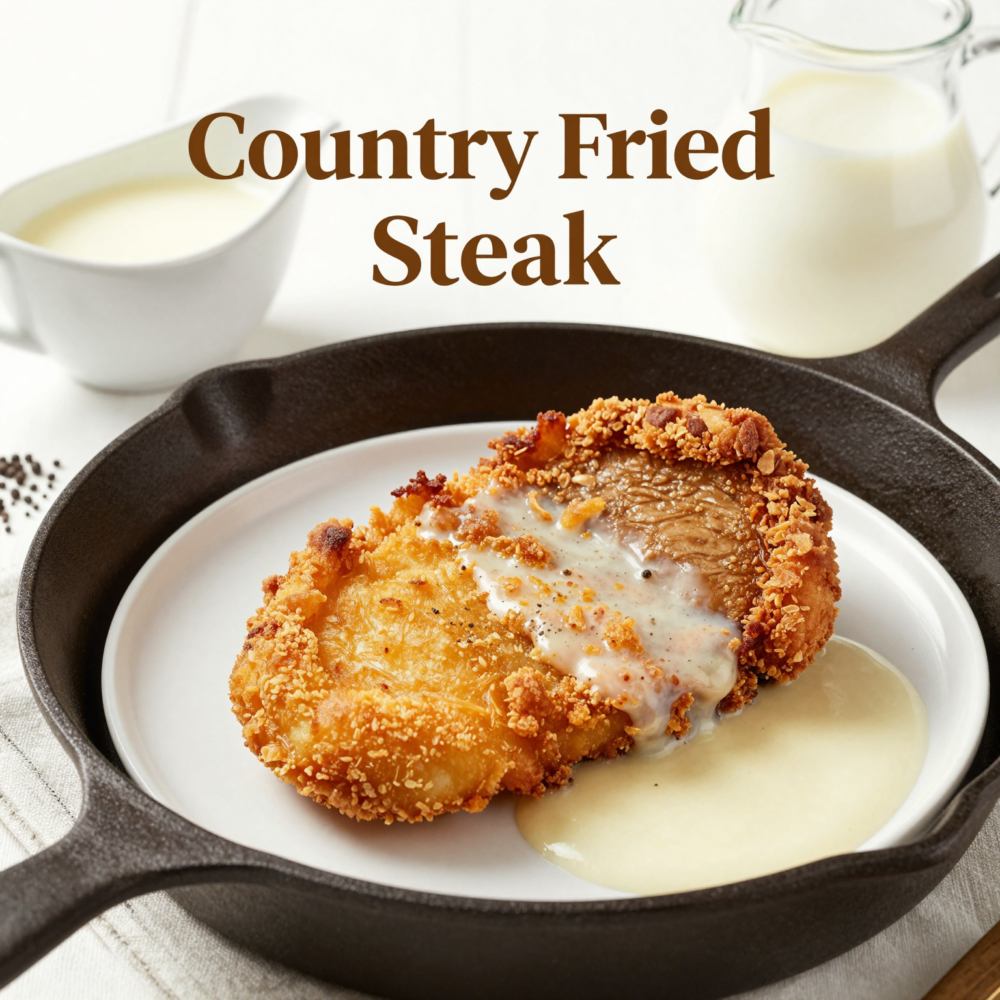
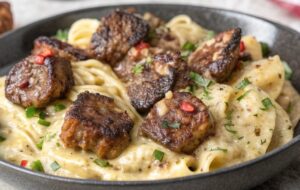
Country fried steak is the kind of comfort food that makes people go quiet for a second—then ask for seconds.
It’s crispy on the outside, tender on the inside, and topped with that creamy “country white” gravy that just belongs on a plate.
I love how this recipe uses cube steak (so it’s easier than hunting for the perfect cut) and turns it into something special with simple pantry ingredients.
You can also tweak the flavor—more pepper, a little heat, thicker or thinner gravy—so it fits your taste.
If you want a big, satisfying meal that still feels doable at home, this is your go-to. Let’s get that golden crust cooking.
Key Takeaways
Country fried steak usually starts with cube steak, pounded thin for tenderness.
Buttermilk (or milk) soaking helps the meat stay soft and flavorful.
A seasoned flour dredge plus cornstarch creates that crunchy, golden coating.
Resting breaded steaks briefly helps the coating stick and stay crisp.
Gravy is made from pan drippings (plus flour and milk/broth) for classic “country white” style.
Quick Answer
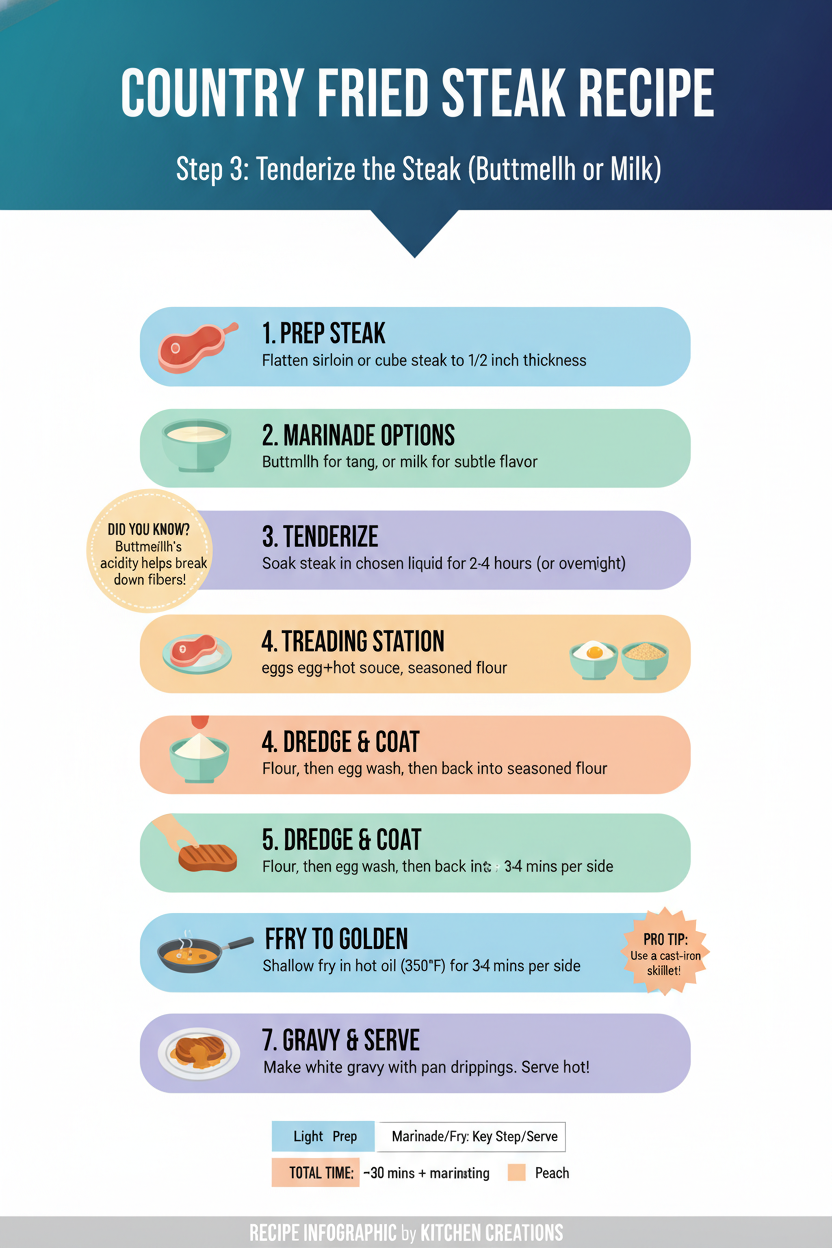
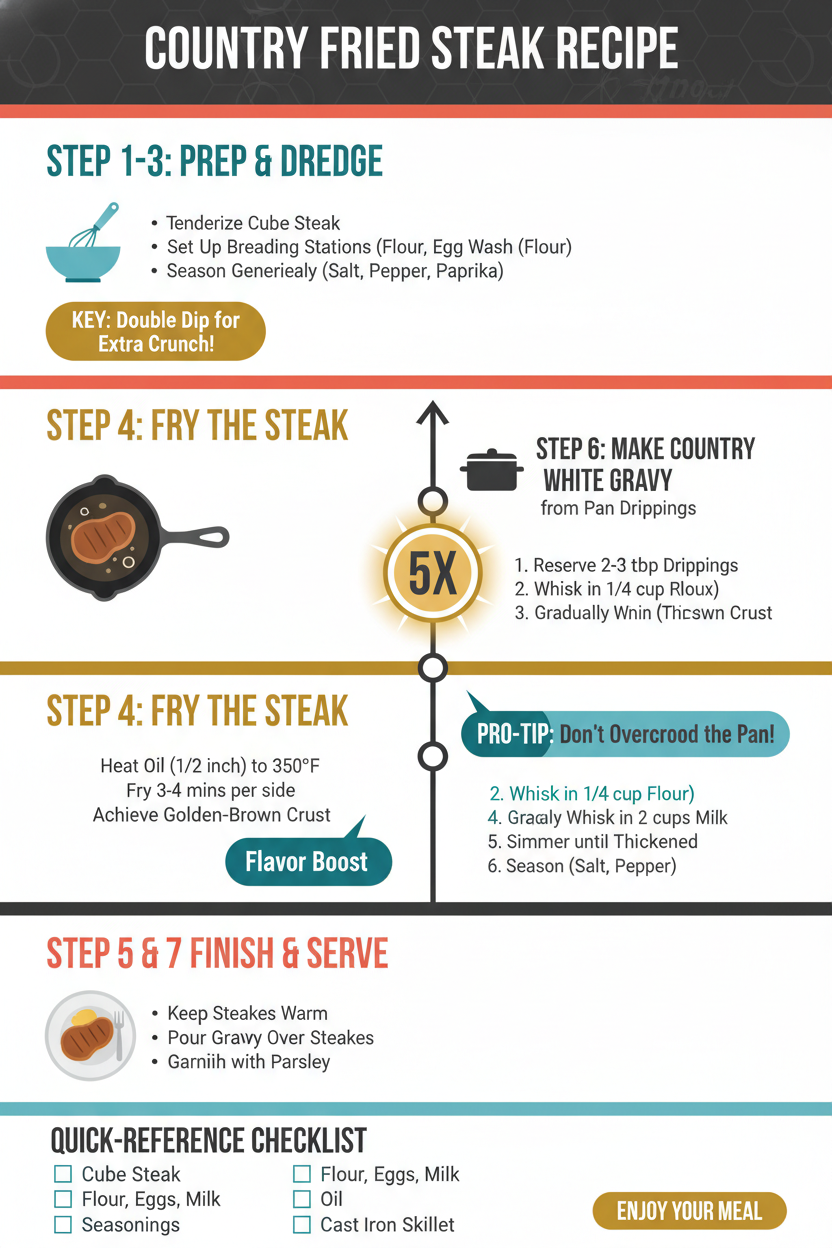
To make country fried steak: pound cube steaks thin, soak them in buttermilk or milk, dredge in seasoned flour (optionally double-dredge for extra crunch), fry until deep golden, then use the pan drippings to make creamy white gravy with flour and milk.
What You Need
Item
Purpose
Notes
Cube steak (about 1 to 1.5 lb)
Main meat
Cube steak works best for country-style results
Buttermilk (or milk)
Tenderizing + flavor
Buttermilk gives great tang; milk works too
Eggs
Helps breading stick
Common in buttermilk-egg wash
Hot sauce (optional)
Adds savory kick
A few dashes make the wash taste “restaurant” style
Worcestershire (optional)
Deepens flavor
Great in the wash for extra savory depth
Flour
Main coating + gravy thickener
Use for dredging and gravy roux
Cornstarch
Extra crispiness
Helps the crust stay crunchy
Baking powder (and/or baking soda)
Browning + crunch
Often added to flour or wash for texture
Salt and black pepper
Seasoning
Season steak, coating, and gravy
Spices (optional)
Flavor boost
Examples: garlic powder, onion powder, paprika
Neutral frying oil
Frying
Peanut, canola, vegetable—whatever you like with a high smoke point
Milk (or beef broth)
Gravy base
Milk for classic white gravy; broth adds depth
Step 1: What Is Country Fried Steak?
Country fried steak is a Southern-style comfort dish where cube steak is coated, fried until crispy, and served with white gravy.
In many homes, it’s treated like a cousin of chicken fried steak: both use breaded, fried steak and are topped with creamy gravy.
The key “country” vibe usually comes from the tenderizing method (often buttermilk) and the creamy gravy made from pan drippings.
Once you nail the breading and gravy, you can serve it for a weeknight dinner, a weekend brunch, or whenever you want something hearty and satisfying.
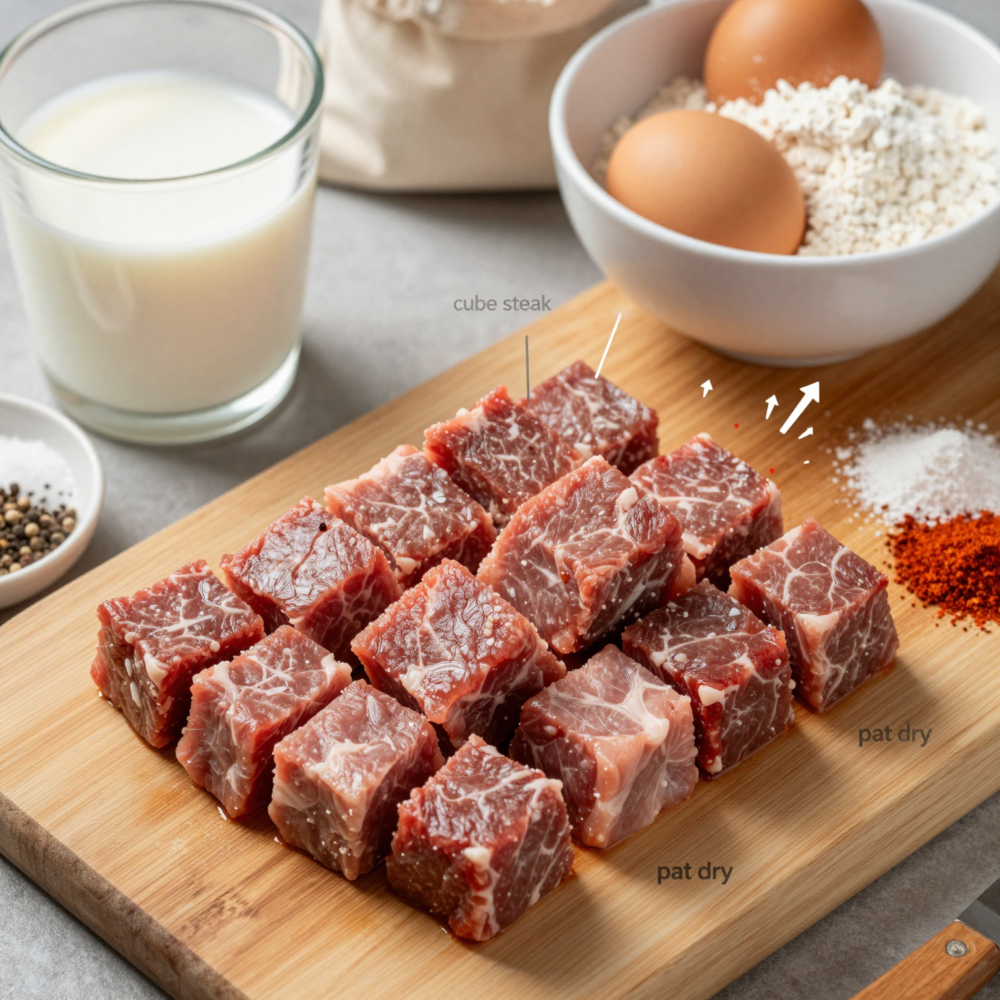
Step 2: Pick and Prep Your Steak (Cube Steak Matters)
I start with cube steak because it’s already cut with that tenderizing texture, and it fries up well with breading.
If your cube steak is thick, I pound it to an even thickness—about 1/4-inch—so it cooks quickly and stays tender.
Even thickness also helps the coating brown evenly instead of burning on the edges while the center stays raw.
Then I pat the steaks dry after soaking (or at least remove excess liquid) before dredging, so the coating doesn’t get gummy.
Step 3: Tenderize the Steak (Buttermilk or Milk)
Tenderizing is where the “wow, this is tender” part comes from, especially with cube steak.
Buttermilk method (my favorite)
Soak cube steaks in buttermilk for 2–4 hours.
This gives you tenderness plus that classic tang.
Milk method (faster option)
Soak cube steaks in milk for 15 minutes to 2 hours.
It’s still helpful, just less intense than buttermilk.
When I pull the steaks from the liquid, I press them gently with paper towels to remove extra moisture.
That one small step helps the flour cling better and leads to a crispier crust.
Here’s how I get that crispy country fried steak crust: seasoned flour for the first layer, optional spiced buttermilk-egg wash for extra crunch, then another flour/cornstarch coating.
Make a seasoned dredge (dry mix)
I mix in a bowl:
Flour
Cornstarch
Salt and black pepper
Optional spices (like garlic powder or paprika)
Baking powder (and sometimes a little baking soda) if you want extra crunch and browning
Set up the wash (optional but worth it)
In another bowl, I whisk:
Buttermilk (or a little of the soaking liquid)
Egg
Hot sauce (a few dashes)
Optional Worcestershire
Double-dredging approach (for extra crisp)
If I’m going for maximum crunch, I use a double-dredge:
First coat: Dredge steak in the seasoned flour.
Coating reinforcement: Dip briefly in the buttermilk-egg wash.
Final coat: Press steak back into the flour/cornstarch mix.
Rest before frying
Once each steak is breaded, I place it on a rack or plate and let it sit about 5–10 minutes.
This helps the coating adhere so it doesn’t slide off in the oil.
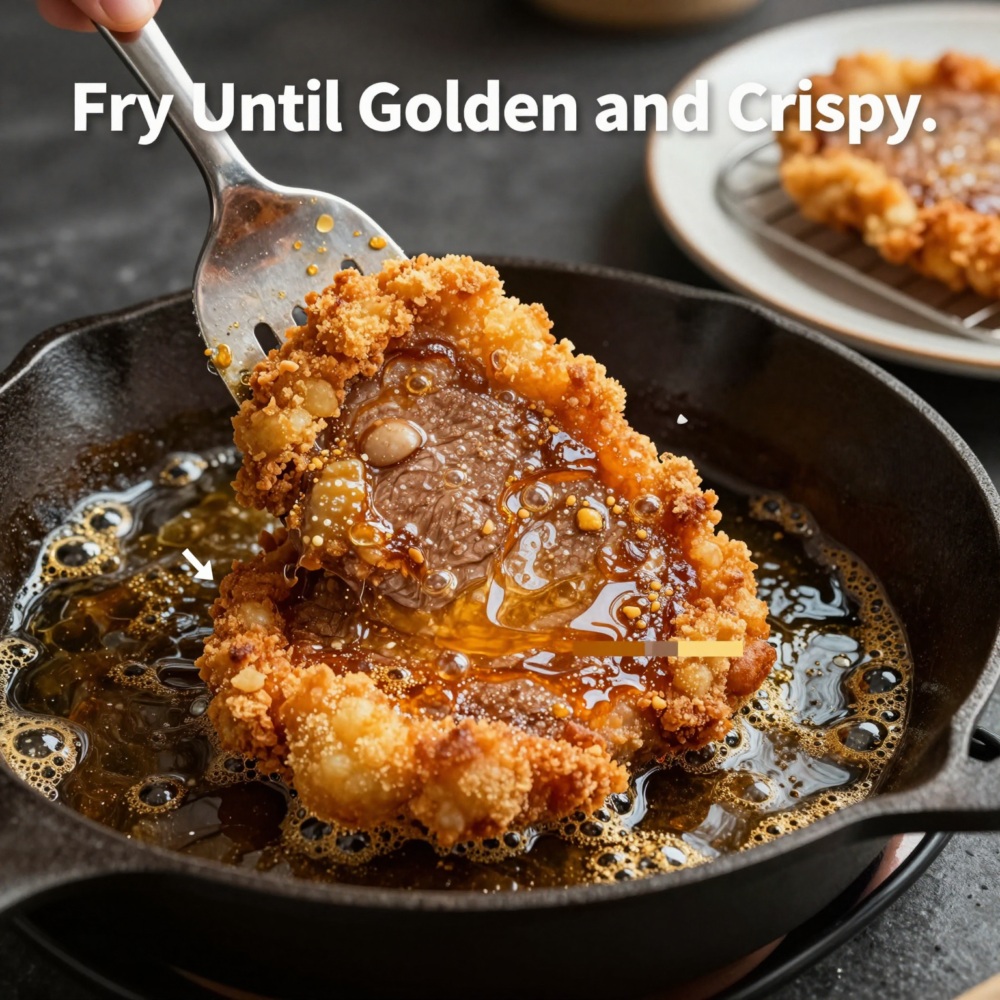
Step 5: Fry Until Golden and Crispy (Golden Cues Matter)
Frying is where timing and oil temperature make all the difference.
Heat the oil
I heat enough neutral oil in a skillet (or deep pan) so the oil comes about 1/2 to 1 inch up the sides of the steak.
I aim for a steady frying temperature—if it’s too cool, the coating absorbs oil and turns greasy. Too hot, it browns too fast before the inside is cooked.
Fry in batches
I fry steaks in batches so the oil temperature doesn’t crash.
Then I cook until:
the crust turns deep golden brown, and
the edges look crisp (not pale or floury)
Drain well
When they’re done, I lift them onto a wire rack or a paper towel-lined tray.
A wire rack is best if you have one because it helps prevent sogginess.
Step 6: Make Country White Gravy from Pan Drippings
This is the part that turns “fried steak” into “country fried steak” for me.
Capture pan drippings
After frying, I carefully pour off excess oil—leaving about 2 to 4 tablespoons of drippings in the pan.
Then I whisk in an equal amount of flour (for example, 2 tablespoons drippings + 2 tablespoons flour).
Cook the roux
I cook the flour/drippings mixture for 1–2 minutes, stirring constantly, until it smells nutty and looks smooth.
This removes that raw flour taste.
Add milk gradually
Next, I whisk in milk slowly until smooth.
If I want extra depth, I’ll swap part of the liquid for beef broth (optional).
I keep stirring over medium heat until the gravy thickens to the texture I like:
Thinner = more pourable
Thicker = spoonable
Season to taste
Finally, I season with salt and black pepper.
Sometimes I add a pinch more pepper than I think I need—because the gravy tastes even better when it has a little bite.
Step 7: Serve Immediately (Crispness Is a Short Window)
Country fried steak is best right after it’s fried, when the coating is crisp and the gravy is warm.
Here’s my serving order:
Put the fried steak on plates.
Spoon or pour white gravy over the top right before eating.
Classic sides that fit perfectly
If you want the full comfort-food spread, I serve it with:
mashed potatoes
biscuits
country vegetables (green beans or corn)
a simple salad if I want something crunchy and fresh on the side
Tips
Pound for even cooking: Try to keep steak thickness around 1/4-inch so it fries evenly.
Don’t skip the rest: Let breaded steaks sit briefly before frying so the coating clings.
Use cornstarch in the flour: It’s one of my favorite tricks for staying crispy.
Fry in batches: If you crowd the pan, the oil temperature drops and the crust gets soggy.
Drain on a rack: Helps the crust stay crisp while you make gravy.
Gravy thickness control: Add more milk to thin, cook a bit longer to thicken.
Flavor boost in the wash: Hot sauce + Worcestershire gives that deeper savory taste many restaurants use.
FAQ
Can I use flour-only breading instead of double-dredging?
Yes. A single seasoned flour dredge still works great. If you want extra crunch, double-dredging (flour → egg wash → flour again) gives a thicker, crisper crust.
What’s the best tenderizing time?
Buttermilk: 2–4 hours is common.
Milk: 15 minutes to 2 hours works.
If you’re in a rush, even a short soak helps, but longer is better for tenderness.
Why does my breading fall off?
Usually it’s one of these:
Steak is too wet (not patted dry after soaking)
Oil is too cool (coating softens)
You didn’t rest breaded steaks briefly
You moved steaks too quickly in the pan
Can I make it ahead?
You can prep the breading and tenderize ahead of time, but I don’t recommend fully frying and storing because the crust loses crispness. If you must hold it, keep steaks warm on a rack and re-crisp briefly in a hot oven (best effort, not perfect).
What if I don’t have buttermilk?
Use milk. If you want a quick buttermilk substitute, you can add a small amount of acid (like lemon juice or vinegar) to milk and let it sit a few minutes. The flavor won’t be exactly the same, but the tenderness benefits still show up.
Can I make the gravy without pan drippings?
You can, but pan drippings are what makes it “country” and flavorful. If you don’t have them, you’ll need extra fat (like butter) and enough seasoning to replace that depth.
Conclusion
Making country fried steak is one of those kitchen wins that feels fancy, but it’s really just smart prep: tenderize the cube steak, build a crispy coating with seasoned flour and cornstarch, fry until golden, and finish with creamy white gravy made from pan drippings.
Once you try it, you’ll understand why this meal shows up at family dinners and comfort-food cravings again and again.
If you want to customize it, go ahead—turn up the pepper, add hot sauce to the wash, or make the gravy thicker or thinner. Now grab your skillet and let’s make that crisp, gravy-soaked magic happen.
Sarah Anderson . J
I’m the mom behind Wise Mom Blogger, where everyday creativity meets real-life motherhood. I share easy DIY crafts, cozy knitting and crochet projects, beginner-friendly sewing ideas, and family-tested recipes—plus quick baking hacks that make homemade feel doable on busy days.