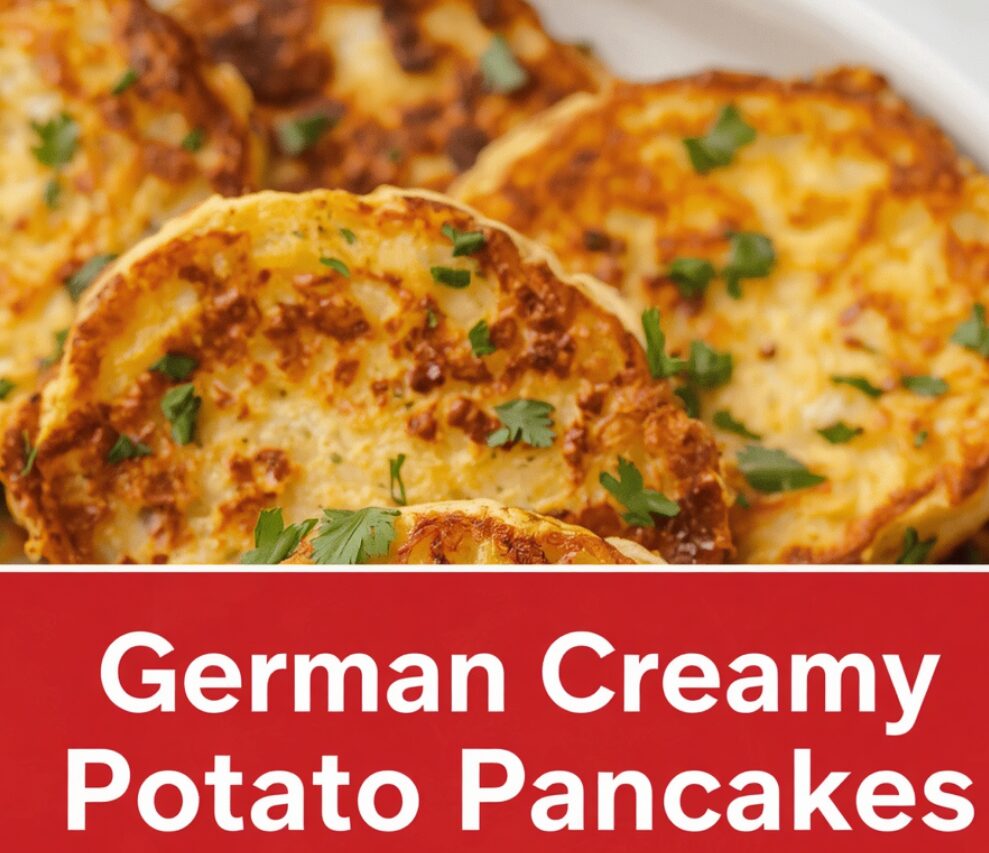
Crispy German potato pancakes are the kind of food that makes the whole room smell amazing.
One bite and you get that perfect balance: tender inside, crunchy outside, and big cozy flavor.
They’re especially great when you want something hearty that doesn’t require fancy techniques.
I love that they’re flexible too—serve them with classic applesauce, or switch things up with different seasonings and fats.
If you’ve ever wondered how to get potato pancakes truly crispy, I’ve got you covered with practical steps and common fixes.
Key Takeaways
Kartoffelpuffer are made by grating potatoes and onion, then squeezing out extra liquid for crispness.
Most recipes use flour (often optional) plus eggs as the binder; flour can be swapped for gluten-free flour.
Fry in hot oil (or bacon fat/lard for extra flavor) and don’t overcrowd the pan.
Serve immediately while they’re crisp—Kartoffelpuffer are best hot and fresh.
Applesauce (Apfelmus) is the classic sweet-savory pairing, often made with apples, honey, and lemon.
Quick Answer
To make German potato pancakes (Kartoffelpuffer), grate potatoes and onion, squeeze/drain them well, mix with eggs (and flour if using) plus salt, pepper, and often nutmeg, then pan-fry in hot oil (or bacon fat/lard) until golden and crispy. Serve right away with applesauce (Apfelmus).
What You Need
Item
Purpose
Notes
Floury/starchy potatoes (Russet or Yukon Gold)
Creates the right potato texture for crisp pancakes
Floury potatoes hold together and crisp well
Onion (yellow onion or shallots)
Adds savory flavor and aroma
Shallots are common in some versions
Eggs
Binds the grated mixture
Helps pancakes hold their shape
All-purpose flour (optional)
Adds structure and helps bind
Many recipes include flour; you can also use gluten-free flour
Gluten-free flour (optional)
Makes a gluten-free version
Use a gluten-free flour blend you trust
Salt
Brings out flavor
Don’t skip it
Black pepper
Adds gentle heat
Add to taste
Nutmeg (optional but common)
Classic warm, slightly sweet spice
Often used in Kartoffelpuffer
Oil for frying
Main frying medium for crispness
Neutral oil works; you can use bacon fat/lard instead
Bacon fat or lard (optional)
Rich, traditional flavor
Great if you want a deeper savory taste
Applesauce (Apfelmus)
Classic topping/side
Store-bought works; homemade is extra good
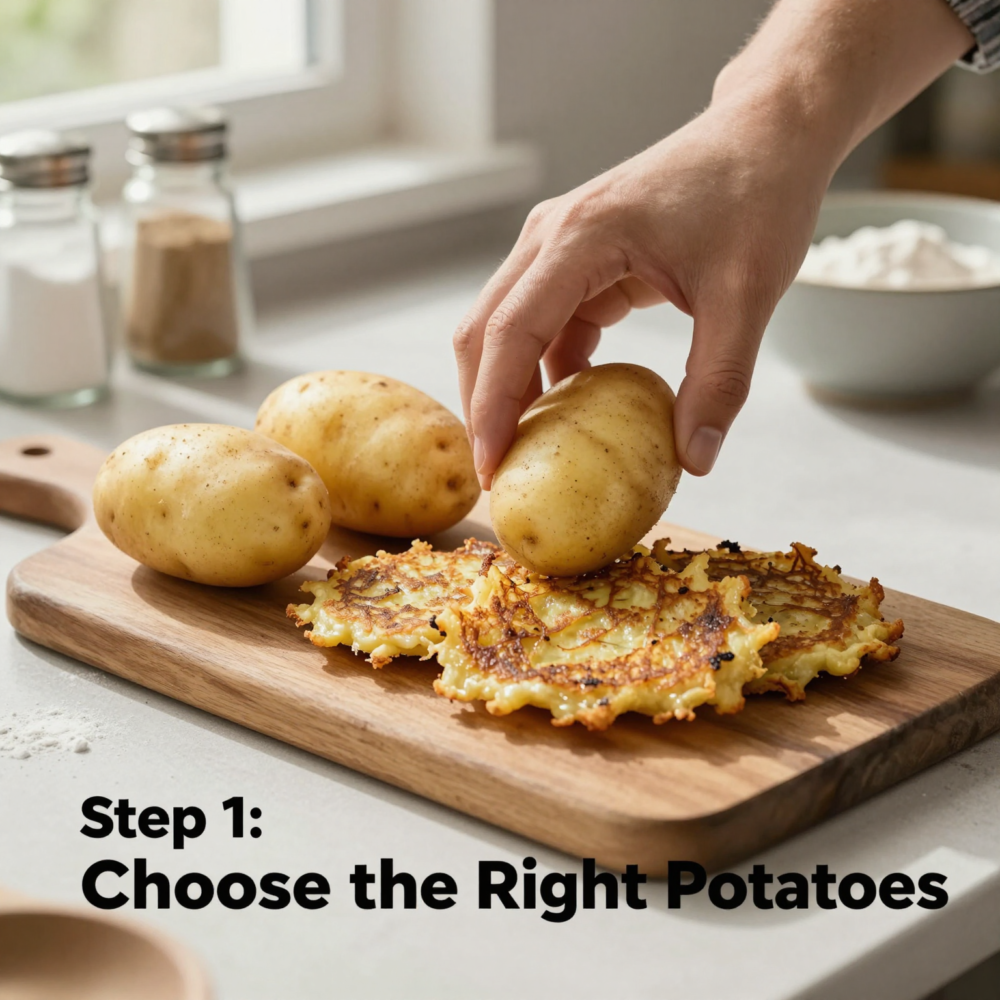
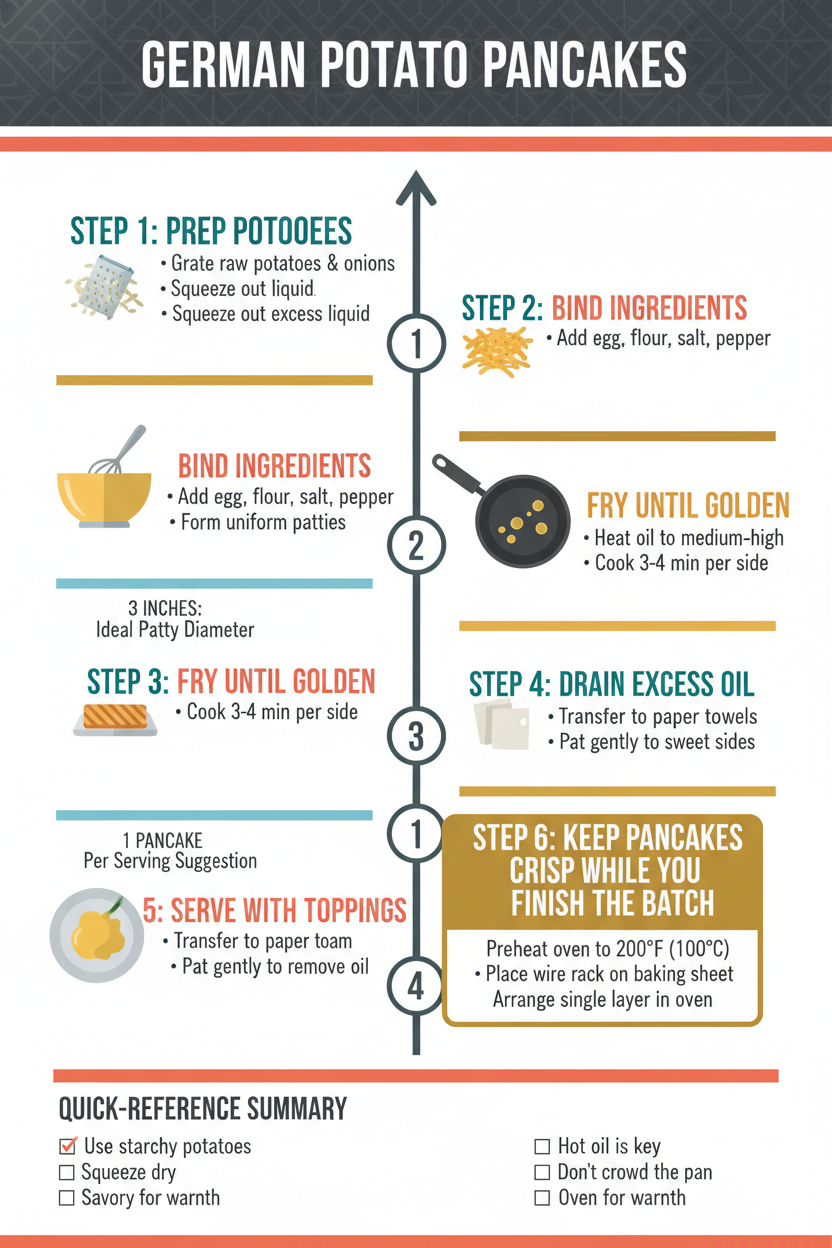
Step 1: Choose the Right Potatoes
If you want crispy German potato pancakes, the potato choice matters more than people think. I usually go for floury or starchy potatoes like Yukon Gold or Russet because they create a better texture when grated and fried. Waxy potatoes can turn out more gummy or less crisp because they don’t break down and crisp the same way.
When I’m shopping, I look for potatoes labeled “starchy,” “for baking,” or “good for roasting,” since those tend to behave well in recipes like Kartoffelpuffer. If you only have one type on hand, you can still make pancakes—but I’ll warn you: the crispness may not be as strong.
Step 2: Grate Potatoes and Onion
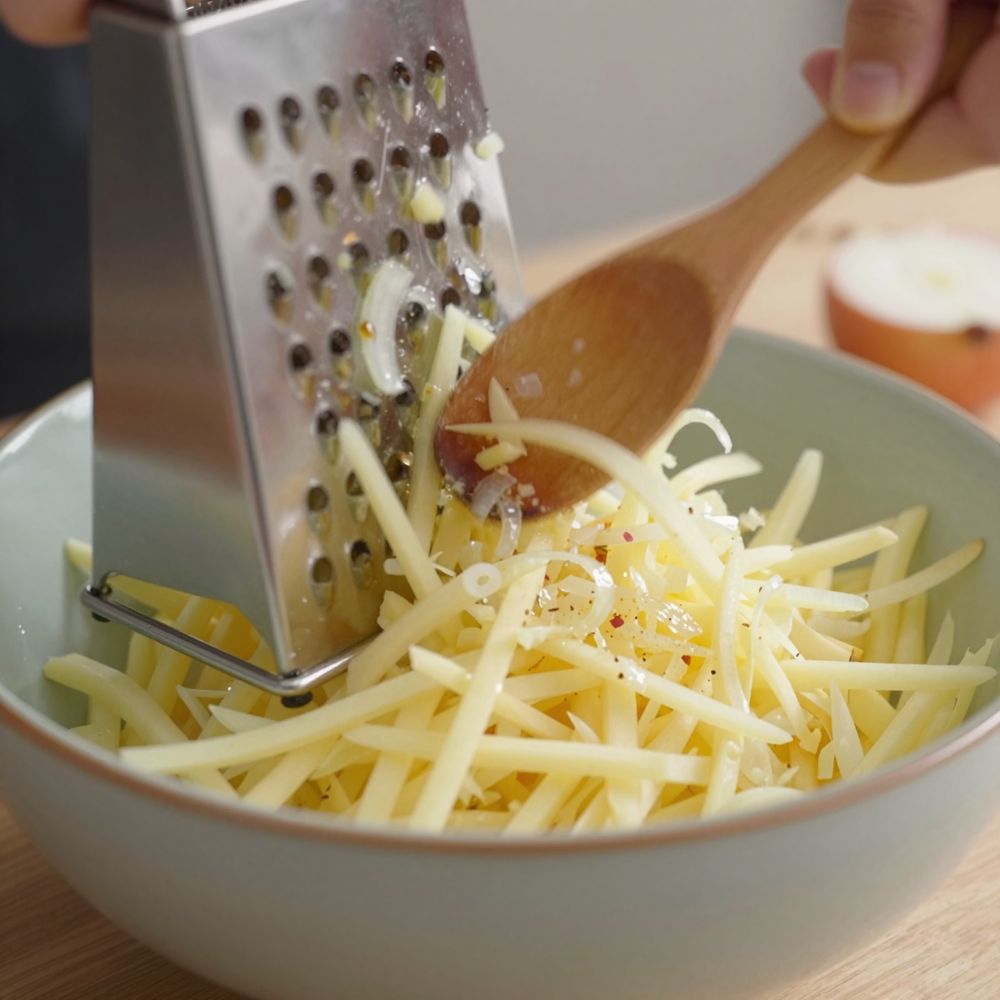
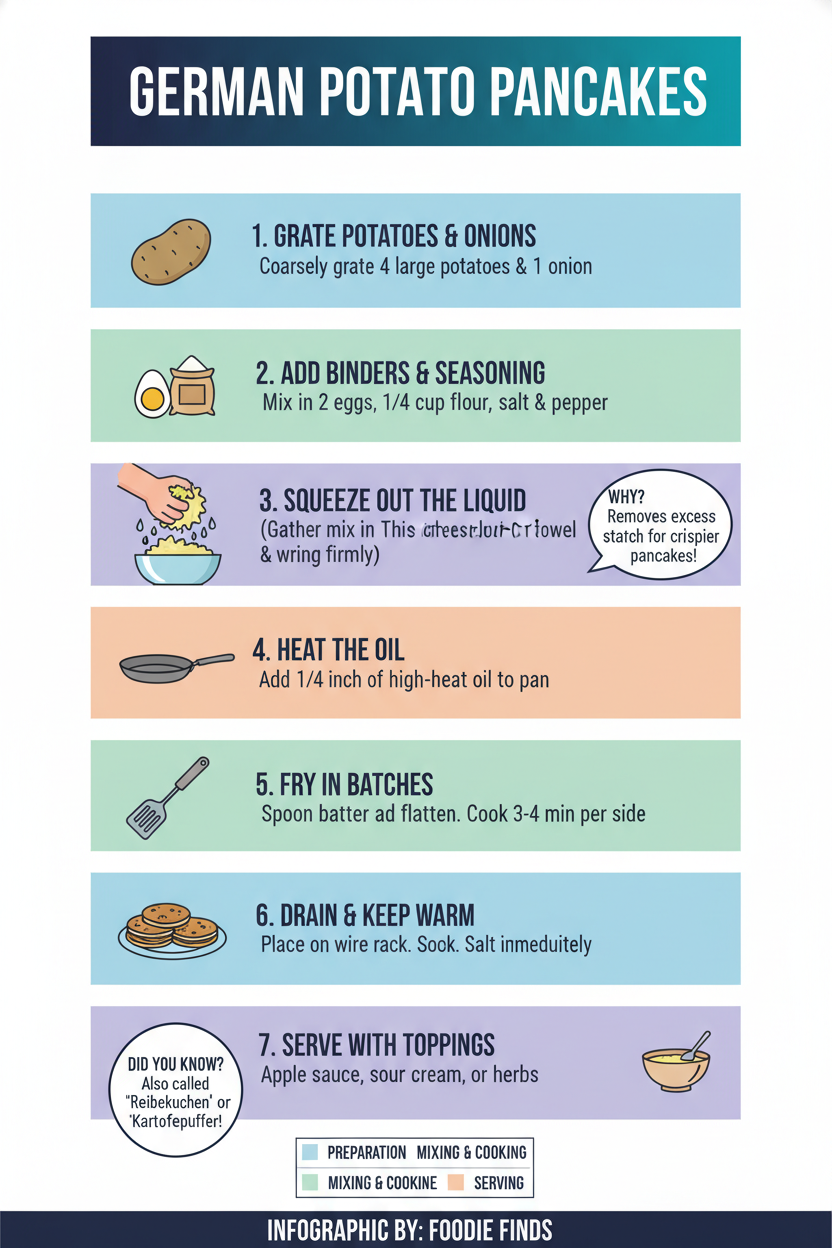
Next comes the part that sets up everything else: grating. I grate the potatoes and the onion (using a box grater or the grating side of a food processor). The goal is small shreds so the pancakes cook evenly and get that crisp surface.
I also grate the onion right alongside the potatoes so everything mixes smoothly. If you like a more delicate onion flavor, you can use shallots instead of yellow onion. Either way, I keep it consistent—smaller shreds usually fry more evenly.
Step 3: Squeeze Out the Liquid (This Is Texture-Critical)
This is the step I never skip, and it’s the biggest reason some potato pancakes don’t crisp up. After grating, I squeeze or drain the mixture really well—until the liquid slows down and the shreds feel less wet.
Why it matters: extra moisture prevents the pancakes from browning and can make them fall apart. It also makes the outside soften instead of crisp. I’ve learned that “just drain a little” isn’t enough. You want the grated potato-onion mixture as dry as you can reasonably get it.
Tip I use: after squeezing, I let the mixture sit for a minute, then squeeze again if it still looks very wet. It sounds fussy, but it makes a noticeable difference.
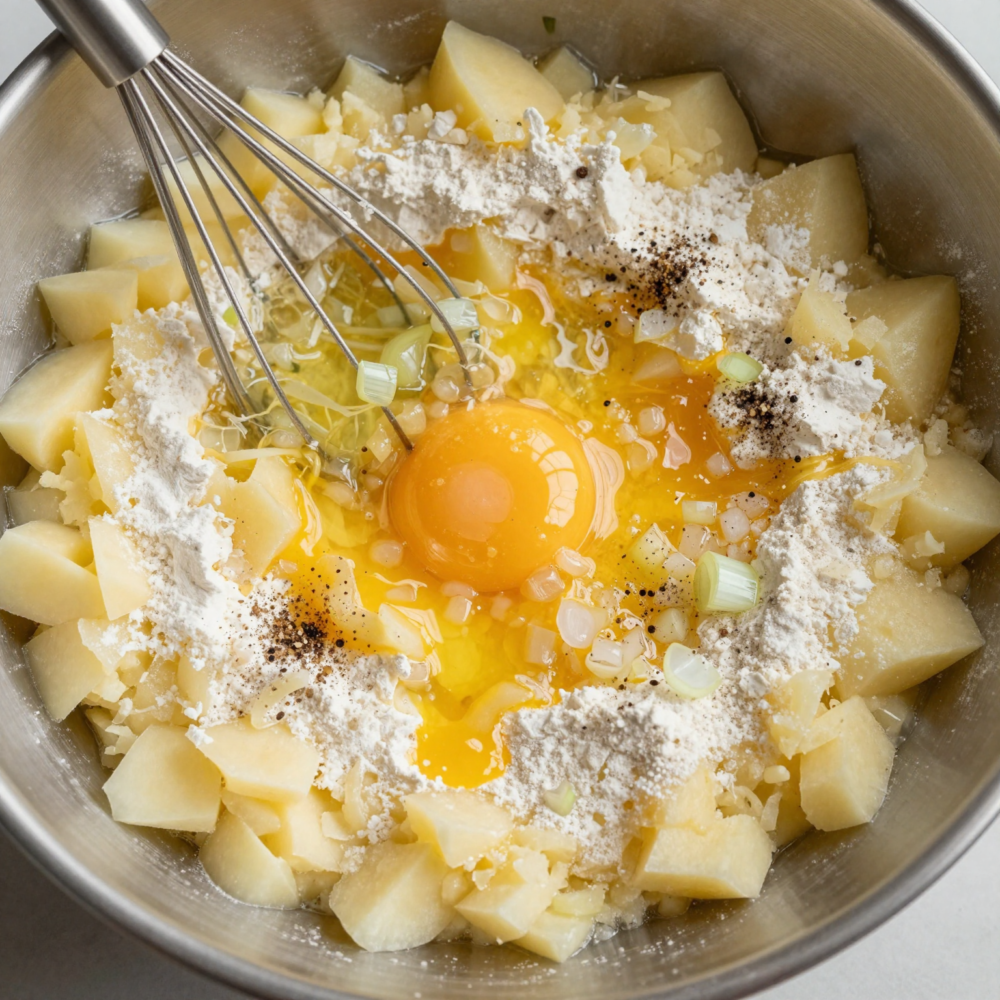
Step 4: Mix in Eggs, Seasonings, and Flour (If Using)
Now I mix the drained potato-onion shreds with the binder and flavor. I add eggs first because they help hold everything together. Then I season with salt and black pepper, and I often add nutmeg because it gives that classic Kartoffelpuffer taste—warm and slightly sweet, not spicy.
Some recipes use flour for structure. If you want sturdier pancakes (especially if your potato mixture is a bit wetter than expected), add flour. If you want gluten-free, you can swap regular flour for gluten-free flour. The key is not adding too much—just enough to help the mixture bind into pancakes.
I stir until it looks cohesive and sticky enough to form patties, but not watery.
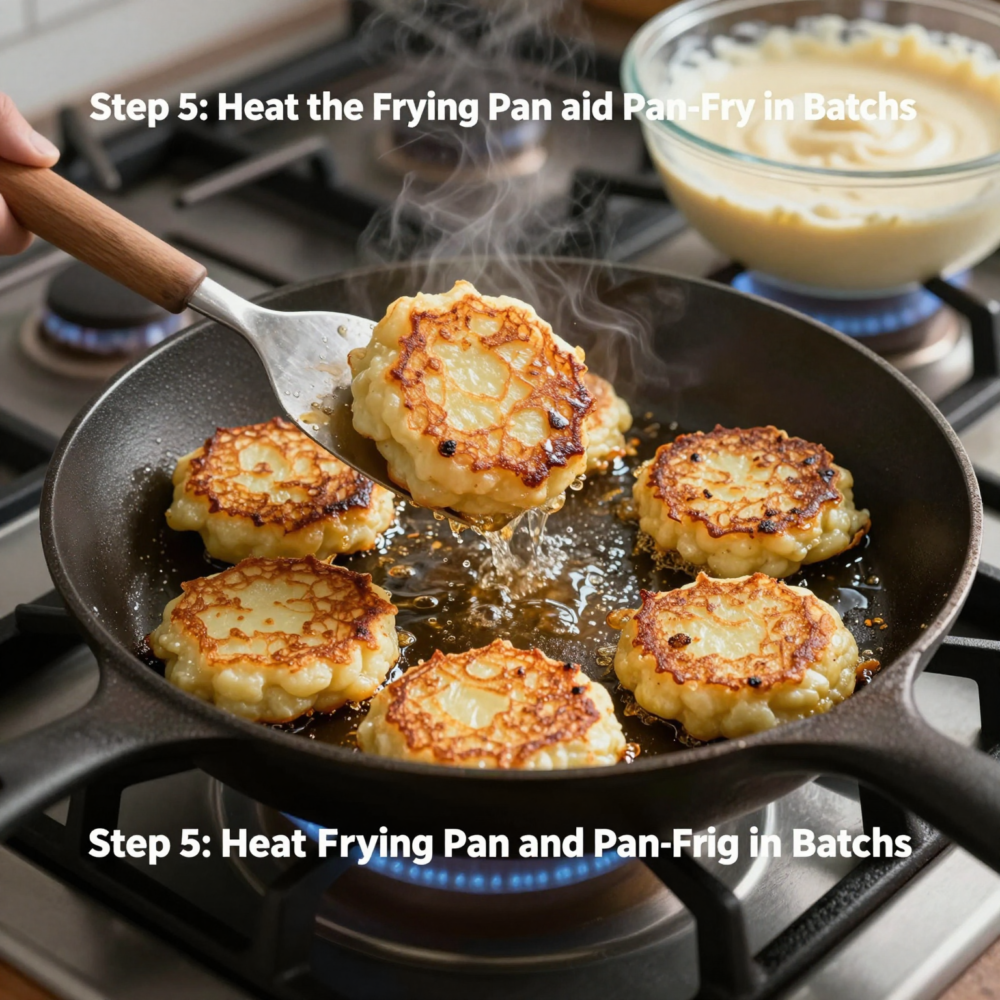
Step 5: Heat the Frying Pan and Pan-Fry in Batches
For crispy results, the pan needs to be hot before the pancakes hit the oil. I heat my frying pan with a good amount of oil (or fat) over medium-high heat. I’m aiming for steady frying—sizzling, but not smoking.
Then I form pancakes using a spoon or by flattening small mounds into round shapes. I cook in batches so the pan doesn’t cool down. Overcrowding is a common mistake because it traps steam, and steam softens the crust.
I fry until golden on the first side, then flip carefully. I usually give them enough time to develop a crisp outer layer before flipping—rushing can cause sticking or breakage.
Oil vs. Bacon Fat (or Lard)
If I want classic “clean” potato flavor, I use oil.
If I want deeper, more traditional German flavor, I use bacon fat or lard.
Both work—the difference is richness and savory depth.
Step 6: Keep Pancakes Crisp While You Finish the Batch
Kartoffelpuffer are best when eaten right away. The crisp outside starts to soften the longer they sit. So I cook all pancakes and serve them immediately.
If I need to pause between batches, I keep the cooked pancakes warm on a rack (not piled on a plate). Using a rack helps air circulate so the bottoms don’t go soggy. If you don’t have a rack, you can still serve right away, but expect some loss in crispness if they cool too much.
Step 7: Serve with Apfelmus (Classic Applesauce)
Here’s where German potato pancakes really shine. The signature pairing is Apfelmus—applesauce—served alongside or spooned right on top. The sweet-tangy fruit cuts through the savory, crisp pancakes and makes each bite feel balanced.
If you’re making your own Apfelmus, a simple approach is apples cooked down until soft, then sweetened (often with honey) and brightened with lemon juice. I like how homemade tastes fresher, but store-bought works perfectly if you’re short on time.
I usually serve Kartoffelpuffer hot with a generous scoop of applesauce so the flavors contrast right away.
Step 8: Try Variations to Make Them Your Own
Once you’ve mastered the base method, it’s fun to tweak flavors and texture. Here are a few variations I like:
Variation 1: Gluten-free Kartoffelpuffer
Use gluten-free flour instead of regular flour. The rest stays the same: grate, drain/squeeze, mix with eggs, season, then fry. Gluten-free versions can be a little more delicate, so I handle them gently and make sure the mixture is well drained.
Variation 2: Spice Adjustments
Nutmeg is common, but you can shift the vibe:
More nutmeg for a classic, warm flavor
A little extra pepper if you like a sharper savory taste
Optional garlic (tiny amount mixed into the batter) if you want a stronger savory punch
Variation 3: Flavor Up the Frying Fat
If you’re using bacon fat or lard, you can experiment with how smoky or rich it is depending on your choice. That small change can make the pancakes feel “restaurant-level” without extra work.
Variation 4: Different Apple Pairings
Instead of plain applesauce, you can serve with spiced applesauce or even a quick fruit topping (if you like). The point is that sweet-savory contrast.
Tips for Best Results
Use floury/starchy potatoes like Yukon Gold or Russet for better crispness and binding.
Squeeze/drain the grated potato-onion mixture thoroughly—this is the crispness secret.
Don’t add too much flour; add enough to bind, not enough to turn pancakes dry.
Fry in batches so the pan stays hot and the pancakes crisp instead of steaming.
Serve right away while they’re crisp. If you must hold them, keep them warm on a rack.
FAQ
Are German potato pancakes the same as latkes?
They’re similar—both are potato-based fried pancakes. Kartoffelpuffer are typically seasoned with German-leaning flavors (often nutmeg) and are commonly served with applesauce (Apfelmus). Latkes are often associated with Jewish cuisine and may use different seasonings and add-ins.
Do I need flour in German potato pancakes?
Not always, but many recipes include it to help with structure. If your mixture is already very dry from squeezing, you might be able to make them with just eggs and seasoning. If you find they fall apart, add flour (or gluten-free flour).
What’s the best way to squeeze the potato mixture?
I squeeze by hand using a clean kitchen towel (or cheesecloth). You can also use a strainer and press with the back of a spoon, but towel-squeezing usually removes more liquid.
Why are my potato pancakes falling apart?
Most often it’s because of too much moisture (not drained enough) or not enough binding (eggs and/or flour). Also, flipping too early can break them—wait until the first side is golden.
Can I make them ahead of time?
They’re best fresh. If you must prep, you can grate potatoes and onion ahead and squeeze/drain closer to cooking. Fully cooked pancakes lose crispness as they sit. If you reheat them, a hot oven or air fryer can help them crisp again.
Can I use pre-shredded potatoes?
I wouldn’t choose them first for the best texture because they can be wetter and uneven. If you do, make sure you squeeze/drain them very well.
Conclusion: Enjoying Kartoffelpuffer at Home
When I make German potato pancakes (Kartoffelpuffer), the process feels simple, but the results are totally satisfying—crisp edges, tender center, and that classic sweet-savory magic with applesauce. The big win comes from three things: grate and squeeze the potato-onion mixture well, use eggs (and flour if needed) to bind, and fry hot without overcrowding the pan. Once you nail those, you can play with variations like bacon fat, nutmeg intensity, and even gluten-free flour. If you try this method once, I’m pretty sure you’ll want to make them again—because they’re the kind of comfort food that always feels special.
Sarah Anderson . J
I’m the mom behind Wise Mom Blogger, where everyday creativity meets real-life motherhood. I share easy DIY crafts, cozy knitting and crochet projects, beginner-friendly sewing ideas, and family-tested recipes—plus quick baking hacks that make homemade feel doable on busy days.