
By a home baker who almost threw away their sourdough starter one too many times.
Let me be honest with you. For the longest time, I thought sourdough English muffins were the kind of thing only professional bakers could pull off — the type of recipe buried in a cookbook you’d flip through at a coffee shop but never actually attempt at home. Then one Sunday morning, standing in my kitchen with a jar of sourdough discard I was about to toss, I decided to try. What came out of that cast iron skillet an hour later absolutely ruined store-bought English muffins for me forever.
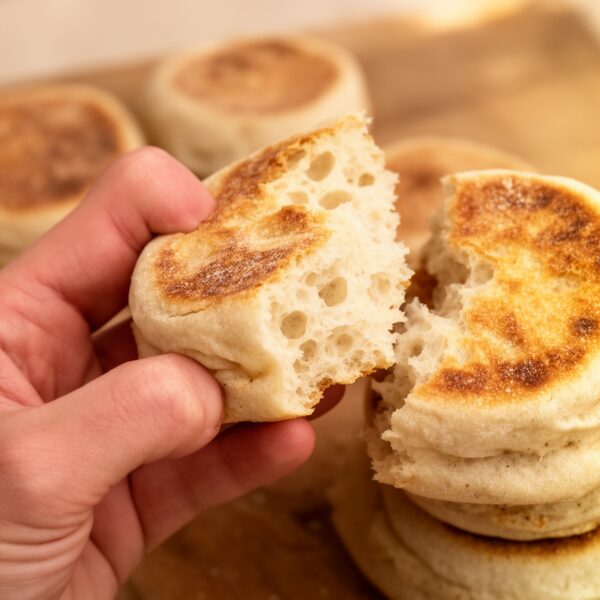
I’m not exaggerating. The tang, the chewy crumb, those glorious golden-brown edges — and when I fork-split one open and watched butter melt into all those nooks and crannies? I actually laughed out loud in my kitchen like a person who had just discovered fire. That’s the kind of moment this recipe gives you.
The best part? You don’t need ring cutters. You don’t need a stand mixer. You don’t even need a fed, active starter if you’re short on time — cold discard from the fridge works perfectly here. This is a true beginner-friendly sourdough project, and I’m going to walk you through every single step.
Why Sourdough Instead of Regular English Muffins?
Here’s the thing about sourdough English muffins that nobody tells you upfront: the long, slow fermentation does most of the work for you. While a regular English muffin recipe has you babysitting yeast and watching rise times, this recipe is mostly about patience. You mix the dough, leave it alone for about 24 hours, and the fermentation develops both the flavor and the open, airy crumb structure you’re chasing. That tang you taste in every bite? That’s real, natural fermentation — not an additive. Plus, you’re finally doing something productive with that discard you’ve been guiltily scraping into the bin every feeding day.
What You’ll Need
This recipe makes 8 large English muffins and uses ingredients you almost certainly already have at home. Here’s what to gather before you start:
🧾 Ingredients
| Ingredient | Amount |
|---|---|
| Bread flour | 500g (approx. 3 cups + 2 Tbsp) |
| Himalayan pink salt (or sea salt) | 2 tsp |
| White sugar or honey | 1 Tbsp |
| Grapeseed oil, vegetable oil, or melted butter | 3 Tbsp |
| Unfed sourdough starter (straight from fridge) | 2 Tbsp |
| Room temperature water | 1¼ cups |
| Fine cornmeal + all-purpose flour (for dusting) | ¼ cup cornmeal + 1 Tbsp flour |
| Oil for pan (optional) | A tiny drizzle |
💡 Note on the starter: Yes, you read that right — unfed, cold discard works here. You don’t need a freshly-fed, bubbling starter for this recipe. That’s part of what makes it so approachable.
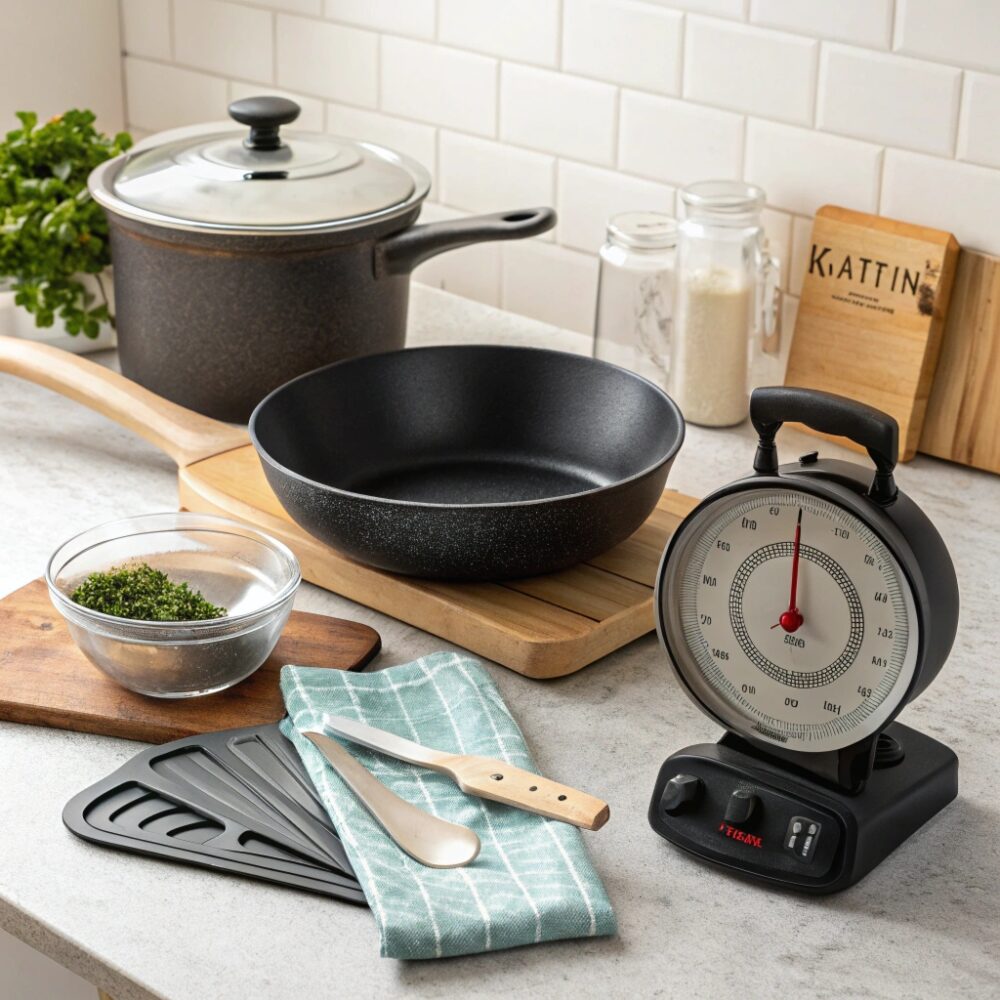
🍳 Equipment
- Large mixing bowl
- Cast iron skillet or any heavy-bottomed pan with a lid (the lid is non-negotiable)
- Spatula
- Kitchen scale (highly recommended for consistent results)
- Tea towel or plastic wrap for covering
No ring cutters, no baking rings, no special tools.
Step-by-Step: Let’s Make the Muffins
Step 1 — Mix the Dough (Morning of Day 1 — about 10 minutes)
Start by adding your water, oil, sugar (or honey), and sourdough starter to your large bowl. Give those wet ingredients a good stir to combine them before you even think about adding the flour. Trust me, it makes things incorporate so much more smoothly. Then add your bread flour and salt, and mix until everything comes together into a shaggy dough.
Here’s a beginner tip I wish someone had told me early on: it’s okay if it looks lumpy and bumpy at this point. Don’t panic. Don’t add more flour. Just cover the bowl with a tea towel and let it rest for 30–60 minutes. The gluten will develop on its own, and when you come back, you’ll find a noticeably smoother dough waiting for you. No kneading required.
Step 2 — The Long, Hands-Off Ferment (~24 hours)
Once your dough has rested and smoothed out, cover the bowl and leave it at room temperature for about 24 hours. This is the bulk fermentation, and it’s where this recipe earns its keep.
During this time, the natural wild yeast and bacteria in your starter are slowly working through the dough, building flavor, developing structure, and creating the internal gas pockets that will eventually become your nooks and crannies. Your job during this entire stage? Literally nothing. Go live your life. the long fermentation time is what allows you to put minimal effort into this recipe.
One important caveat: If your kitchen runs warm — say, above 70°F (21°C) — put the dough in the refrigerator overnight to slow things down. An over-fermented dough will be slack, sticky, and won’t hold its shape when you try to cut it.
Step 3 — Shape the Muffins (Evening of Day 1 or Morning of Day 2)
By the time your fermentation is done, the dough should look visibly aerated — slightly puffed, with a few bubbles. Prepare your work surface by dusting it with the cornmeal and flour mixture. Cornmeal is key here because it creates that signature slightly crunchy, rustic exterior on the muffin’s bottom and top.
Gently turn the dough out and divide it into 8 roughly equal pieces. Don’t stress about perfect portions — a little variety just means someone gets a slightly bigger muffin, and someone always volunteers for that role.
To shape each piece, fold the sides of the dough piece underneath itself, then place it seam-side down and drag it across the work surface while applying gentle downward pressure. Rotate it 90 degrees and drag again. Repeat this two or three times until you have a tight, smooth ball. This technique builds surface tension and gives you that beautiful round shape — no ring cutter needed. Place each ball on a cornmeal-dusted tray and sprinkle more cornmeal on top.
Step 4 — The Final Proof (Overnight or 1–2 hours)
Cover your shaped muffins with a tea towel and let them proof at room temperature (ideally 66–68°F / 19–20°C) overnight, or for at least 1–2 hours if you’re doing a same-day version. By the time they’re ready to cook, they should look noticeably puffy and soft — they should jiggle slightly when you nudge the tray.
Resist the temptation to cook them early. Under-proofed muffins are dense inside. Wait for the puff.
Step 5 — The Griddle Cook (About 10 minutes)
Here’s where it all comes together. Heat your cast iron skillet or griddle over medium-low heat for a few minutes before adding the muffins. If you want, add a tiny drizzle of oil — but honestly, a dry pan works just as well and won’t affect the texture.
Carefully place 3–4 muffins in the pan with space between them, then put the lid on. This is the secret to cooking them through without burning the outside. The steam created under the lid gently cooks the interior while the bottom develops that iconic golden crust. Cook for about 4–5 minutes per side. When you flip them, they should be a deep, toasty brown. Repeat with the remaining muffins.
If you want to be precise, you’re looking for an internal temperature of around 200°F (93°C). We suggests finishing them in a 350°F oven for 10 minutes to guarantee a fully cooked interior — a great trick if you’re cooking for a crowd.
Step 6 — The Fork Split (Do Not Skip This Step)
Let the muffins cool for at least 10 minutes before you open them. Now here’s the move that changes everything:
Do not use a knife.
Instead, take a fork and poke it all the way around the equator of the muffin — like you’re perforating a line around the middle. Then gently pull the two halves apart with your hands. That tearing action creates the irregular, craggy surface of peaks and valleys that traps butter, jam, honey — anything you put on them. A knife gives you a smooth, flat, boring cut. A fork split gives you nooks and crannies.
📺 Watch & Learn: Video Resources
Pro Tips for Maximum Nooks and Crannies
Getting that iconic texture isn’t magic — it’s a few small decisions stacked together:
- Be gentle with proofed dough. Every time you roughly handle it, you’re deflating the gas bubbles that become your texture. Treat it like something precious.
- Press to ½ inch thickness if you’re using the cut-and-shape method rather than shaping balls — this keeps the crumb open.
- Low and slow heat is everything. Cranking the heat to speed things up will burn the outside before the inside is cooked. Resist.
- Always cornmeal both sides — top and bottom. It’s not just anti-stick; it’s flavor and texture.
- Wait for the puff before cooking. Patience during the proof is directly proportional to the number of nooks you’ll get.
Storing, Freezing & Serving
Let your muffins cool completely before storing. They’ll keep in an airtight bag or container at room temperature for 3–4 days, or you can freeze them for up to 3 months. They go straight from freezer to toaster — no need to thaw.
For serving, I love a simple schmear of honey butter: just whip two sticks of softened butter with ¼ cup of honey until fluffy. Watch it disappear into those nooks and you’ll understand why I made a batch every week for two months straight. Egg sandwiches, avocado, smoked salmon, plain butter, jam — there’s almost nothing these muffins don’t make better.
If you’re a visual learner (and honestly, most of us are when it comes to baking), these three videos are fantastic companions to this recipe:
You’ve Got This
Sourdough baking has a reputation for being intimidating, and I genuinely think sourdough English muffins are the recipe that should shatter that reputation for good. There’s no scoring, no Dutch oven, no shaping anxiety. Just dough, a pan, a lid, and a fork. The 24-hour fermentation timeline sounds long, but your actual hands-on time is probably under 30 minutes total.
The first batch you make might not be perfect — mine certainly weren’t. But they’ll still be better than anything from a supermarket shelf, and by batch two or three, you’ll have completely ruined store-bought for yourself too. That’s a promise.
Now go dig that discard out of the fridge. You’ve got English muffins to make. 🍞

Sarah Anderson . J
I’m the mom behind Wise Mom Blogger, where everyday creativity meets real-life motherhood. I share easy DIY crafts, cozy knitting and crochet projects, beginner-friendly sewing ideas, and family-tested recipes—plus quick baking hacks that make homemade feel doable on busy days.


Is there any way to print this recipe? I don’t see a print button and my hands have arthritis for so much copying!
YES IVE ADDED IT AT THE TOP RIGHT