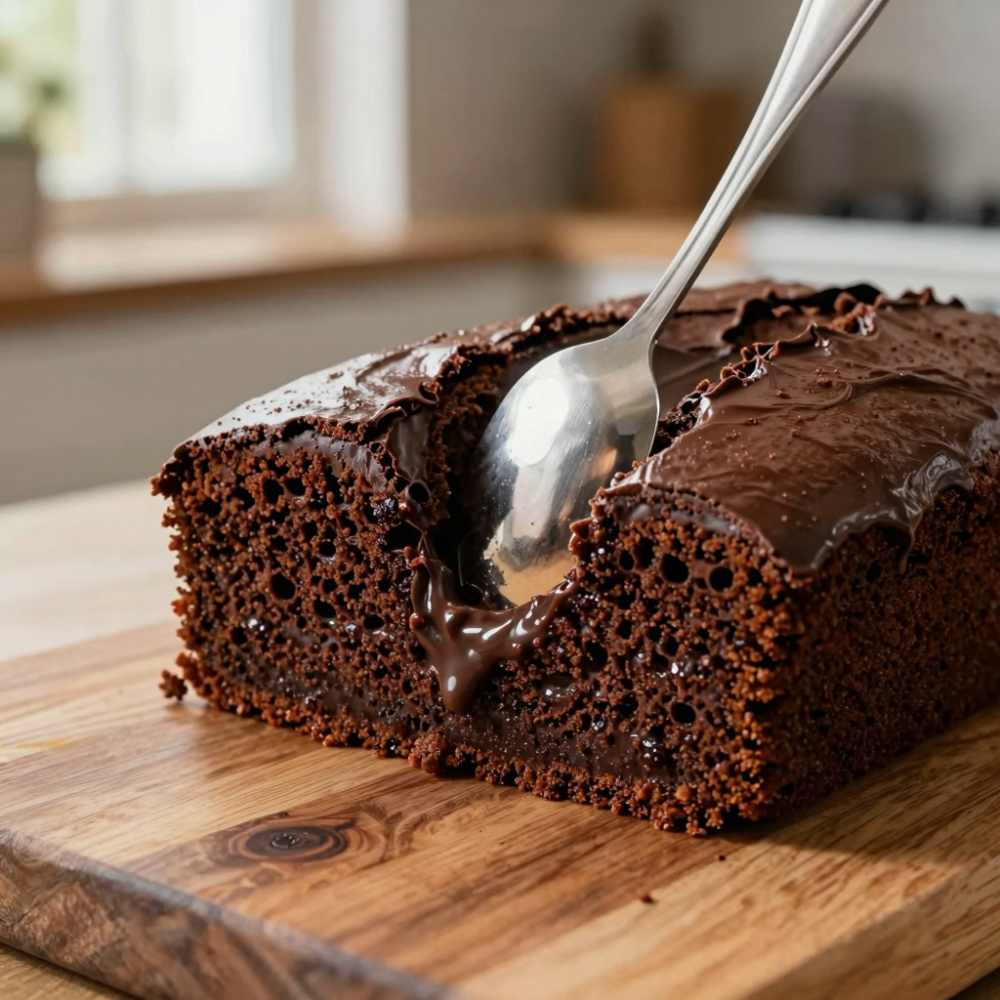
Homemade moist chocolate cake is the kind of dessert that disappears fast because every bite feels soft, rich, and tender.
It sounds simple, but getting that “not dry, not crumbly” texture takes a few smart moves with leaveners, fat, eggs, cocoa, and baking prep.
Good news: the same set of techniques shows up again and again in reliable chocolate cake recipes, and you can use them as a blueprint every time.
According to several well-tested recipes (including Allrecipes and other top community and blogger-style methods), the biggest wins come from getting your leavening balanced, choosing the right cocoa, and preventing overbaking with smart pan prep.
If you want a cake that stays moist for days, I’ll show you exactly how I build that moisture “engine” and how I troubleshoot when it goes wrong.
Key Takeaways
“Moist” usually means a tender crumb, not a gooey center, and it starts with the right dry mix plus the right fat.
Use unsweetened cocoa powder, and Dutch-process cocoa is a great option if you want deeper chocolate flavor (just avoid cocoa mix).
Baking powder helps with lightness and rise, while baking soda improves rise and texture; salt balances the chocolate so it tastes richer.
Vegetable oil tends to keep cake soft and moist longer than butter, and eggs help bind and emulsify the batter.
Grease the pans and line the bottoms with parchment; optional damp cake strips can help bake more evenly and reduce dry edges.
Doneness comes from time plus cues (springy center and toothpick crumbs), and overbaking is the fastest route to a dry cake.
Quick Answer
To make a homemade moist chocolate cake, I focus on these core levers: (1) whisk dry ingredients thoroughly (flour, sugars, unsweetened cocoa, baking powder, baking soda, salt, optional cornstarch), (2) use a moistening fat like vegetable oil plus eggs and milk for a smooth batter, (3) prep pans with grease and parchment to avoid overbaked edges, and (4) bake to proper doneness so the cake doesn’t dry out.
What You Need
Item
Purpose
Notes
Unsweetened cocoa powder (Dutch-process if desired)
Deep chocolate flavor and structure
Do not use cocoa mix
All-purpose flour
Gives the cake body
Measure accurately for best crumb
Granulated sugar + brown sugar
Sweetness plus moisture and flavor
Brown sugar adds extra richness
Baking powder
Light rise and fluffy texture
Helps keep crumb tender
Baking soda
Better rise and texture
Works with other ingredients to improve softness
Salt
Balances sweetness and boosts chocolate
Use a small but not “optional” amount
Optional cornstarch
Extra tenderness and moisture support
Common in very moist versions
Eggs
Binding and emulsifying
Two eggs is common for structure
Milk
Adds moisture and helps smooth batter
Whole or your preferred milk works
Vanilla extract
Rounds and enhances chocolate flavor
Don’t skip for “finished” flavor
Vegetable oil (or other neutral oil)
Helps keep cake soft longer
Often beats butter for sustained moistness
Optional espresso powder
Boosts chocolate taste
Doesn’t make it taste like coffee
Parchment paper
Protects cake bottom and texture
Line the bottoms of pans
Grease (butter spray, oil, or butter)
Prevents sticking
Grease inside and sides evenly
Optional damp cake strips
More even baking
Used around pans to reduce dry edges
Step 1: Know what “moist” really means
When I say “moist,” I mean the cake has a tender crumb that feels soft when you press it lightly, and it doesn’t turn dry or dusty after cooling. A cake can look dark and chocolatey but still eat dry if it’s baked too long or if the batter is too thick or too “tight.”
What a moist crumb looks like
The center springs back when lightly touched
The toothpick test comes out with a few moist crumbs, not dry streaks
The cake slices cleanly and doesn’t crumble like a brownie that baked too long
What causes “not moist” chocolate cake (fast)
Overbaking because ovens run hot or pans bake unevenly
Using cocoa mix instead of unsweetened cocoa powder
Skipping leavening balance or mixing unevenly
Step 2: Choose the right cocoa powder (this matters a lot)
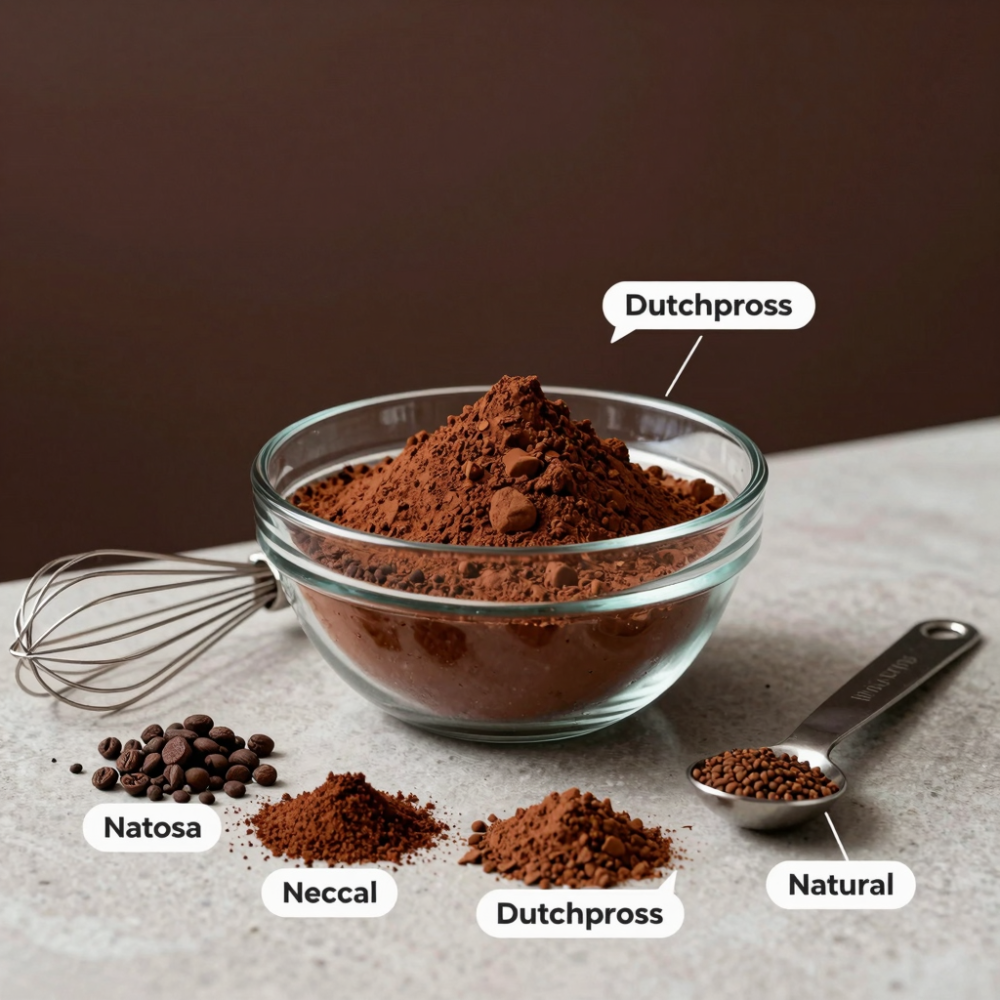
For moist chocolate cake, I always start with unsweetened cocoa powder. Cocoa mix usually contains extra sweeteners and sometimes additives, and it can change both flavor and texture.
My cocoa choice strategy
Use unsweetened cocoa powder for consistent results.
If you want a stronger, deeper chocolate flavor, consider Dutch-process cocoa (a common choice in highly rated “best moist chocolate cake” style recipes).
Easy cocoa mistake to avoid
Don’t grab a can labeled “cocoa mix.” It may say “chocolate,” but it’s not the same as pure cocoa powder.
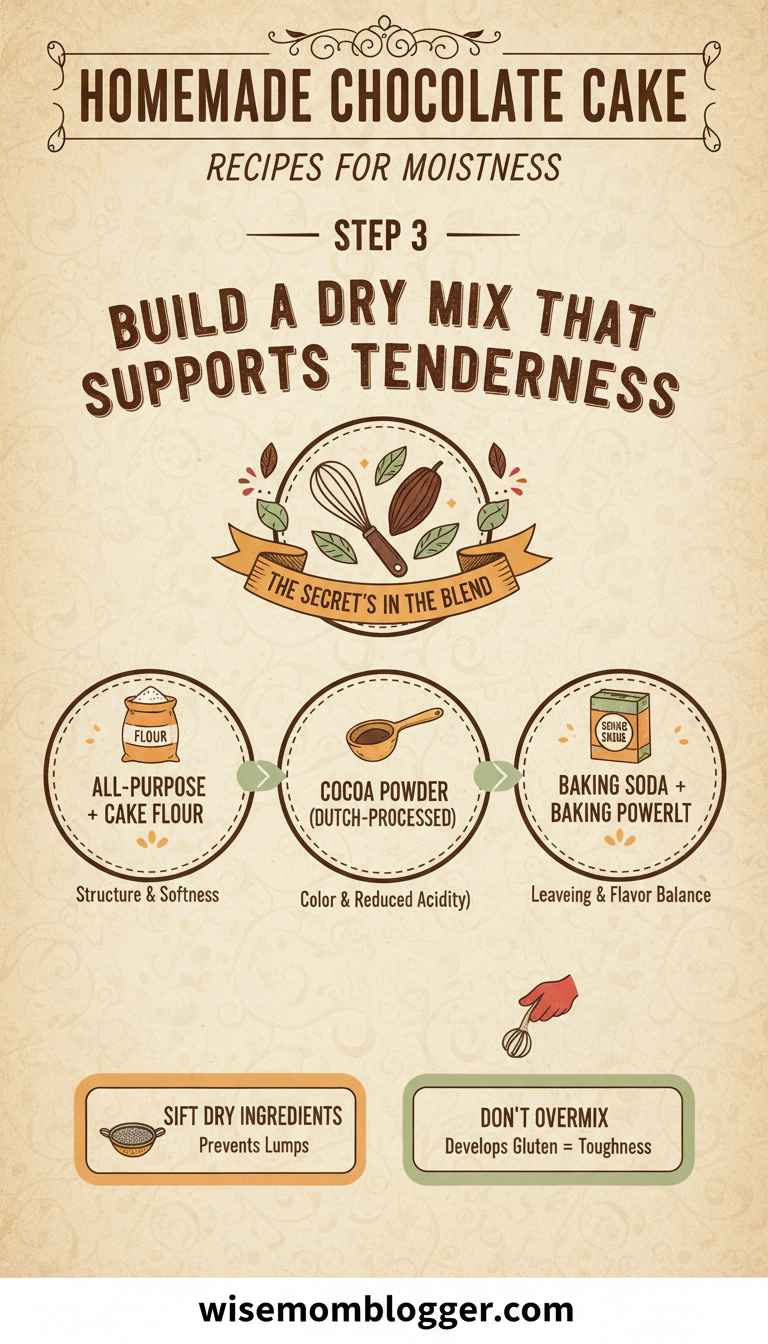
Step 3: Build a dry mix that supports tenderness
This is the part I treat like a “foundation pour.” If the dry ingredients aren’t evenly whisked, you can end up with uneven rise, weird pockets of leavening flavor, or a cake that bakes dry in spots.
Dry mix checklist I use
Flour
Granulated sugar plus brown sugar
Cocoa powder
Baking powder and baking soda
Salt
Optional cornstarch for extra tenderness
Optional espresso powder for deeper chocolate flavor
Why whisking matters
Multiple reliable chocolate cake recipes emphasize mixing the dry ingredients well before adding wet ingredients. When baking powder, baking soda, salt, and cocoa are evenly distributed, the batter rises more evenly and the final crumb is more tender.
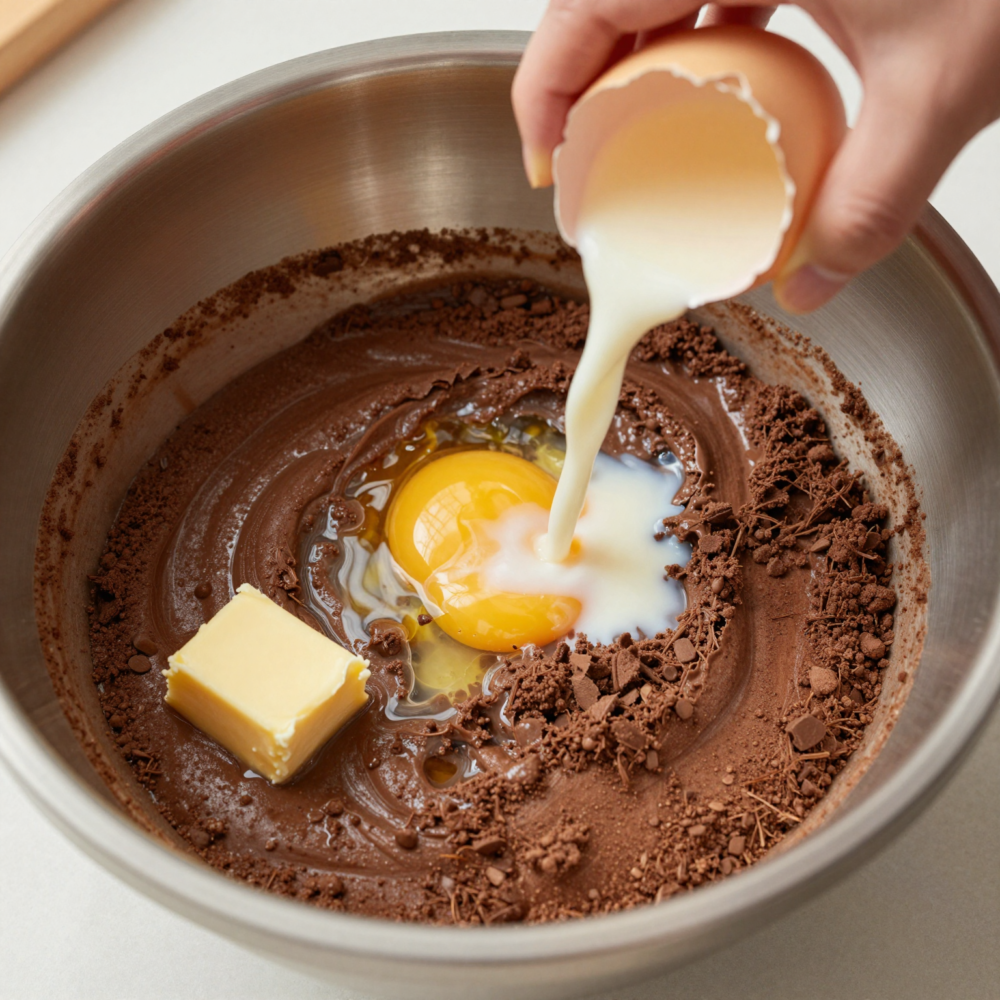
Step 4: Use the moistness engine (fat, eggs, and milk)
If I had to pick the single biggest “moisture lever,” it would be the fat choice plus eggs and milk.
Vegetable oil vs butter (my take)
Many tested moist chocolate cake approaches use vegetable oil because it keeps the cake soft and moist longer. Butter can taste amazing, but oil often gives that “stays tender” effect for a longer window.
Eggs do more than you think
Eggs help:
Bind the batter so it holds together
Support structure
Emulsify the wet ingredients so the batter bakes smoothly
Milk makes batter pourable and cake tender
Milk adds moisture and helps you get a smooth, pourable batter, which bakes into a more even crumb.
Flavor finish
Vanilla extract rounds out chocolate flavor so it tastes richer, not just “dark.”
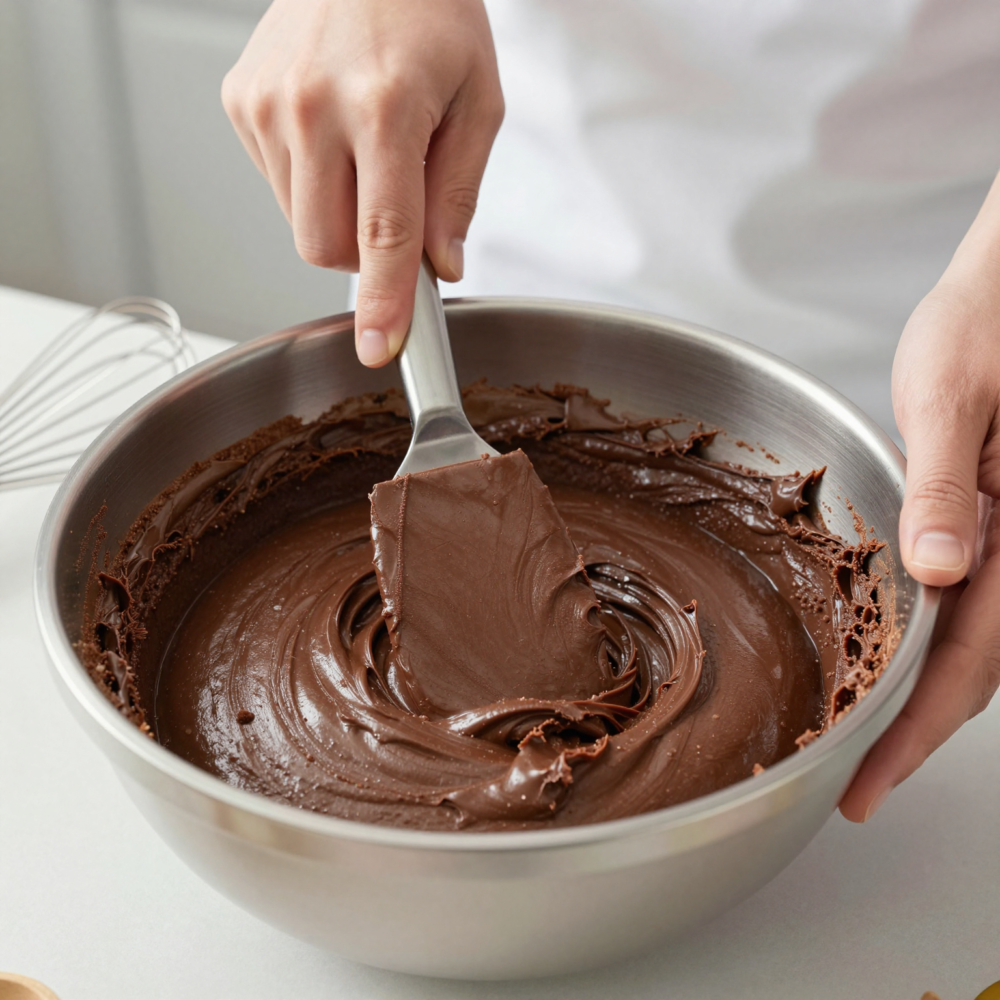
Step 5: Mix batter the right way (tender, not tough)
This is where I slow down. Overmixing after flour goes in can make cake tougher, while under-mixing can leave lumps or uneven leavening.
My mixing method
Whisk dry ingredients until uniform and lump-free.
Whisk wet ingredients until smooth (eggs, milk, vanilla, oil).
Pour wet into dry.
Mix just until combined and batter looks smooth.
Optional booster
I like adding espresso powder (a small amount) for deeper chocolate flavor. It doesn’t taste like coffee; it makes the chocolate taste more chocolatey.
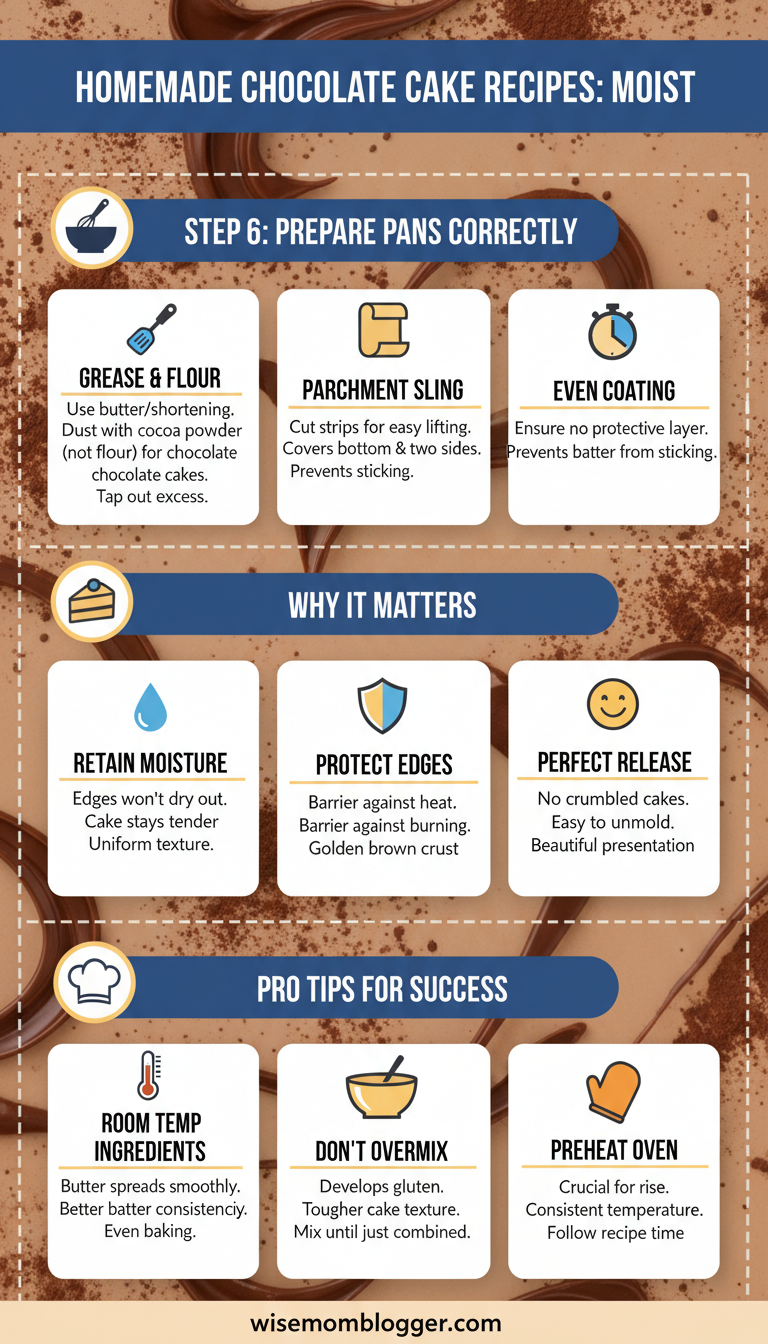
Step 6: Prepare pans correctly so you don’t dry out the edges
You can do everything right and still end up with a dry outer layer. Pan prep helps prevent sticking and can promote more even baking.
My pan prep routine
Grease the inside of the pan thoroughly
Line the bottom with parchment paper
If you have them, wrap the pans with damp cake strips to bake more evenly
Why this reduces dryness
Even baking helps prevent the edges from overbaking while the center finishes. That’s a big deal for moist layers, especially for multi-layer cakes.
Optional “pan release” shortcut
Some recipes suggest homemade pan release (often called cake goop) to improve release without damaging the crumb.
Step 7: Bake for moist results (temperature, timing, doneness cues)
Even great batter can turn dry if you bake too long. I treat “doneness” like a skill, not a clock.
Temperature baseline
A common baseline in from-scratch chocolate cake recipes is 350°F (175°C). Preheat fully so the batter hits steady heat.
Pan size matters
Use the pan sizes your recipe is designed for (for example, many moist chocolate cakes are built around 8-inch rounds). If you change pan sizes, your bake time will change too.
Doneness cues I trust
The center should look set and feel springy when gently pressed.
A toothpick test should come out mostly clean with a few moist crumbs.
If it comes out completely dry, I treat that as a sign to start watching earlier next time.
Don’t overbake
Overbaking is the fastest way to turn a moist cake into a dry cake, even if the recipe is perfect.
Step 8: Cool and serve correctly to lock in moisture
Moist cake is partly chemistry and partly timing. I want the cake to cool without steaming itself dry or collapsing moisture.
My cooling steps
Let cakes cool in the pan briefly so they stabilize.
Turn out and finish cooling on a rack.
Layering and frosting timing
Always frost only when the cake is cool (or close to room temperature).
Frosting warm layers can cause condensation, which can mess with texture and make layers seem gummy.
Best serving temperature
Room temperature often gives the softest crumb and the best chocolate flavor.
Tips
Use both sugars if your recipe calls for it: granulated for sweetness and structure, brown sugar for deeper flavor and extra moisture.
Measure cocoa carefully. Too much cocoa can dry the crumb; too little can make flavor dull.
Whisk dry ingredients well to distribute cocoa and leaveners.
Mix wet and dry gently after flour is added. Stop as soon as the batter looks uniform.
Start checking doneness early. Ovens vary a lot.
If your cakes tend to bake unevenly, parchment plus optional damp cake strips can make a noticeable difference.
Store smarter: once cooled, cover well to prevent drying. Moist chocolate cake usually tastes even better the next day.
Troubleshooting: Why Your Cake Turns Dry
If your cake is coming out dry, I use a quick checklist to find the likely cause.
Problem: Cake is dry even though it looks done
You likely overbaked. Next time, check earlier and remove as soon as the center is springy.
Your oven might run hot. Consider using an oven thermometer.
Problem: Cake has uneven texture or dry pockets
Dry ingredients may not have been whisked evenly.
Batter may have been lumpy or mixed unevenly after flour was added.
Problem: Cake tastes “off” or chocolate flavor seems weak
You may be using cocoa mix instead of unsweetened cocoa powder.
Your cocoa might be too old or has been stored poorly; cocoa quality affects flavor.
Problem: Cake is crumbly or doesn’t feel tender
Too little fat or wrong fat substitution can change moisture.
Too much mixing after adding flour can make the crumb tougher.
Problem: Edges are dry but the center is okay
Pan baking may be uneven.
Try parchment plus greased pans and consider damp cake strips for more even heat.
Recipe Blueprint (Template You Can Follow)
Use this as your go-to structure whenever you want a homemade moist chocolate cake.
Dry mix (whisk together)
Flour
Granulated sugar
Brown sugar
Unsweetened cocoa powder
Baking powder
Baking soda
Salt
Optional cornstarch
Optional espresso powder
Wet mix (whisk together)
Eggs
Milk
Vanilla extract
Vegetable oil (or your chosen moistening fat)
Combine
Pour wet into dry.
Mix until smooth and combined, with no big lumps.
Bake
Bake at a consistent baseline temperature like 350°F (175°C) (based on common tested recipes).
Bake until the center is springy and the toothpick shows moist crumbs.
Cool properly, then frost or serve.
Latest Updates or ## 2026 Trends
In 2026, I’m noticing a continued shift toward “pro-style home baking” where people focus on fewer but smarter levers: better ingredient quality, more reliable cocoa choice, and less overbaking through improved pan prep. A lot of bakers also keep leaning into oil-based moisture and emulsified batter because it helps cakes stay soft longer. Another trend I see is more home cooks adopting damp cake strips and more careful parchment lining to get even layers without dry edges. If you want one modern upgrade, I’d pick unsweetened cocoa plus careful pan prep first, then fine-tune bake time with doneness cues.
FAQ
What makes chocolate cake moist instead of dry?
Moist cake comes from the right balance of leavening, the right fat for softness, proper eggs and milk for a smooth batter, and avoiding overbaking. Pan prep also helps prevent dry edges.
Can I use butter instead of vegetable oil?
You can, but you might not get the same “stays soft longer” result. Vegetable oil is a common choice in moist cake recipes because it keeps texture tender for longer.
What cocoa should I use for moist chocolate cake?
Use unsweetened cocoa powder. If you want deeper flavor, Dutch-process cocoa is a popular option. Avoid cocoa mix.
Why does my cake dry out even if I didn’t overbake it “by much”?
Drying can happen if the cake bakes slightly too long or if it cools uncovered. Also, oven hotspots can cause edges to dry first, which you may only notice after slicing.
Should I cool the cake before frosting?
Yes. I always frost after cooling so the crumb stays intact and the frosting doesn’t melt in a way that changes texture.
How can I make my cake taste more chocolatey?
I recommend using high-quality unsweetened cocoa and adding a small amount of espresso powder for deeper chocolate flavor. Vanilla also helps the flavor taste more rounded.
Conclusion
If you want homemade chocolate cake recipes moist, I’d focus on the “moisture engine” rather than just hoping for the best. Choose unsweetened cocoa powder (Dutch-process if you want extra depth), build a well-whisked dry mix with the right leaveners and salt, and use moistening fat plus eggs and milk for a smooth batter. Then protect your cake from drying out by preparing pans correctly and baking to true doneness cues, not just a time guess. Once it’s cooled, treat it gently and frost at the right temperature so the tender crumb stays tender.
References
Allrecipes. (n.d.). One Bowl Chocolate Cake Recipe. https://www.allrecipes.com/recipe/17981/one-bowl-chocolate-cake-iii/
I’m the mom behind Wise Mom Blogger, where everyday creativity meets real-life motherhood. I share easy DIY crafts, cozy knitting and crochet projects, beginner-friendly sewing ideas, and family-tested recipes—plus quick baking hacks that make homemade feel doable on busy days.