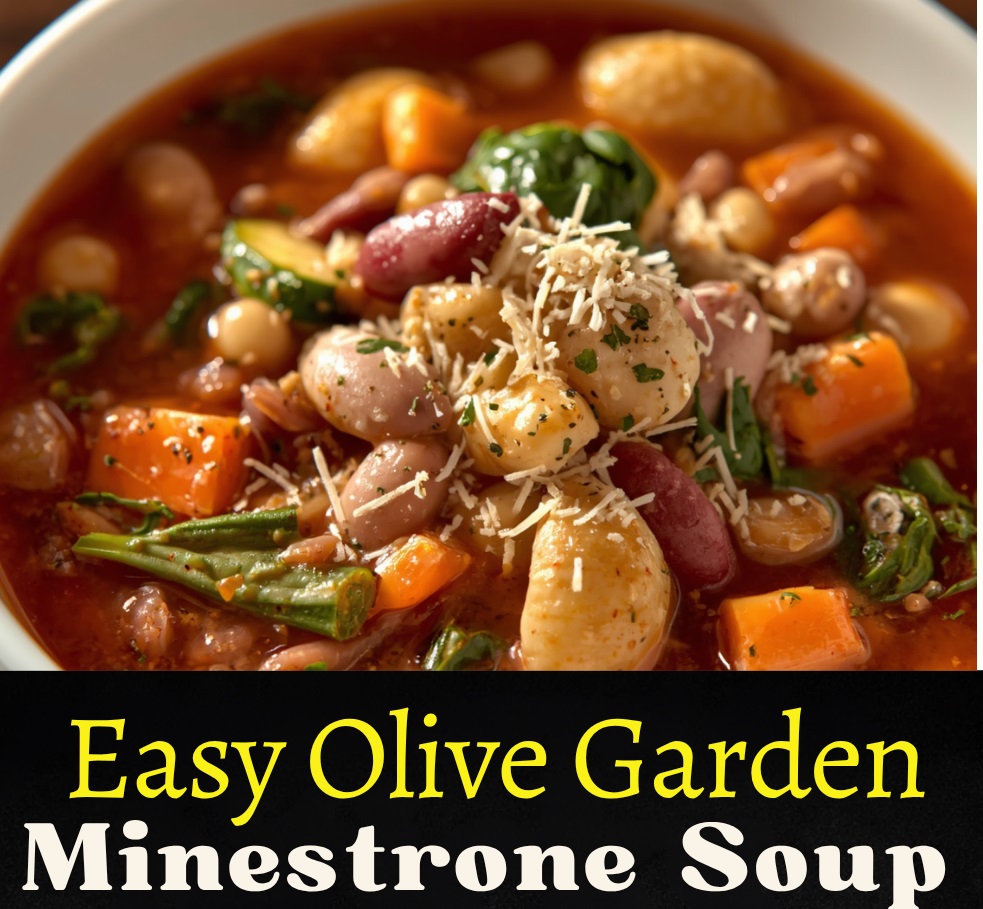
This Olive Garden-style minestrone soup is cozy, hearty, and packed with real comfort. One spoonful and you’ll get that warm, tomato-rich bowl feel—right at home. What I love most is how it brings a “restaurant thick” texture using beans, lots of vegetables, and pasta in a rich tomato broth. It’s also flexible, so I can swap ingredients based on what I have without ruining the vibe. It’s perfect for busy weeknights, meal prep, or when you want something filling that still tastes fresh. If you follow my steps and timing tips, you’ll get tender veggies, creamy beans, and pasta that stays in great shape.
Key Takeaways
- Olive Garden-style minestrone is built on a rich tomato broth, hearty beans, and pasta plus lots of vegetables.
- A typical “copycat” ingredient vibe includes a mix like cannellini and kidney beans, along with vegetables such as zucchini, carrots, celery, and spinach.
- Timing matters: you want pasta cooked separately or added late so it doesn’t turn mushy.
- Minestrone is highly adaptable—swap vegetables freely and keep the overall structure (tomato + beans + veg + pasta).
- It can be made vegan by using egg-free noodles (or rice) and a vegetable-based broth.
Quick Answer
To make an Olive Garden-inspired minestrone soup, I sauté aromatics (onion, celery, garlic), soften a big mix of vegetables (carrots, zucchini, green beans, etc.), then simmer them in a tomato-based broth with beans until tender. Finally, I add pasta near the end (or cook it separately) so it stays al dente, then finish with optional leafy greens like spinach.
What You Need
| Item | Purpose | Notes |
|---|---|---|
| Olive oil (or olive oil spray) | Sauté aromatics and vegetables | Helps build the flavor base |
| Onion, celery, garlic | Aromatics for a deep savory start | Classic Olive Garden-style foundation |
| Carrots | Adds sweetness and hearty texture | Dice small for even cooking |
| Zucchini | Brings freshness and tender bite | Add once veggies are halfway cooked |
| Green beans (optional) | Adds extra “vegetable crunch” feel | Cut into bite-size pieces |
| Tomatoes (crushed or diced) and tomato sauce/paste | Builds the rich tomato broth | Tomato-rich base is key |
| Vegetable broth (or chicken broth) | Forms the soup body | Vegan option uses vegetable broth |
| Cannellini beans + kidney beans | Creamy + hearty protein and thickness | Rinse if using canned |
| Italian seasoning (or oregano/basil mix) | Season the tomato broth | Use to match that Italian taste |
| Dried pasta (small pasta shapes) | Makes it hearty and “copycat” | Add late so it doesn’t get mushy |
| Spinach (optional) | Adds color and fresh greens | Stir in near the end |
| Salt + black pepper | Season and balance flavor | Taste and adjust throughout |
Step 1: Get Your Ingredients Ready
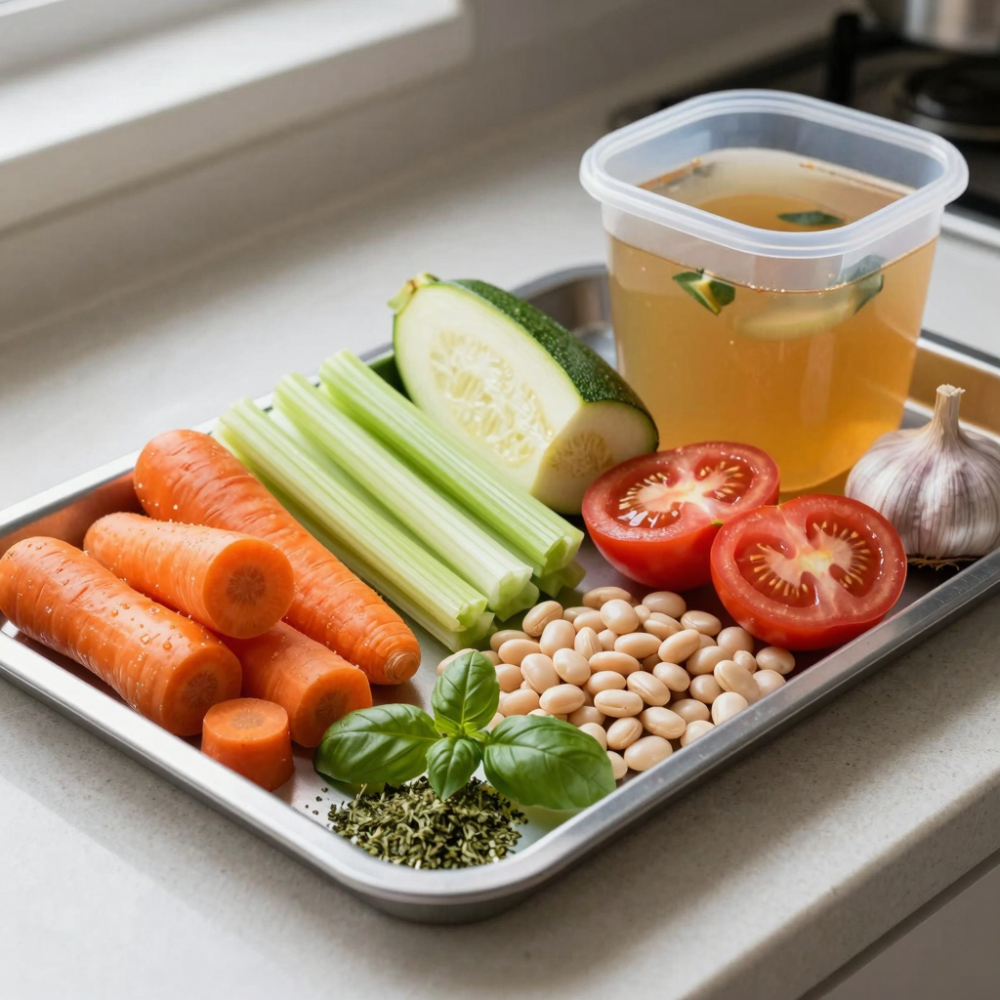
I like to start by prepping everything before I turn on the heat. Minestone-style soup moves fast once it starts simmering, and chopping first makes cooking way less stressful. I dice the onion and celery, mince the garlic, and cut carrots (and zucchini/green beans if I’m using them) into bite-size pieces. If I’m using canned beans, I rinse them quickly so the soup tastes cleaner and less “canned.”
Quick note: I choose a “big vegetable” approach because that’s a huge part of the Olive Garden-style feel—so I aim for a mix, not just one or two vegetables.
Step 2: Build the Flavor Base (Aromatics First)
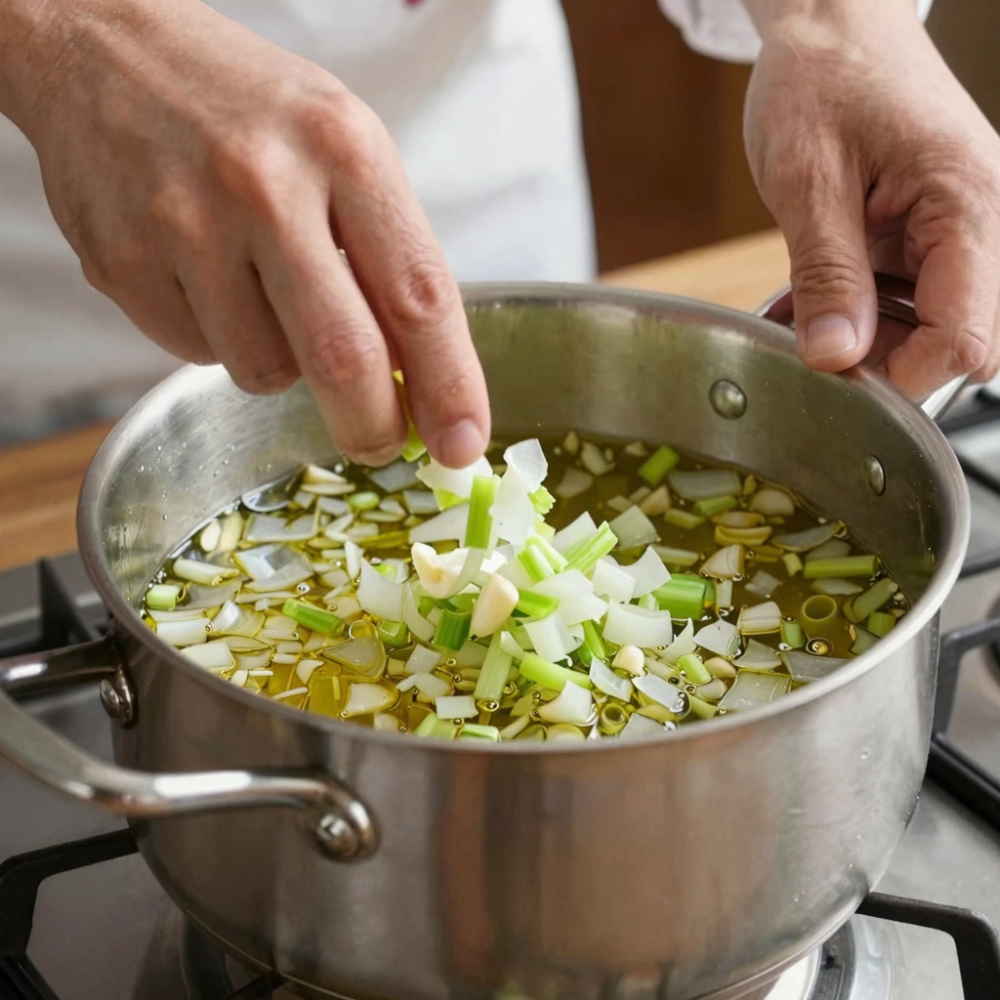
In a large pot, I heat olive oil over medium heat. Then I sauté onion and celery until they soften and start smelling sweet and savory. After that, I add garlic and cook for about 30–60 seconds—just until fragrant. This step is where the soup gets that deep, restaurant-like flavor instead of tasting like “just tomatoes and beans.”
I keep the heat moderate so the garlic doesn’t burn (burnt garlic can turn bitter fast).
Step 3: Soften the Vegetables to Develop Texture
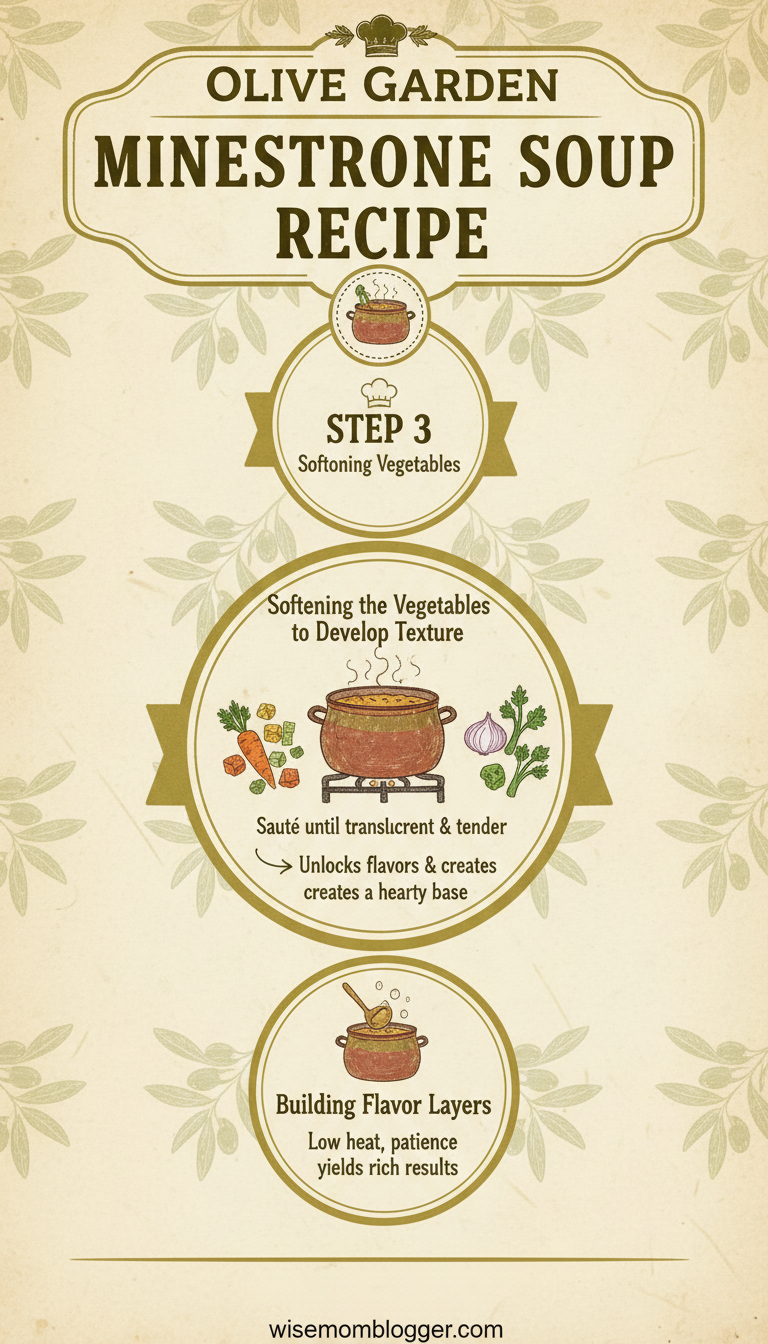
Next, I add carrots and any “firm” vegetables first (like green beans if I’m using them). I stir everything so the vegetables get coated in that flavorful oil and tomato-adjacent goodness. After a few minutes, I add zucchini and any other quick-cooking veggies. Zucchini doesn’t need to cook forever, so I add it when the other vegetables are already on their way to tender.
By the time I’m done, the pot should smell amazing—like warm Italian comfort.
Step 4: Add Beans + Tomato Broth and Simmer
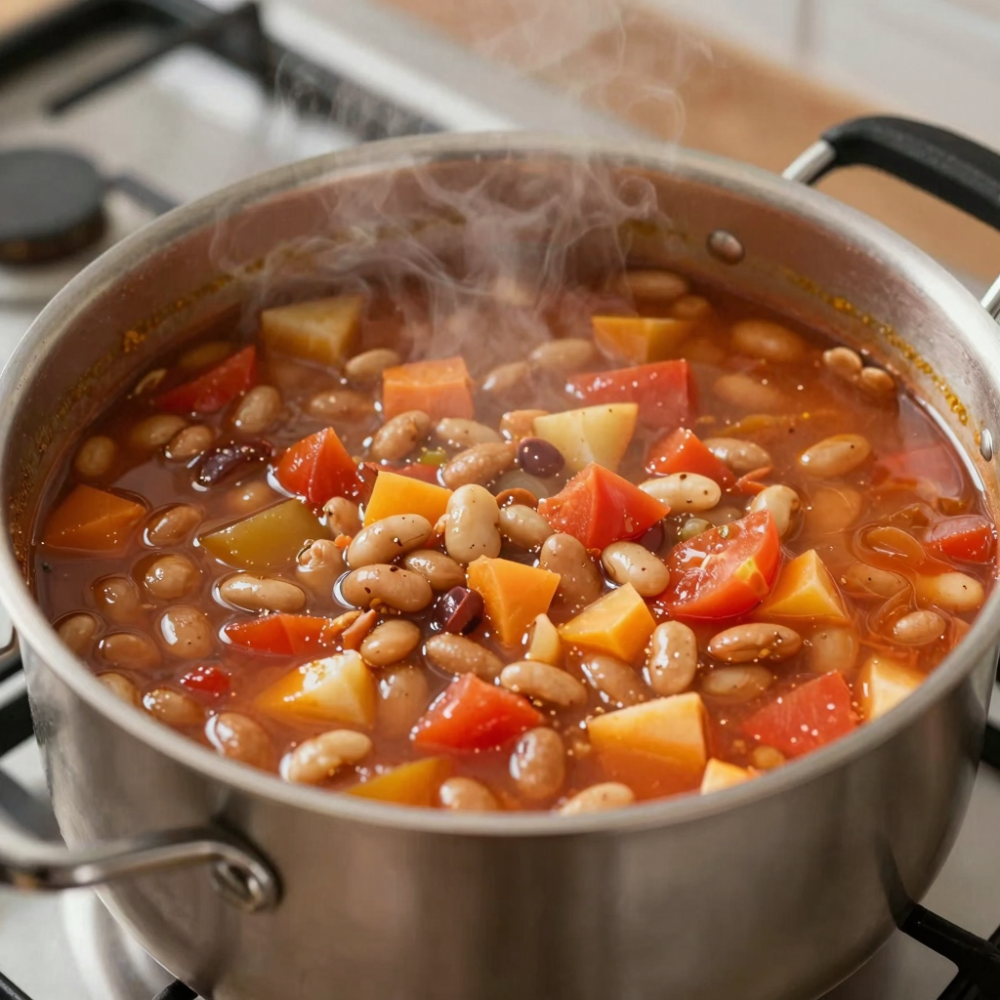
Now it’s time for the “main character” ingredients: beans and tomato broth. I stir in crushed tomatoes (and/or tomato sauce), then add broth. After that, I add my beans—often a mix of cannellini and kidney beans for that creamy-meets-hearty feel. I sprinkle in Italian seasoning, then add salt and black pepper to taste.
Then I let it simmer until the vegetables are tender and the flavors meld. I usually simmer long enough for everything to get cozy, but I don’t go so long that the soup becomes bland or the vegetables disappear.
Step 5: Add Pasta at the Right Time (So It Stays Perfect)
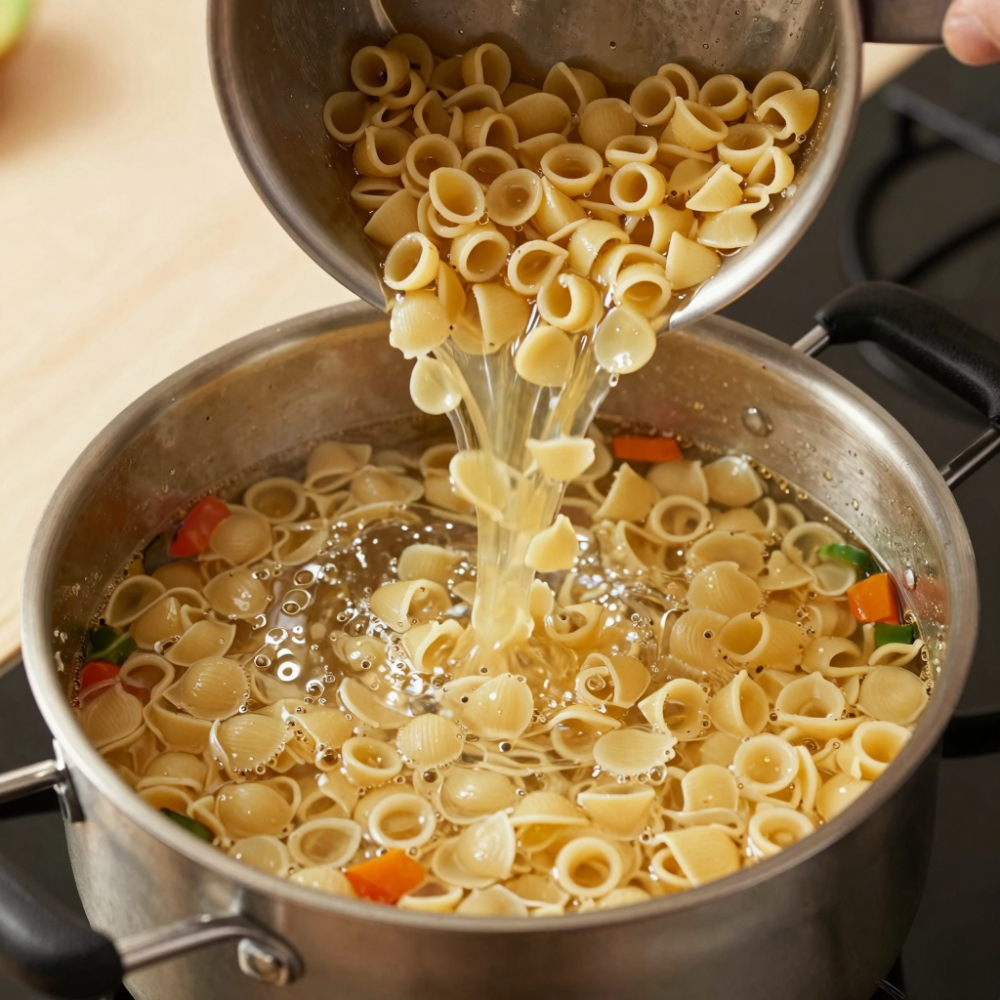
This is the step that makes or breaks the texture. If I dump pasta in too early, it can soak up the broth and turn mushy—especially if I plan to store leftovers.
Here are my two best approaches:
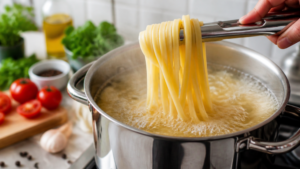
- Option A (my go-to for best texture): Cook pasta separately in salted water until al dente, then add it to bowls (or add to the pot at the very end for a quick 1–2 minute warm-up).
- Option B: Add pasta to the soup late and only simmer until al dente, following the pasta package timing minus a minute or so.
Either way, I taste before serving. Minestrone should be hearty, not watery, and the pasta should still have a little bite.
Step 6: Finish with Leafy Greens (Optional but Worth It)
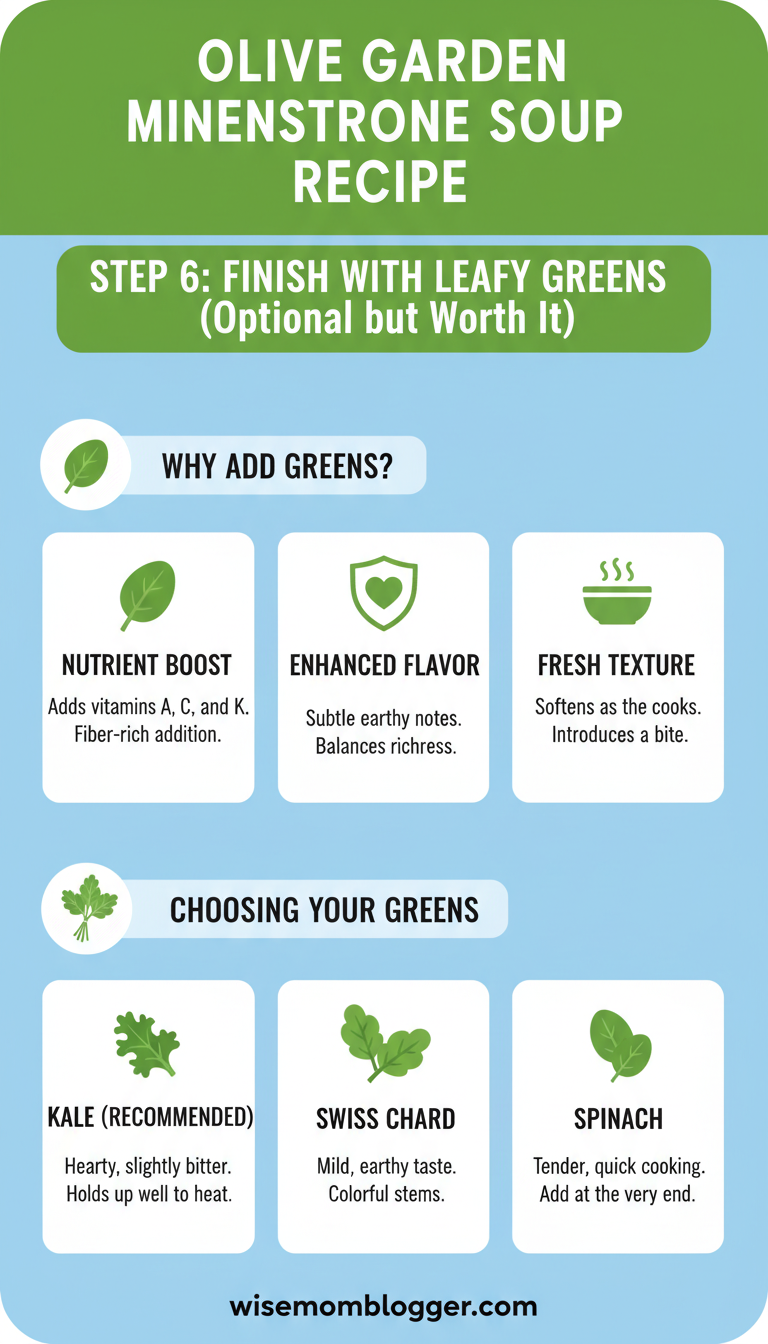
If I’m using spinach, I add it during the last few minutes of cooking. I stir until it wilts into the soup. This little step makes the soup feel fresher and brighter, and it adds that “real meal” look and taste. It’s optional, but I usually do it because it adds color and balance.
Step 7: Taste, Adjust, and Serve Like You Mean It
Before serving, I taste again and adjust seasoning. Sometimes I add a touch more salt or pepper. If the tomato flavor feels flat, I add a pinch more Italian seasoning. I serve it hot, straight from the pot, and I usually give it a final stir so every spoon has vegetables, beans, and broth.
If I cooked pasta separately, I portion pasta into bowls first, then ladle soup over it. That way, leftovers stay better.
Tips
- Use a bean mix for that Olive Garden vibe: Many copycat styles use cannellini + kidney beans because it creates both creaminess and hearty bite.
- Swap vegetables without stress: Minestrone is famously flexible. If you don’t have zucchini or green beans, use what you’ve got—just keep a mix of tender and firmer vegetables.
- Thicken naturally: Beans help thicken the soup. If you want it thicker, simmer a little longer or mash a small portion of beans in the pot.
- Don’t overcook pasta: This is the biggest texture fix. Cook late or cook separately.
- Make it vegan if you want: Use vegetable-based broth and egg-free noodles (or rice). Some vegan-friendly broth concentrates can also work well if you want extra flavor depth.
- Keep leftovers in mind: If you plan to save it, I cook pasta separately so the soup doesn’t absorb everything overnight.
FAQ
Can I make this Olive Garden minestrone soup vegan?
Yes. I keep the “copycat” structure by using a vegetable-based broth and egg-free noodles (or substituting rice). The rest—tomato broth, beans, and vegetable mix—stays the same. I also make sure my pasta choice is vegan-friendly.
What pasta is best for minestrone?
I like small pasta shapes (like ditalini or elbow-style pasta) because they fit the soup well. The exact brand doesn’t matter as much as timing: add it late or cook separately so it stays al dente.
Why does my minestrone taste too watery?
Usually it’s one of these: the broth-to-ingredients ratio is off, or the pasta soaked up the liquid. I fix it by simmering a little longer to reduce, or by cooking pasta separately next time.
How long does minestrone last in the fridge?
Typically, I keep it in the fridge for about 3–4 days. If you cooked pasta in the soup, I find texture can change faster—so I recommend storing soup and pasta separately when possible.
Can I freeze minestrone soup?
I can, but I freeze best when the pasta is cooked separately (and kept out of the soup). Then I freeze the soup base and add fresh pasta when reheating. This keeps everything from getting mushy.
What vegetables can I use if I don’t have zucchini or spinach?
No problem. Minestrone is about variety, not perfection. Carrots, celery, onions, garlic, green beans, bell peppers, or even chopped cabbage can all work. I try to keep a balance of tender and firmer vegetables so the soup feels rich in texture.
Conclusion
Making Olive Garden-style minestrone soup at home is one of those “easy but impressive” meals. I start with aromatics, build a rich tomato broth, and pack in beans and a big mix of vegetables—then I finish with pasta timed perfectly so it stays delicious instead of mushy. The best part is how flexible it is: I can swap vegetables, adjust thickness, and even go vegan without losing that cozy, restaurant-like feel. If you try this once, you’ll probably find yourself making it again—because it’s the kind of soup that tastes even better the next day.

Sarah Anderson . J
I’m the mom behind Wise Mom Blogger, where everyday creativity meets real-life motherhood. I share easy DIY crafts, cozy knitting and crochet projects, beginner-friendly sewing ideas, and family-tested recipes—plus quick baking hacks that make homemade feel doable on busy days.