
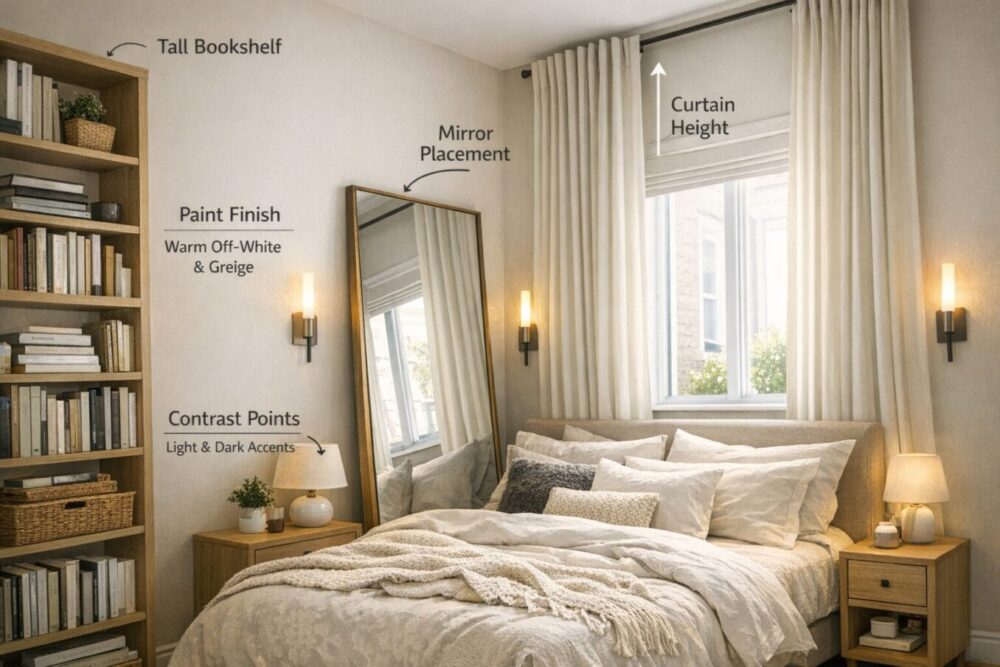

If your bedroom feels dim, you can make it feel brighter and cozier by layering light, choosing warm-toned bulbs, using mirrors and light-reflecting finishes, and smartly arranging furniture. You don’t need a lot of fancy fixtures—just a few strategic changes and you’ll notice a big difference. I’ll show you 10 practical ideas you can try this weekend.
Key Takeaways
- Layer lighting: mix ambient, task, and accent lights with dimmers.
- Pick warm, soft color temperatures (roughly 2700K–3000K) for a cozy vibe.
- Mirrors and reflective surfaces dramatically increase perceived brightness.
- Light-colored walls and fabrics bounce light better but still feel calm.
- Smart lighting and scenes save energy and help you switch moods fast.
- Avoid heavy, dark drapes and clutter that absorb light.
- Plan around your window and furniture layout to maximize light flow.
- Small changes add up: even one bright lamp with a dimmer can change the room.
Introduction
I’ve learned that a bedroom doesn’t need to be bright like a sunny living room to feel welcoming. In fact, some of the coziest bedrooms come from smart lighting decisions in rooms that don’t get a lot of natural light. You might be sharing your space with a north-facing window, a cozy alcove, or just a room that never quite catches a beam of sun. The good news is that you can create a space that looks brighter and feels more inviting without tearing out walls or buying a giant skylight. These 10 ideas focus on practical changes you can make with lighting, layout, and color choices. Ready to transform your dim retreat? Let’s dive in.
1. Layered Lighting with Dimmable Options
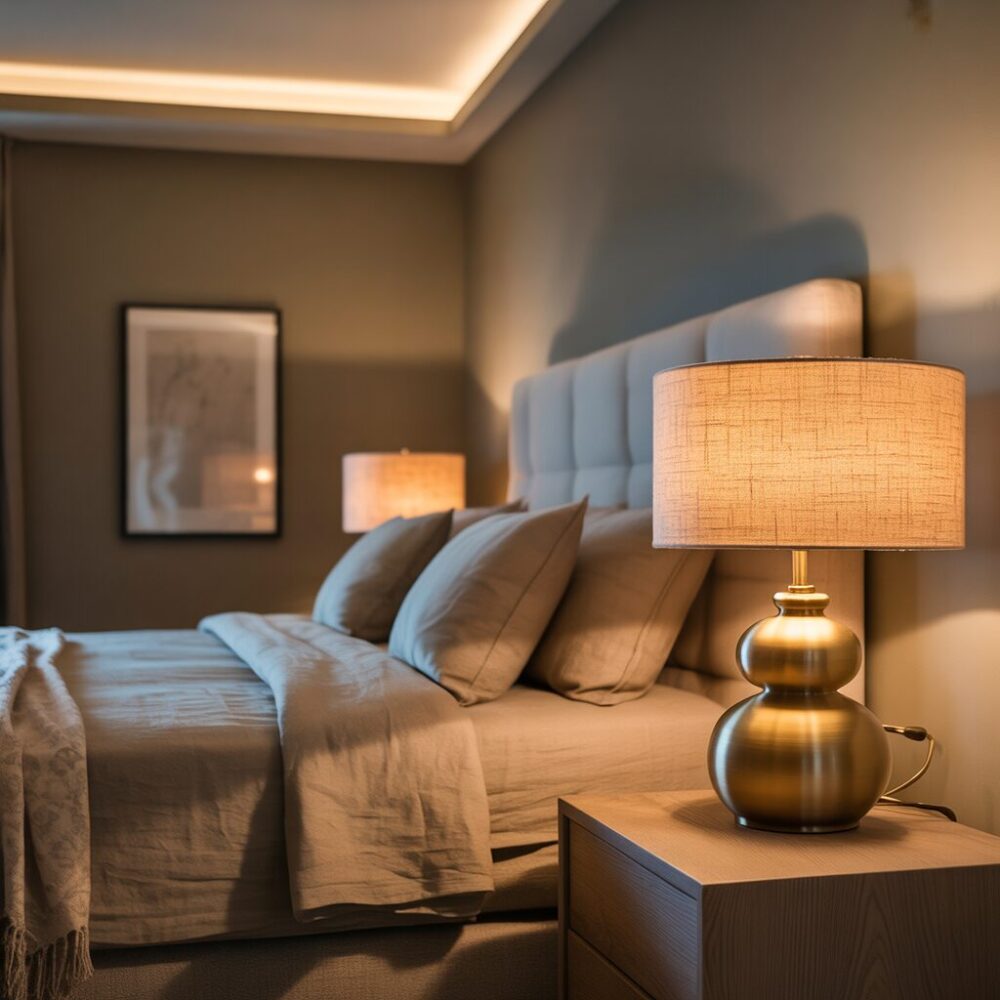
I find that layering light is the single most powerful trick for a low-light bedroom. You don’t want one harsh ceiling light blasting down on you; you want a mix of light at different heights and intensities. Here’s how you can do it:
- Ambient light: A soft ceiling light or a ceiling fan with a dimmable light works as the base.
- Task light: A reading lamp by the bed or a desk lamp if you have a workstation.
- Accent light: A small wall sconce or a glowing nightlight to add depth without glare.
When I set this up, I use dimmers on the main light and on a couple of lamps. You can control mood instantly by lowering the main light and keeping task lights at a lower level. If you’re worried about cost, smart bulbs or plug-in dimmers are affordable and easy to install. You’ll notice the room feels more alive because there are several light sources, not just one.
Tips you can try this week:
- Put a dimmer on your overhead fixture and on at least one lamp.
- Use warm bulbs around 2700K to 3000K for a cozy glow.
- Aim for a total combined brightness of about 200–400 lumens per reading area when you’re lounging and 100–300 lumens for mood lighting.
Why this helps: Dimmed, layered lighting reduces harsh shadows and makes the room appear more open, even if the sun never fully comes out.
2. Warm Color Temperature and Soft White Bulbs
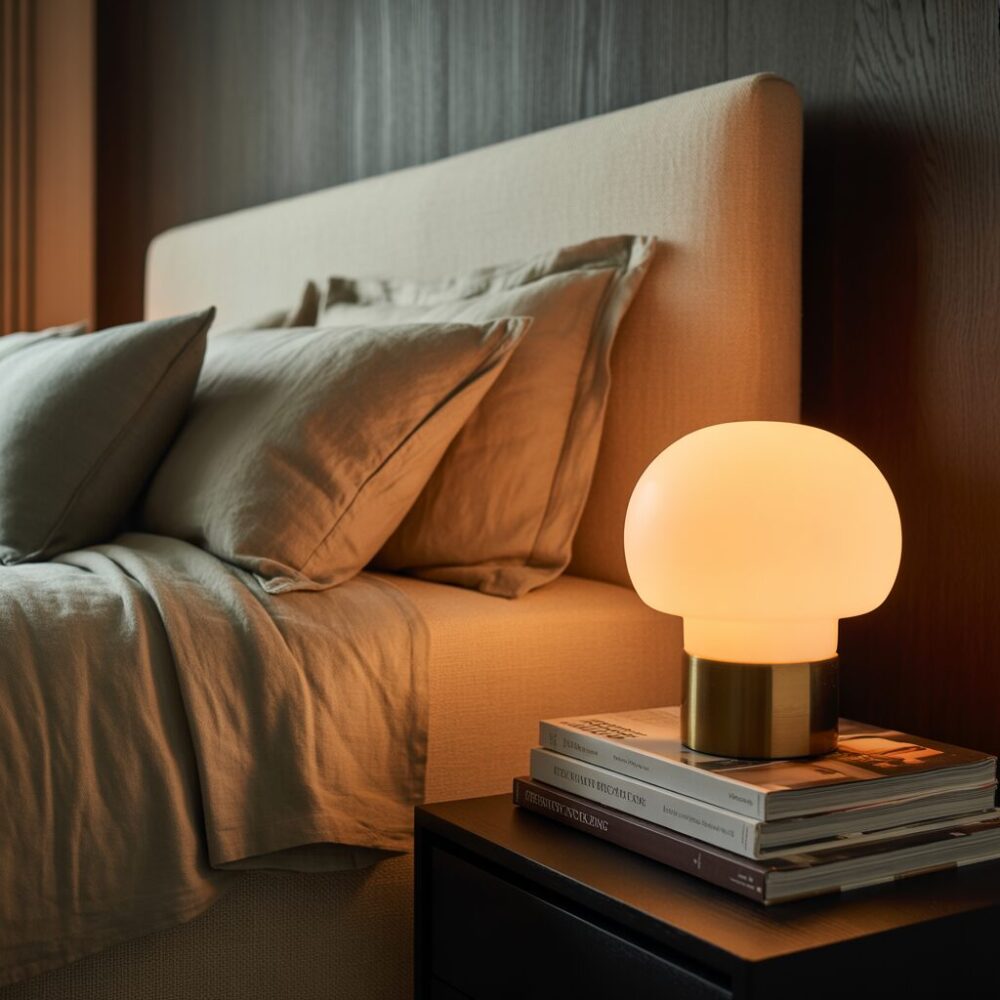
The color temperature of your bulbs changes how big a room feels. Bright blue-toned lights can feel clinical in a bedroom, and in a dim room they make everything look dull. I prefer softer whites that mimic sunset tones. Here’s how you can use color temperature to your advantage:
- Use 2700K–3000K bulbs for most fixtures.
- Avoid daylight-75K or higher in bedrooms unless you’re getting ready in the morning and need alertness.
- For reading corners, a slightly cooler 3000K–3500K bulb can help you see details without overpowering the space.
When you switch to warm bulbs, you’ll notice the walls, fabrics, and wood tones read warmer and brighter without needing a ton of light. You’ll also find it easier to fall asleep if you’re sensitive to stark lighting.
Practical steps:
- Check all bulbs in lamps, sconces, and overheads; upgrade non-warm bulbs first.
- If you can, choose LED bulbs labeled “soft white” or “warm white.”
- Use warm bulbs in fixtures that are visually close to your bed to keep the space coherent.
3. Mirrors and Reflective Surfaces to Multiply Light
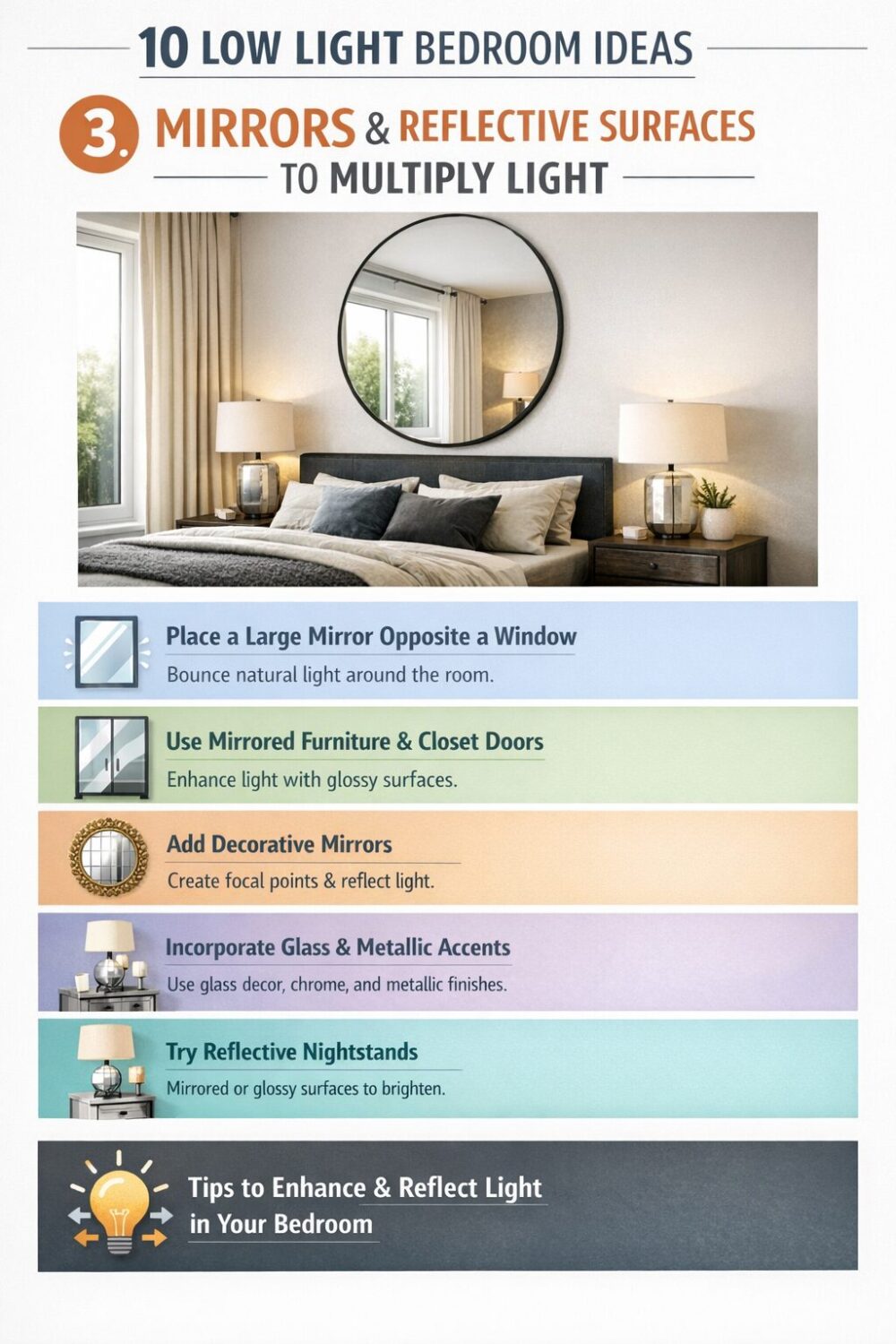
Mirrors aren’t just for vanity. They can dramatically increase how bright a room feels by bouncing the light around. In a low-light bedroom, I’ve positioned mirrors to reflect lamps and windows. Here’s how you can do it:
- Place a tall mirror on a wall opposite a window or lamp to catch the light.
- Use mirrored furniture or glossy surfaces on dressers and nightstands.
- Consider a wall with a large mirror behind a bed as a dramatic focal point.
What you’ll gain: more light without adding more fixtures. The room instantly feels bigger and more open.
Tips:
- Don’t overdo it: one or two mirrors placed thoughtfully are enough.
- If your space is small, use one large mirror rather than several small ones to avoid a busy look.
4. Light-Colored Walls and Coordinated Fabrics
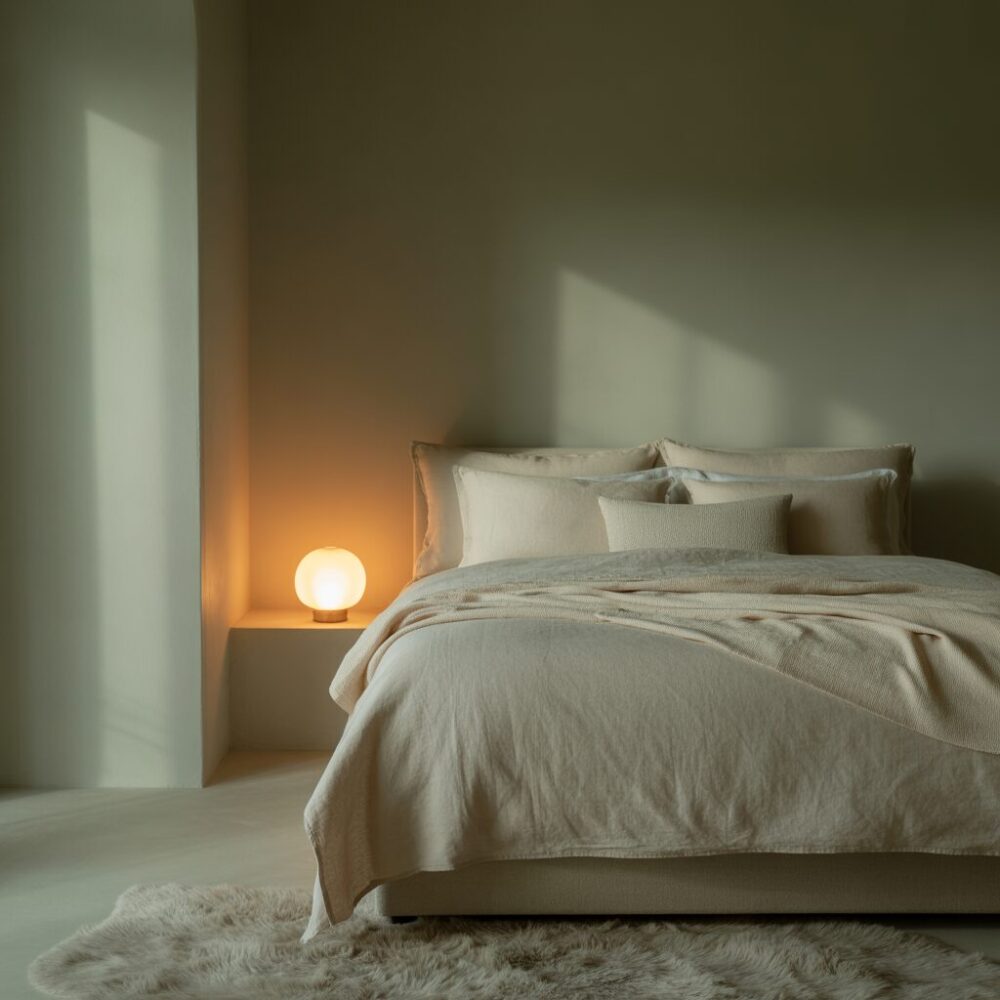
Light walls reflect more light, especially when paired with lighter fabrics and furniture. You don’t need to repaint everything, but small changes can create a brighter feeling:
- Choose pale neutrals like soft white, cream, or light gray as the base.
- Pick curtains and textiles in light tones to keep the room airy.
- If you have dark wood furniture, balance it with lighter bedding or a pale rug.
You’ll be surprised how much airiness a few pale surfaces can bring. The key is balance: keep some darker accents for depth, but let the majority of the surfaces do the light-reflecting work.
Ideas you can implement:
- Swap out heavy, dark drapes for lighter, sheer options.
- Add a pale throw blanket at the end of the bed to guide the eye and brighten the space.
- Use a light-colored rug to bounce floor light up.
5. Sheer Curtains and Window Light Hacks
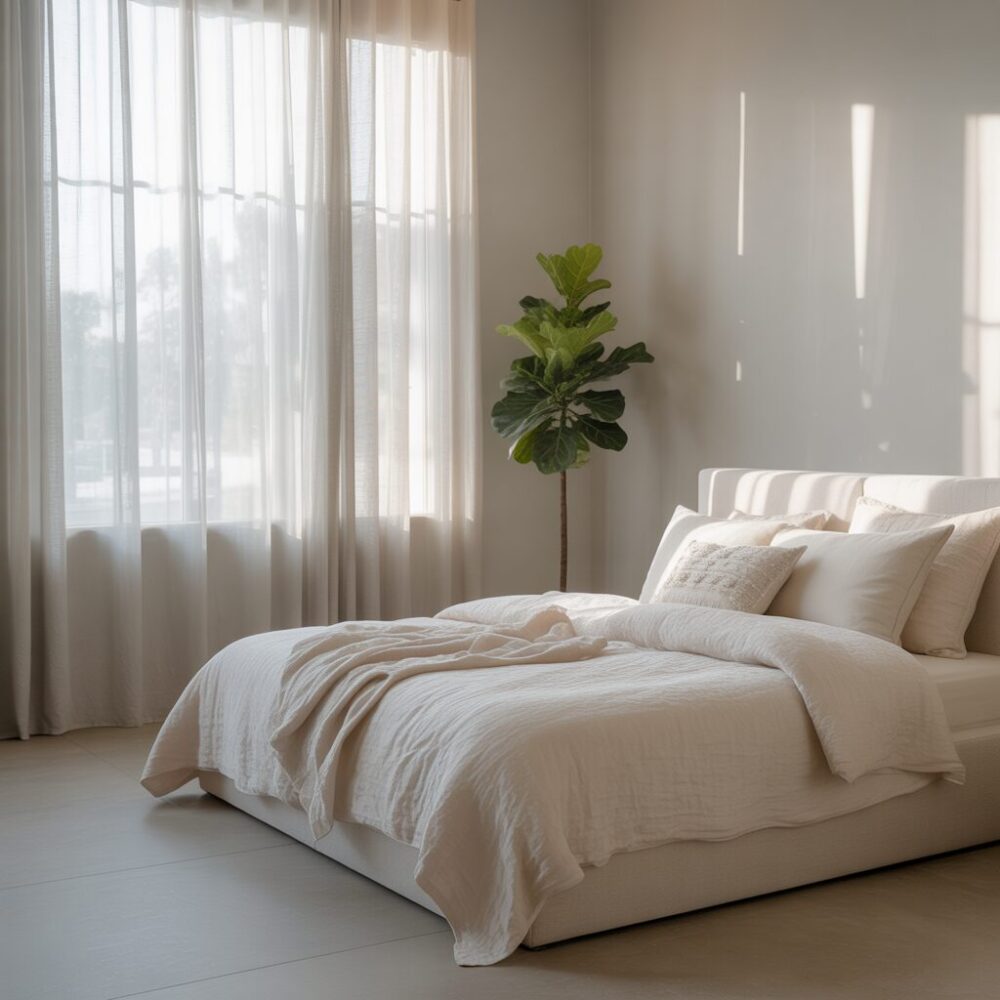
Even if you don’t have a lot of natural light, how you treat windows can change the room’s brightness. Sheer curtains let in more ambient light while preserving privacy, and they’re budget-friendly. Here’s how I use window treatments in low-light bedrooms:
- Choose sheer or voile curtains in light colors to maximize light transmission.
- If you must have heavy drapes, keep them open during the day and use sheer liners.
- Consider window films that increase light diffusion if privacy is a concern.
Extra trick: place a mirror near the window to reflect the outdoor light deeper into the room. It’s a simple trick that can make a surprising difference.
6. Soft LED Strips and Ambient Accent Lighting
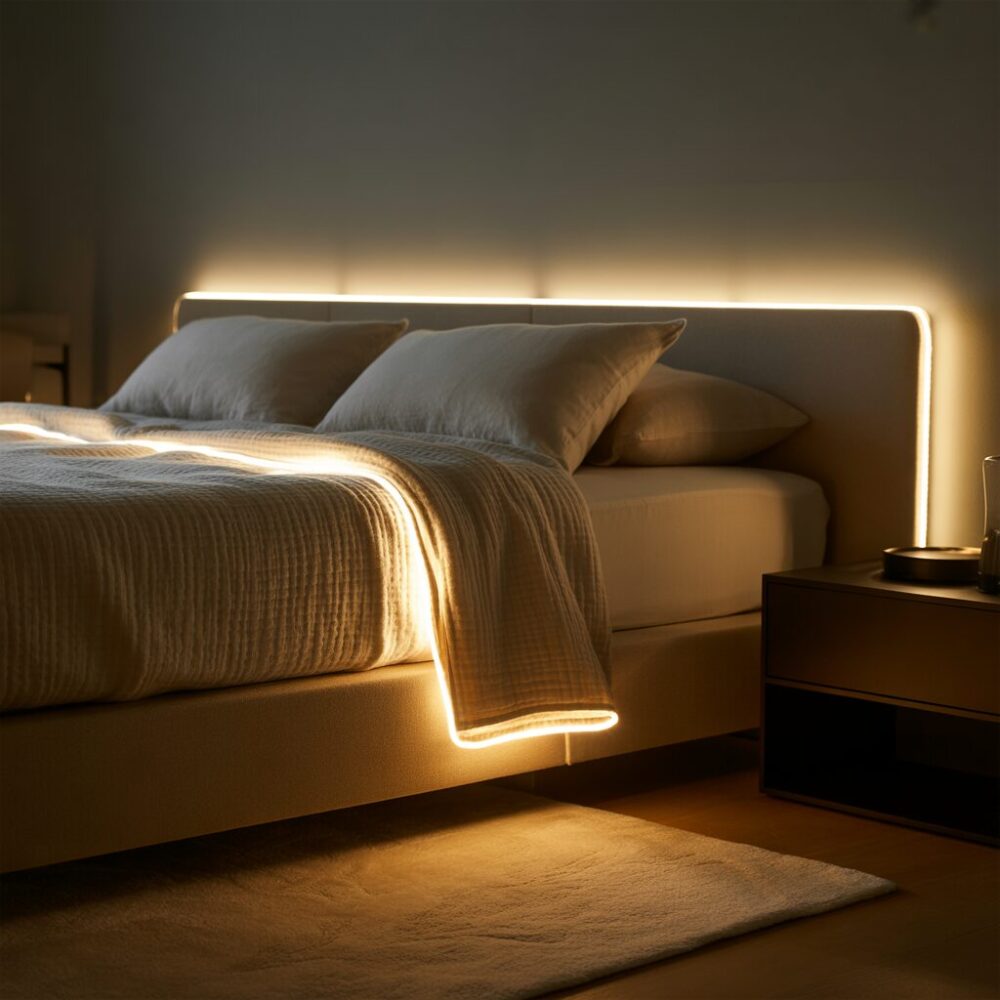
Accent lighting is your friend in a low-light bedroom. LED strips behind a headboard, along a shelf, or under a bed frame add glow without glare. I like to keep these subtle and warm so they don’t interfere with sleep.
Ways to use LED strips:
- Install a warm white strip behind the headboard to create a gentle halo.
- Place a strip under floating shelves to highlight textures without shining in your face.
- Use battery-powered puck lights for tight spaces or corners that need a lift.
Why it helps: ambient light creates depth and makes the ceiling feel higher. It’s also incredibly energy-efficient and easy to install.
7. Smart Lighting and Scenes for Mood and Sleep
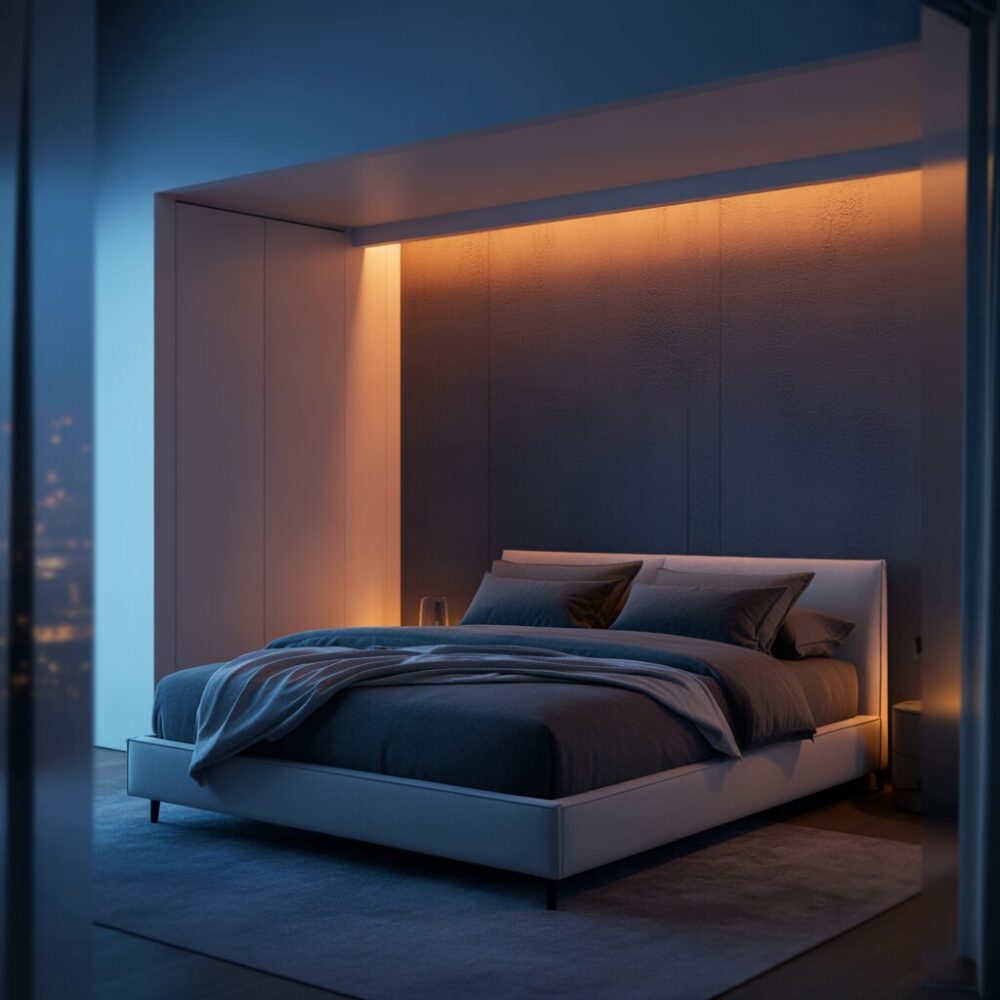
Smart lighting lets you control brightness and color with your phone or voice assistant. I use scenes for different times of day or activities:
- Reading scene: warm, brighter light by the bed.
- Relax/bedtime scene: all lights dimmed to a soft glow.
- Wake-up scene: gentle, gradually increasing light to mimic sunrise.
How you set it up:
- Use smart bulbs or smart plugs with dimmers.
- Create at least two scenes you can activate with a tap or voice.
- Make sure your device is easy to reach from bed.
Smart lighting helps you avoid leaving lights on all night and makes it feel like your room is always tuned to your mood.
8. Strategic Furniture Placement to Maximize Light Flow
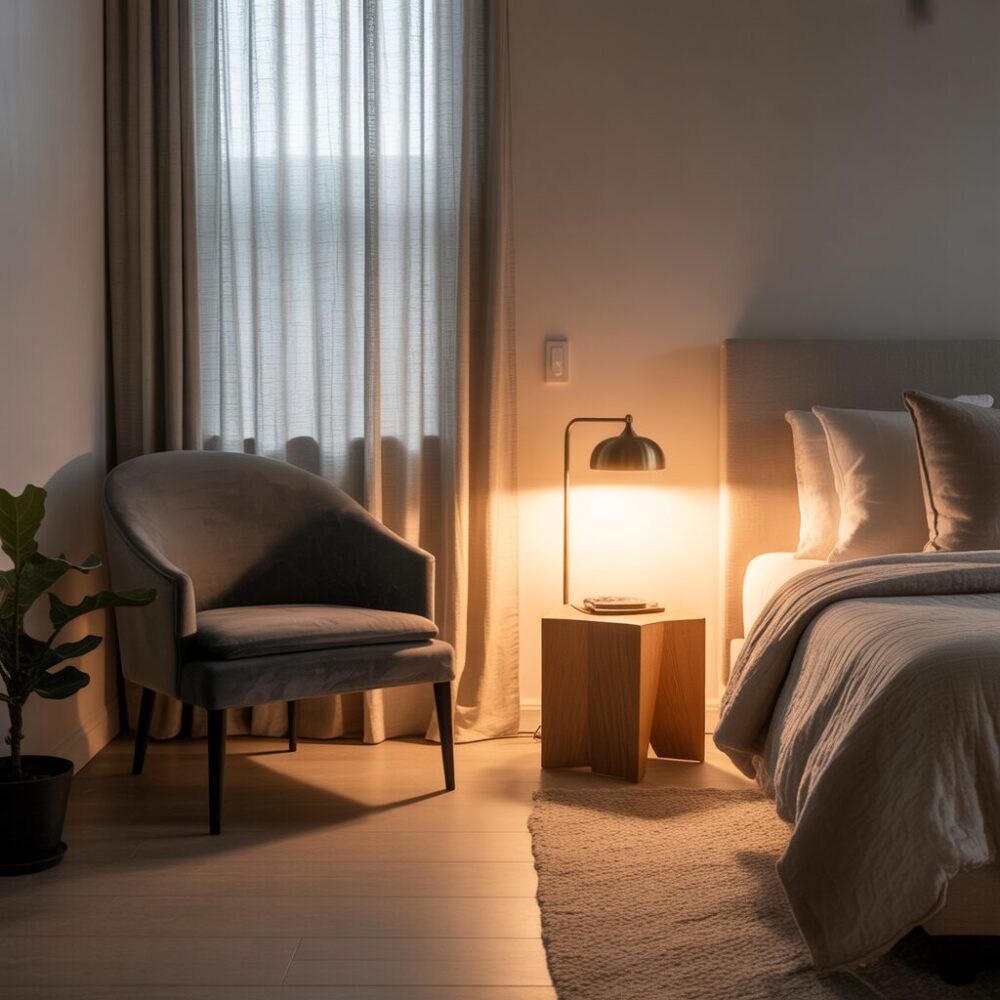
Sometimes the issue isn’t the lights themselves but how the room is laid out. If you block windows or place a large dark piece in the middle, the space feels dim. I’ve found a few simple setup rules that work well:
- Avoid blocking windows with tall furniture; keep sight lines open.
- Use low-profile bed frames and light-colored bed linens to avoid heavy silhouettes.
- Place a reflector (mirror or light surface) opposite a lamp to bounce light across the room.
If you’re redesigning, sketch a quick layout and experiment with moving a lamp or small table to where it catches more light. You’ll feel the difference in minutes.
9. Textiles and Layering for Soft Brightness
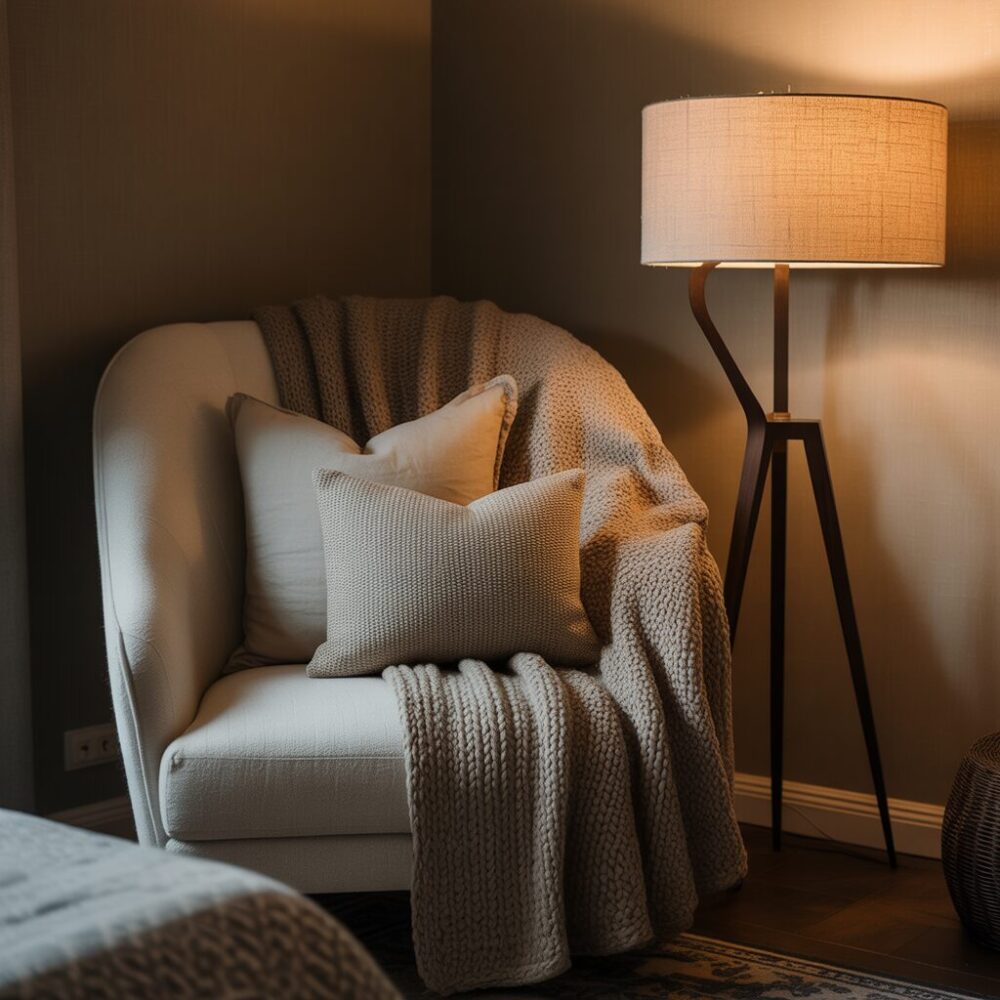
Textiles can soften and spread light in a gentle, uniform way. I choose fabrics that reflect light and feel airy:
- Use cotton, linen, or blends in light colors for bedding and curtains.
- Add a pale knit throw or a soft rug to break up shadows without darkening the room.
- Avoid heavy, dense fabrics in dark colors that can absorb light.
Layering textiles adds texture and warmth while keeping the room from feeling flat or gloomy.
10. Minimalist Clutter Reduction for Perceived Brightness
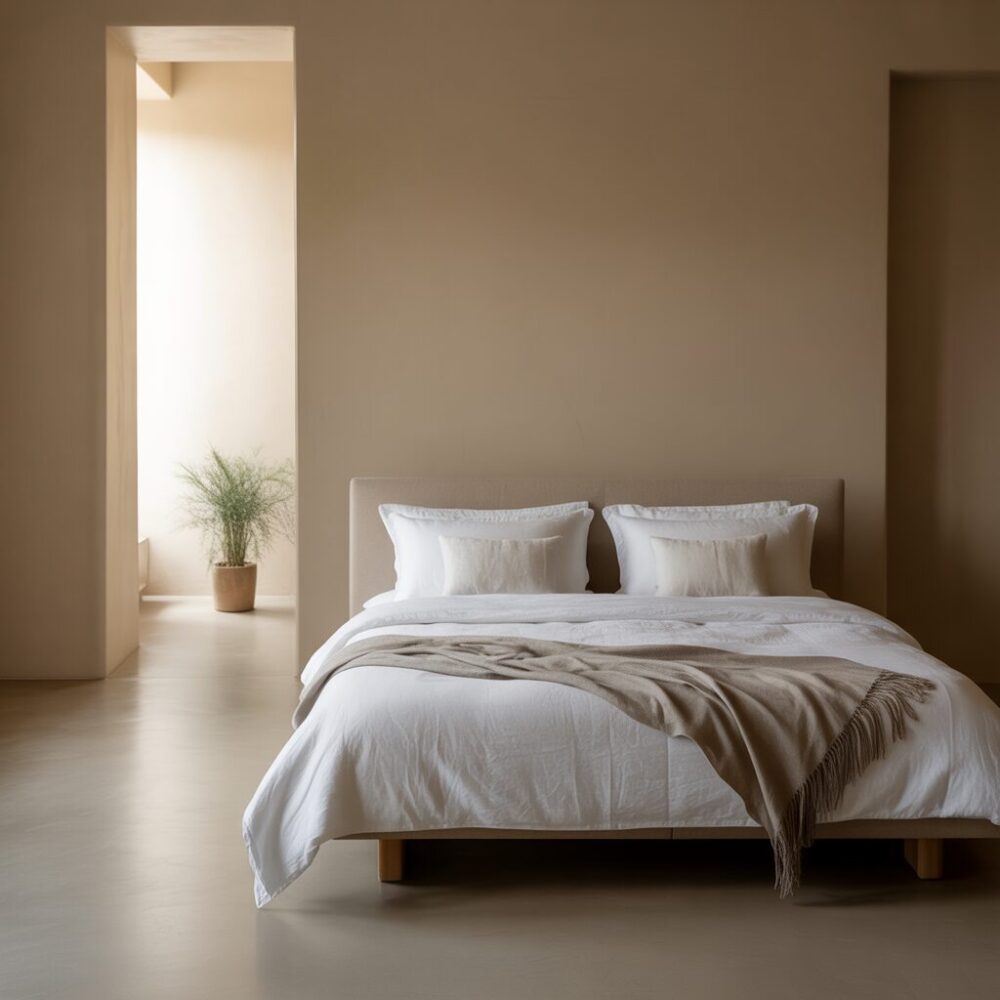
A clutter-free space instantly feels brighter because your eyes don’t bounce around dark corners. I’m not saying you must live in a showroom, but a calmer space helps reflect light better:
- Store away items you don’t need every day.
- Use under-bed storage to keep surfaces clean.
- Choose a few decorative pieces with light colors or subtle shine.
A tidy room looks more open and can feel larger, even with the same amount of light. You’ll notice this trick shows up in photos and in how you feel when you walk in at night.
Common Mistakes
- Relying on a single overhead light: It creates harsh shadows and a flat feel.
- Choosing cool or daylight bulbs for all fixtures: It makes the room feel clinical and less cozy.
- Blocking windows with big, dark furniture: This robs the space of natural light and reduces brightness.
- Skipping dimmers or smart controls: You miss the power to adjust mood and brightness throughout the night.
- Using heavy drapes all the time: They absorb light and darken the room even more.
- Ignoring scale: A large mirror or shiny surface in a tiny room can look out of place if not balanced.
- Forgetting texture: Without light textures, a room can feel dull even if it’s bright.
If you avoid these mistakes, your low-light bedroom will feel lighter, calmer, and more welcoming.
FAQ
- Can I brighten a dim bedroom without changing the ceiling light?
Yes. Add a few lamps, LED strips, and a mirror or two. Dimmer switches on lamps can dramatically improve how bright the room feels, even with modest fixtures.
- What color temperature is best for a bedroom?
Most people prefer warm white, around 2700K to 3000K. It’s soft, cozy, and helps you wind down at night. You can use a slightly cooler bulb for reading tasks (around 3500K) but keep it away from the bed where you’ll sleep.
- How bright should my bedroom lights be?
Aim for a mix: ambient lighting around 200–400 lumens in the center of the room, plus 100–300 lumens at reading corners. If you’re using smart scenes, you can adjust brightness by mood and time of day.
- Is it okay to use LED strips in a bedroom?
Absolutely. LED strips are energy-efficient and great for accent lighting. Keep them warm-toned and hidden so they don’t glare in your eyes.
- Do I need professional help to install dimmers or smart lighting?
Not necessarily. Many dimmers and smart bulbs are DIY-friendly and come with instructions. If you’re unsure about wiring, a quick consult with a professional is worthwhile.
Conclusion
I know how frustrating a dim bedroom can feel, but you don’t have to wait for summer sunshine to enjoy a brighter, more inviting space. By layering lighting, choosing warm temperatures, and using mirrors, light fabrics, and smart controls, you can transform a low-light room into a calm sanctuary. You don’t need a big budget or a dramatic redesign—just a few thoughtful swaps and placements.
If you start with one or two ideas this week, you’ll begin to notice changes in how the room looks and feels. Try adding dimmable lamps, swap in a warm bulb or two, and test a mirror opposite a light source. I think you’ll be surprised by how much brighter your bedroom can feel without actually adding more light.
Would you like me to tailor these ideas to your exact room size and window orientation? Share a quick description of your space, and I can draft a step-by-step plan personalized for you.

Sarah Anderson . J
I’m the mom behind Wise Mom Blogger, where everyday creativity meets real-life motherhood. I share easy DIY crafts, cozy knitting and crochet projects, beginner-friendly sewing ideas, and family-tested recipes—plus quick baking hacks that make homemade feel doable on busy days.