
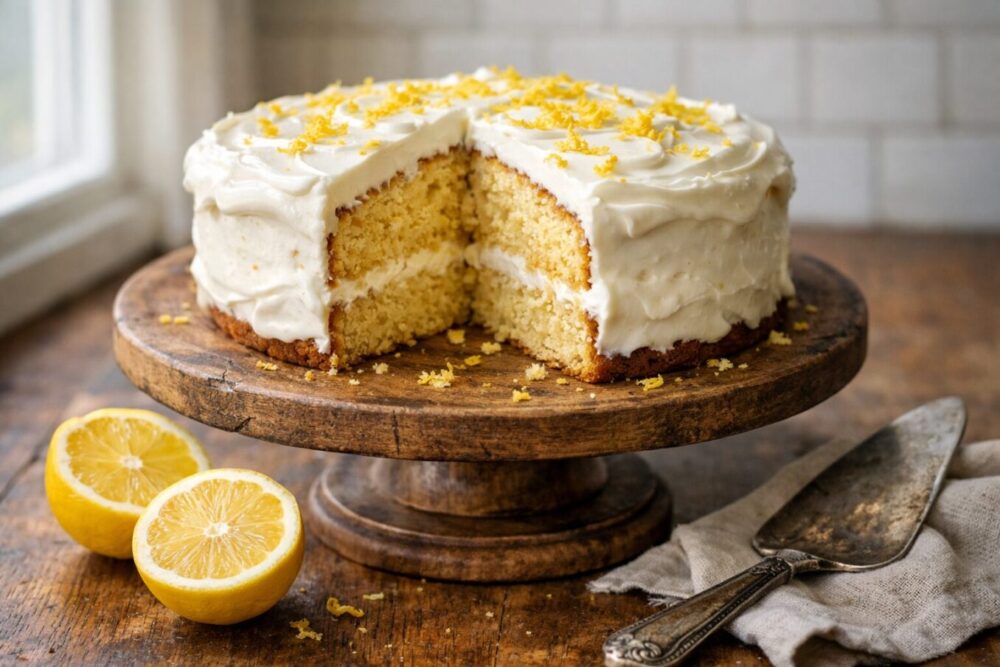

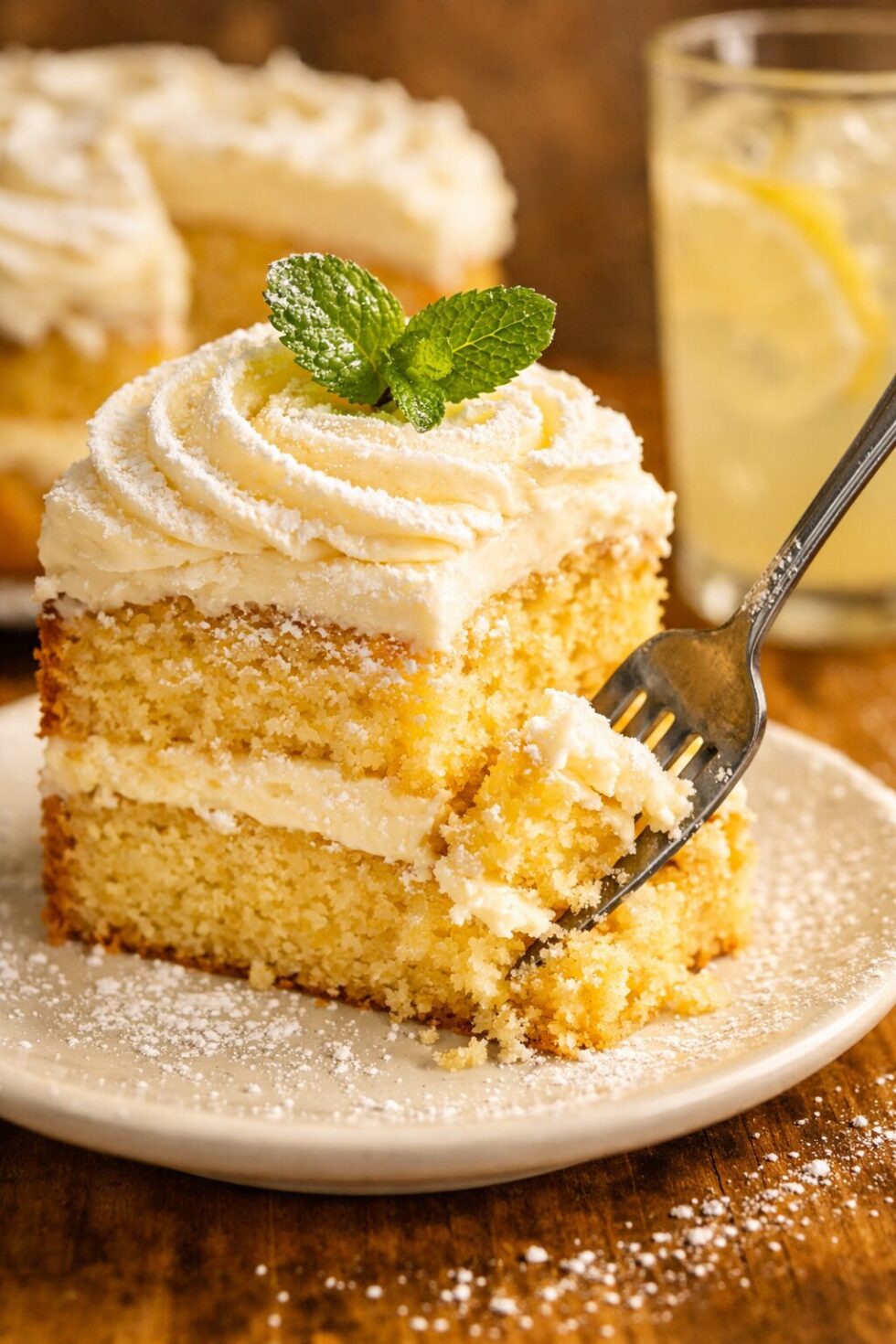
This lemon cake with cream cheese recipe produces a tender, moist cake bursting with fresh citrus flavor and topped with tangy cream cheese frosting. It uses simple pantry ingredients, takes about 75 minutes from start to finish (including cooling), and works for everything from weeknight desserts to birthday celebrations. No special equipment needed beyond a standard mixer and two 9-inch round pans.
Key Takeaways
- Fresh lemon juice and zest give the strongest lemon flavor; bottled juice alone falls flat.
- Room-temperature cream cheese (about 70°F) is non-negotiable for smooth frosting without lumps.
- The cake layers stay moist for up to 4 days when stored properly in the fridge.
- Sour cream in the batter adds richness and keeps the crumb tender.
- You can bake this as a layer cake, sheet cake, or cupcakes with minor time adjustments.
- Overmixing the batter after adding flour is the most common mistake that leads to a tough, dense cake.
- This recipe makes enough frosting for a generous coat; double it if you want thick decorative piping.
Why Does This Lemon Cake with Cream Cheese Recipe Work So Well?
The combination of bright lemon and tangy cream cheese creates a flavor balance that’s hard to beat. The acidity from the lemon juice reacts with baking soda to give the cake lift, while the fat in cream cheese frosting rounds out the tartness into something rich and satisfying.
I’ve tested a lot of lemon cake recipes over the years, and the ones that fall short usually share the same problem: they rely on extract or bottled juice and skip the zest. Lemon zest contains essential oils that carry the real citrus punch. The juice provides acidity and moisture, but the zest is where the aroma lives. You need both.
What makes this version stand out:
- Sour cream keeps the crumb soft without making it heavy
- A balanced ratio of butter to oil gives both flavor and moisture
- The frosting uses a full block of cream cheese, so it actually tastes like cream cheese (not just sweet butter)
What Ingredients Do You Need?
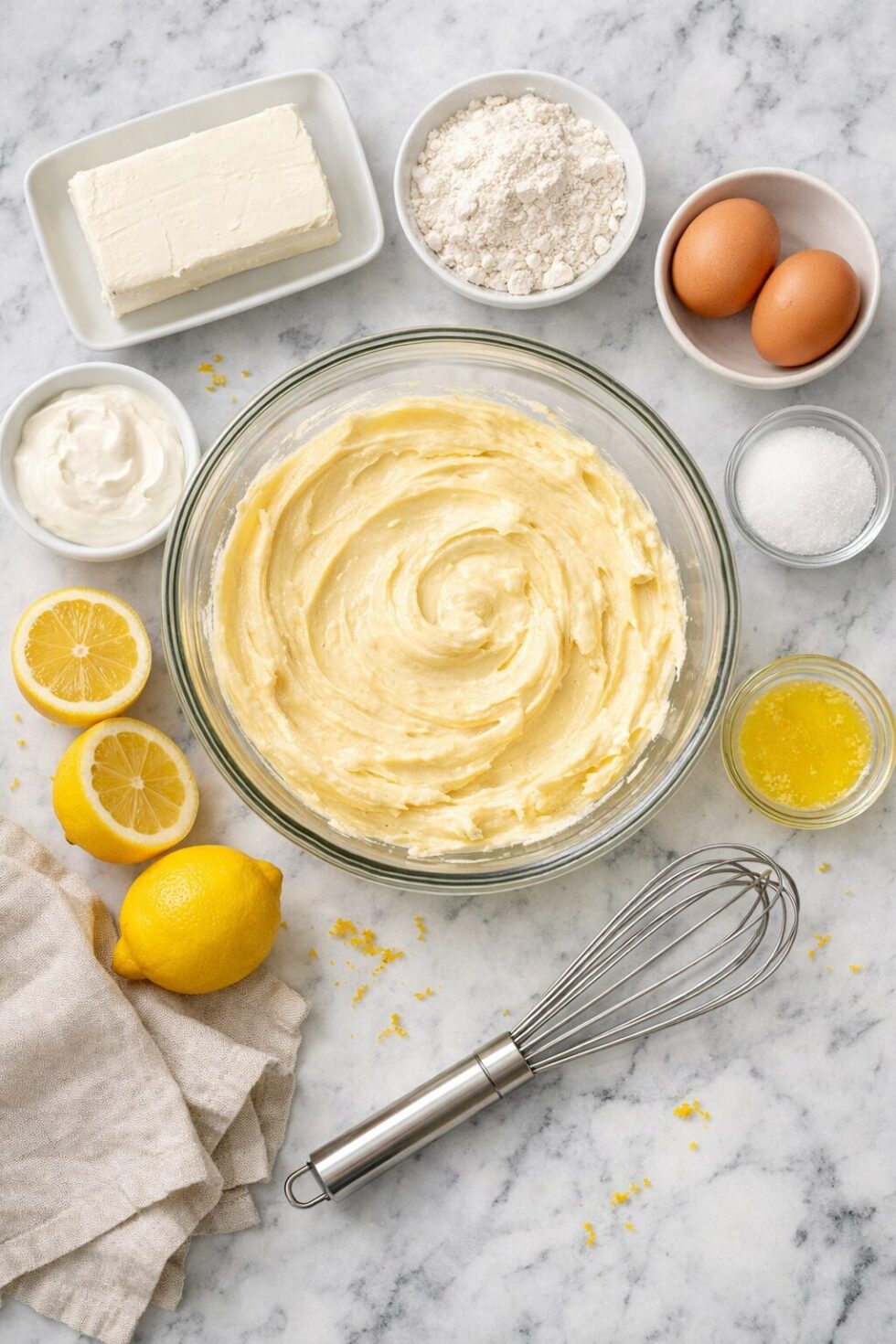
Here’s everything for the cake and frosting. I’ve included weight measurements alongside volume because they’re more accurate for baking.
Cake Ingredients
| Ingredient | Volume | Weight |
|---|---|---|
| All-purpose flour | 2½ cups | 312g |
| Granulated sugar | 1½ cups | 300g |
| Unsalted butter, softened | ½ cup | 113g |
| Vegetable oil | ¼ cup | 56g |
| Large eggs | 3 | — |
| Sour cream | ¾ cup | 180g |
| Fresh lemon juice | ¼ cup | 60ml |
| Lemon zest | 2 tablespoons | From ~3 lemons |
| Whole milk | ½ cup | 120ml |
| Baking powder | 2 teaspoons | — |
| Baking soda | ½ teaspoon | — |
| Salt | ¾ teaspoon | — |
| Vanilla extract | 1 teaspoon | — |
Cream Cheese Frosting Ingredients
| Ingredient | Amount |
|---|---|
| Cream cheese, full-fat, softened | 8 oz (one block) |
| Unsalted butter, softened | ½ cup (113g) |
| Powdered sugar, sifted | 3 cups (360g) |
| Fresh lemon juice | 1 tablespoon |
| Lemon zest | 1 teaspoon |
| Vanilla extract | 1 teaspoon |
| Salt | Pinch |
Important: Use full-fat cream cheese, not the spreadable kind in a tub. The lower moisture content in block cream cheese gives the frosting structure so it holds its shape.
How Do You Make This Lemon Cream Cheese Cake Step by Step?
Follow these steps in order. The whole process takes about 35 minutes of active work plus 25-30 minutes of baking and 20 minutes of cooling.
Step 1: Prep Your Pans and Oven
- Heat your oven to 350°F (175°C).
- Grease two 9-inch round cake pans with butter or nonstick spray.
- Line the bottoms with parchment paper circles, then grease the parchment too.
- Dust lightly with flour and tap out the excess.
Common mistake: Skipping the parchment. Even with greasing, lemon cake sticks more than chocolate or vanilla because of the acidity. The parchment is your insurance policy.
Step 2: Mix the Dry Ingredients
Whisk together the flour, baking powder, baking soda, and salt in a medium bowl. Set it aside.
Step 3: Cream the Butter and Sugar
Beat the softened butter, oil, and sugar together on medium speed for 3-4 minutes until the mixture is pale and fluffy. This step incorporates air, which contributes to a lighter crumb.
Add the eggs one at a time, beating for about 30 seconds after each. Then mix in the vanilla, lemon zest, and lemon juice. The batter might look slightly curdled at this point — that’s normal and will smooth out.
Step 4: Alternate Wet and Dry
Combine the milk and sour cream in a measuring cup. With the mixer on low speed:
- Add one-third of the flour mixture. Mix until just combined.
- Add half the milk-sour cream mixture. Mix briefly.
- Repeat: another third of flour, the rest of the milk mixture, then the final third of flour.
Stop mixing as soon as the flour disappears. Every extra second of mixing develops gluten, which makes the cake tough. A few small streaks of flour are better than an overmixed batter.
Step 5: Bake
Divide the batter evenly between the two pans. A kitchen scale helps here — aim for equal weight in each pan.
Bake for 25-30 minutes. The cakes are done when:
- A toothpick inserted in the center comes out clean or with a few moist crumbs
- The edges pull slightly away from the pan
- The top springs back when lightly pressed
Let the cakes cool in pans for 10 minutes, then turn them out onto wire racks to cool completely. Do not frost warm cakes. The frosting will melt and slide off.
Step 6: Make the Cream Cheese Frosting
- Beat the cream cheese and butter together on medium speed for 2 minutes until completely smooth.
- Add the powdered sugar one cup at a time, mixing on low speed after each addition.
- Add the lemon juice, lemon zest, vanilla, and salt. Beat on medium-high for 1-2 minutes until fluffy.
Choose your sugar amount: 3 cups gives a moderately sweet frosting. If you prefer less sweetness, start with 2½ cups and taste. You can always add more.
Step 7: Assemble
- Place one cake layer on your serving plate, flat side up.
- Spread about one-third of the frosting on top.
- Place the second layer on top, flat side up (this gives you a level top).
- Frost the top and sides with the remaining frosting.
- Garnish with extra lemon zest, thin lemon slices, or fresh berries if you like.
What Are the Most Common Mistakes with This Lemon Cake with Cream Cheese Recipe?
Even experienced bakers run into these issues. Here’s how to avoid them:
Lumpy frosting: Almost always caused by cold cream cheese. Set it out on the counter for at least an hour before using. If you forgot, cut it into small cubes — they’ll warm faster. Microwaving works in a pinch (10-second bursts), but it’s easy to overdo and end up with a melted mess.
Flat, dense cake: Usually from expired leavening agents. Baking powder loses potency after about 6-12 months once opened. Test yours by dropping a teaspoon into hot water — it should bubble vigorously.
Weak lemon flavor: If you used only juice without zest, or substituted bottled juice, the flavor will be muted. Fresh zest is the single biggest factor in getting a cake that actually tastes like lemon.
Dry cake: Overbaking by even 3-5 minutes can dry out a lemon cake. Start checking at 23 minutes. Pull it when the toothpick shows moist crumbs, not when it’s bone dry.
Can You Make Variations of This Recipe?
Yes, and the base recipe adapts well. Here are the most reliable variations I’ve tried:
- Lemon blueberry cake: Toss 1 cup of fresh blueberries in 1 tablespoon of flour, then fold them into the finished batter. The flour coating prevents them from sinking.
- Sheet cake version: Pour all the batter into a greased 9×13-inch pan. Bake at 350°F for 30-35 minutes. Frost the top only.
- Cupcakes: Fill lined muffin tins two-thirds full. Bake for 18-22 minutes. This recipe yields about 24 cupcakes.
- Lemon lavender cake: Add 1 tablespoon of dried culinary lavender to the sugar before creaming. The sugar pulls out the lavender oils.
- Gluten-free swap: Replace the all-purpose flour with a 1:1 gluten-free baking blend (like Bob’s Red Mill). Add ¼ teaspoon of xanthan gum if your blend doesn’t already contain it.
How Should You Store Lemon Cake with Cream Cheese Frosting?
Cream cheese frosting contains dairy, so this cake needs refrigeration if you’re not eating it within 2 hours.
- Refrigerator: Store covered (a cake dome or loose plastic wrap) for up to 4 days. Let it sit at room temperature for 20-30 minutes before serving for the best texture and flavor.
- Freezer: Wrap unfrosted layers tightly in plastic wrap, then aluminum foil. Freeze for up to 3 months. Thaw overnight in the fridge before frosting.
- Frosted cake in the freezer: Freeze uncovered for 1 hour until the frosting firms up, then wrap tightly. This prevents the wrap from sticking to the frosting.
Conclusion
This lemon cake with cream cheese recipe is one of those reliable crowd-pleasers that works for casual dinners and special occasions alike. The keys to getting it right are simple: use fresh lemons (both juice and zest), don’t overmix your batter, and make sure your cream cheese is truly at room temperature before you start the frosting.
If you’re baking this for the first time, stick with the base recipe as written. Once you’ve nailed it, try the blueberry or lavender variations. And if you’re feeding a crowd without wanting to fuss over layer assembly, the sheet cake version is just as delicious with half the effort.
Go grab some lemons and get started.
FAQ
How many servings does this lemon cake recipe make? A two-layer 9-inch cake serves 12-16 people, depending on slice size.
Can I use salted butter instead of unsalted? Yes, but reduce the added salt to ¼ teaspoon in the cake and skip the pinch in the frosting.
Can I make this cake ahead of time? Absolutely. Bake the layers up to 2 days ahead and store them wrapped tightly at room temperature. Frost the day you plan to serve it, or frost and refrigerate up to 2 days before.
Why is my cream cheese frosting runny? Either the cream cheese or butter was too warm, or you didn’t use enough powdered sugar. Chill the frosting in the fridge for 20 minutes, then re-whip it.
Can I use Meyer lemons? Yes. Meyer lemons are sweeter and less acidic than regular lemons, so the cake will have a milder, slightly floral flavor. No other adjustments needed.
Is lemon extract a good substitute for fresh lemon juice? It’s not a 1:1 swap. Extract adds flavor but no acidity or moisture. If you must use it, add 1 teaspoon of extract plus ¼ cup of buttermilk to replace the lemon juice.
Can I make this as a bundt cake? Yes. Grease and flour a 10-cup bundt pan thoroughly. Bake at 350°F for 40-50 minutes. Drizzle with a lemon glaze (powdered sugar plus lemon juice) instead of the cream cheese frosting, or serve the frosting on the side.
What if I only have one cake pan? Bake the layers one at a time. Keep the second batch of batter in the fridge while the first layer bakes and cools. The batter holds fine for up to 30 minutes refrigerated.
SEO Meta Title: Best Lemon Cake with Cream Cheese Recipe for Any Occasion
SEO Meta Description: This easy lemon cake with cream cheese recipe uses fresh lemons and tangy frosting for a moist, flavorful cake. Step-by-step guide with tips and variations.

Sarah Anderson . J
I’m the mom behind Wise Mom Blogger, where everyday creativity meets real-life motherhood. I share easy DIY crafts, cozy knitting and crochet projects, beginner-friendly sewing ideas, and family-tested recipes—plus quick baking hacks that make homemade feel doable on busy days.
