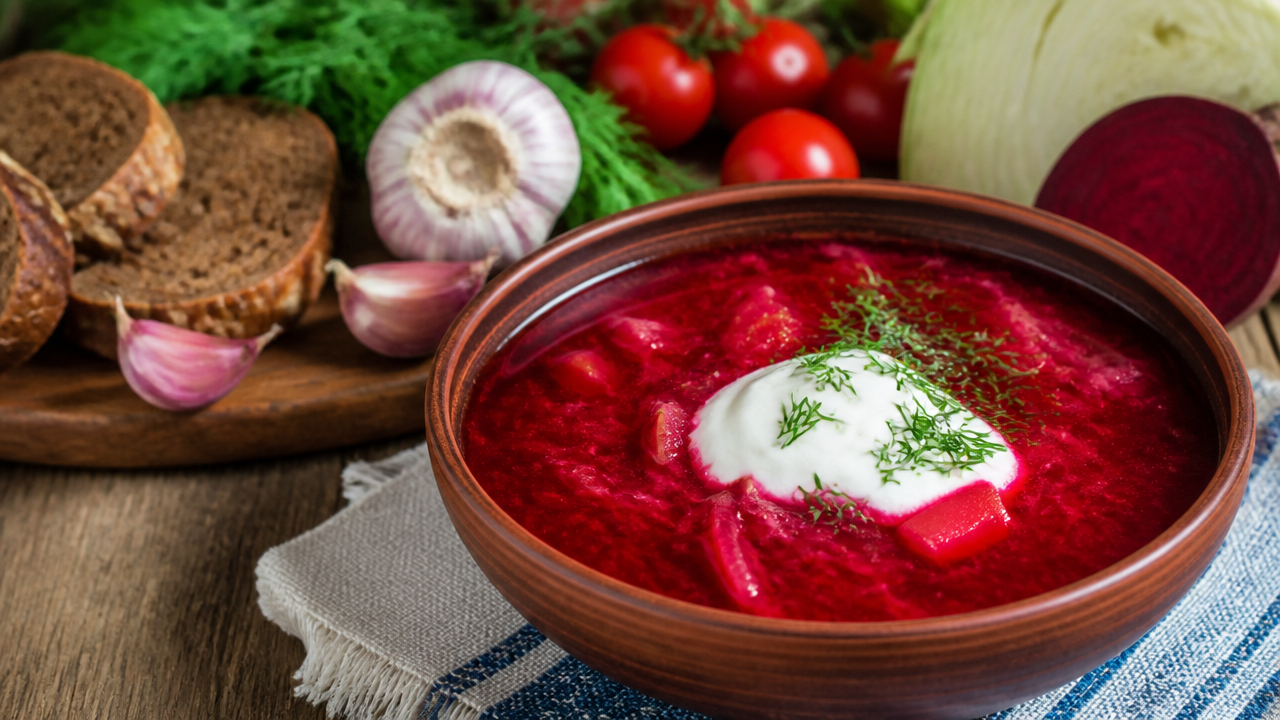
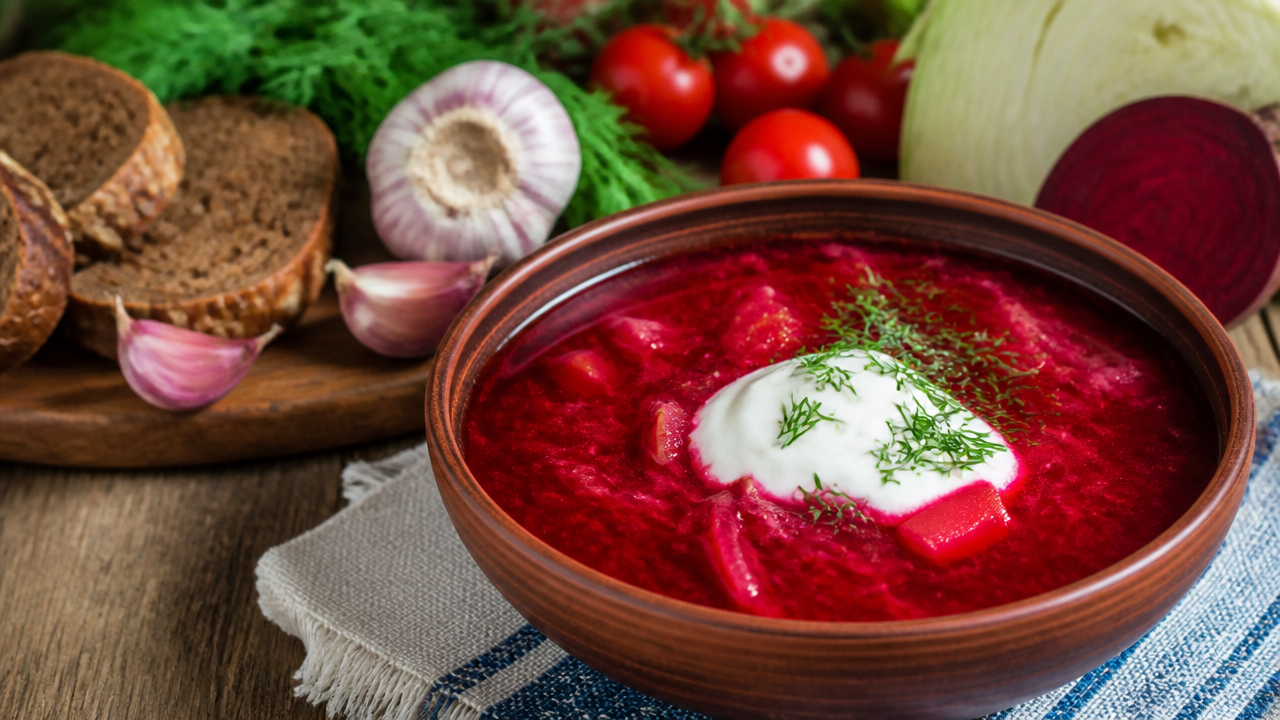
What gives a bowl of homemade borscht its signature deep magenta color and that earthy, tangy depth? Getting the balance right between sweet beets, savory broth, and a bright splash of acid is the key to a truly memorable soup. Whether you’re planning a cozy winter dinner or a festive holiday meal, mastering this classic beet soup is easier than you think. This guide walks you through every step, from building the perfect stock to serving it with a dollop of sour cream. If you’re looking for another great side dish, try this How to Make Sautéed Swiss Chard with Chickpeas: A 15-Minute Healthy Side.
Quick Questions and Answers
Question: Why is borscht soup so red in color?
Answer: Borscht gets its deep red color from beets, which contain natural pigments called betalains. When you cook the beets, these pigments are released into the broth. Adding a little vinegar or lemon juice while cooking helps lock in that bright red color by preventing the beets from oxidizing and turning brown.
Question: Can you make borscht without meat?
Answer: Yes, absolutely. You can skip the meat and use a rich vegetable stock or mushroom stock instead. The earthy flavors from beets, carrots, and cabbage create a satisfying soup on their own. Many vegetarian versions add beans for protein and a heartier texture, making it just as filling.
Question: Do you cook cabbage before adding to borscht?
Answer: No, you do not need to cook it separately. Shredded cabbage is added directly to the soup pot towards the end of cooking. It only needs about 15 to 20 minutes of simmering until it is tender but still has a little bite. Adding it too early makes it mushy.
Key Takeaways
Sequence matters: Add potatoes first, then cabbage, then beets, and finally the aromatics to ensure every vegetable is cooked perfectly.
Acid is your friend: A splash of vinegar or lemon juice added with the beets is the secret to a vibrant, non-muddy red soup.
Patience pays off: A good borscht needs at least an hour of simmering for the meat stock, and it tastes even better the next day.
What You Need
Item
Purpose
Notes
1-2 lbs Pork Ribs or Beef Brisket
Creates the rich, savory stock base
Pork ribs are traditional in Ukraine; beef brisket is common in Russian versions.
3-4 Medium Beets
The star ingredient, providing color and earthy sweetness
Grate them or cut them into thin matchsticks for faster cooking.
2-3 Potatoes (gold or russet)
Adds heartiness and helps thicken the broth naturally
Cut into 1/2-inch cubes.
2-3 Cups Shredded Cabbage
Adds texture and bulk
Shred it thinly so it cooks quickly.
1 Onion, 2 Carrots, 3-4 Garlic Cloves
The aromatic foundation for the ‘zazharka’
Dice the onion finely and grate the carrots.
2 Tbsp Tomato Paste or Ketchup
Adds depth of flavor and a slight tang
Cook it down with the onions and carrots.
1 Tbsp White Vinegar or Lemon Juice
Preserves the bright red color of the beets
Add it at the same time as the beets.
Fresh Dill and Parsley
Brightens the finished soup with fresh herbal notes
Stir in at the very end, after removing from heat.
Sour Cream (Smetana)
Traditional garnish, adds creamy tanginess
Use full-fat for the best flavor and texture.
Step 1: Prepping the Master Stock
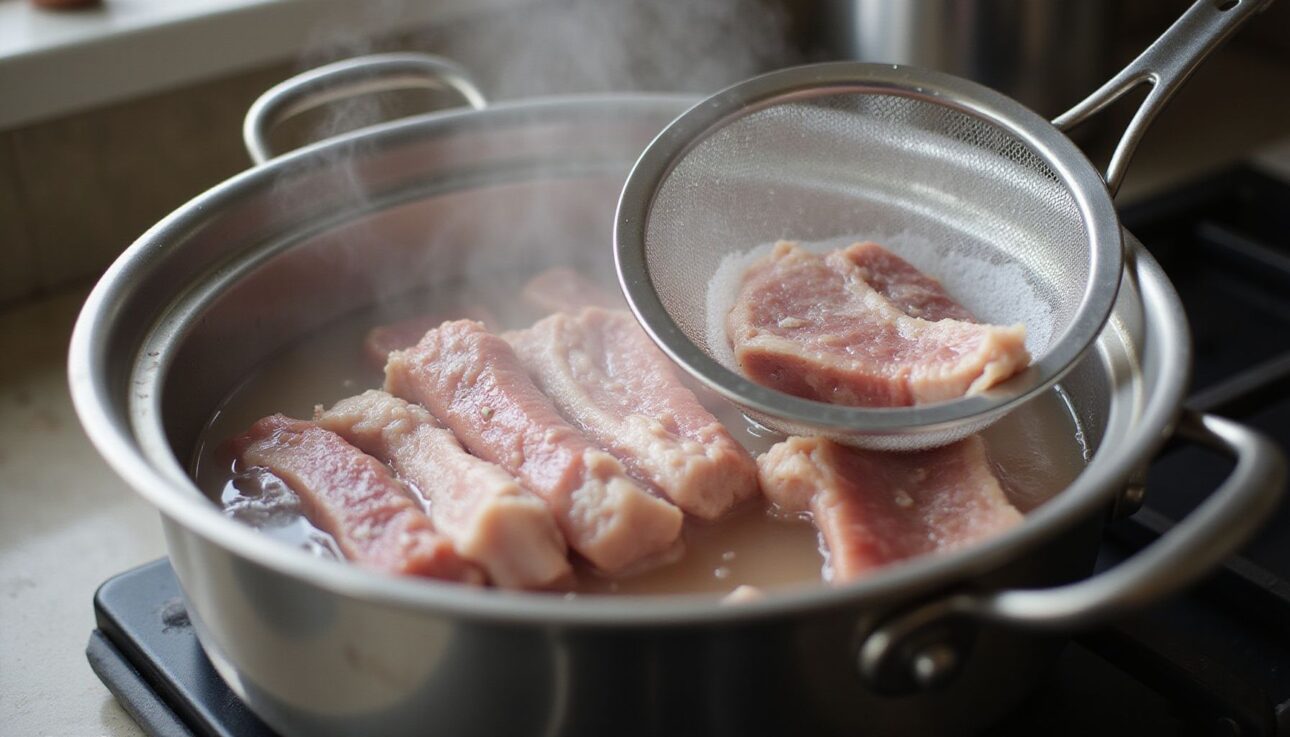
Start with cold water. This is non-negotiable for a clear, flavorful broth. Place your meat (pork ribs or beef brisket) in a large 6-8 quart stockpot and cover it with cold water by about 2 inches.
Bring the pot to a gentle boil over medium-high heat. As the water heats up, a grayish foam (scum) will rise to the surface. Skim this off with a spoon. This step directly impacts the clarity of your final soup. According to a guide from Obozrevatel, starting meat in hot water and failing to skim the foam are two of the quickest ways to ruin a batch.
Once the foam is mostly gone, reduce the heat to low, cover the pot, and let it simmer gently for 1.5 to 2 hours. The meat should be tender enough to fall off the bone. Remove the meat from the broth. Once cool enough to handle, shred the meat into bite-sized pieces, discarding the bones. Set the meat aside and keep the broth warm.
Step 2: Preparing the ‘Zazharka’ (Flavor Base)
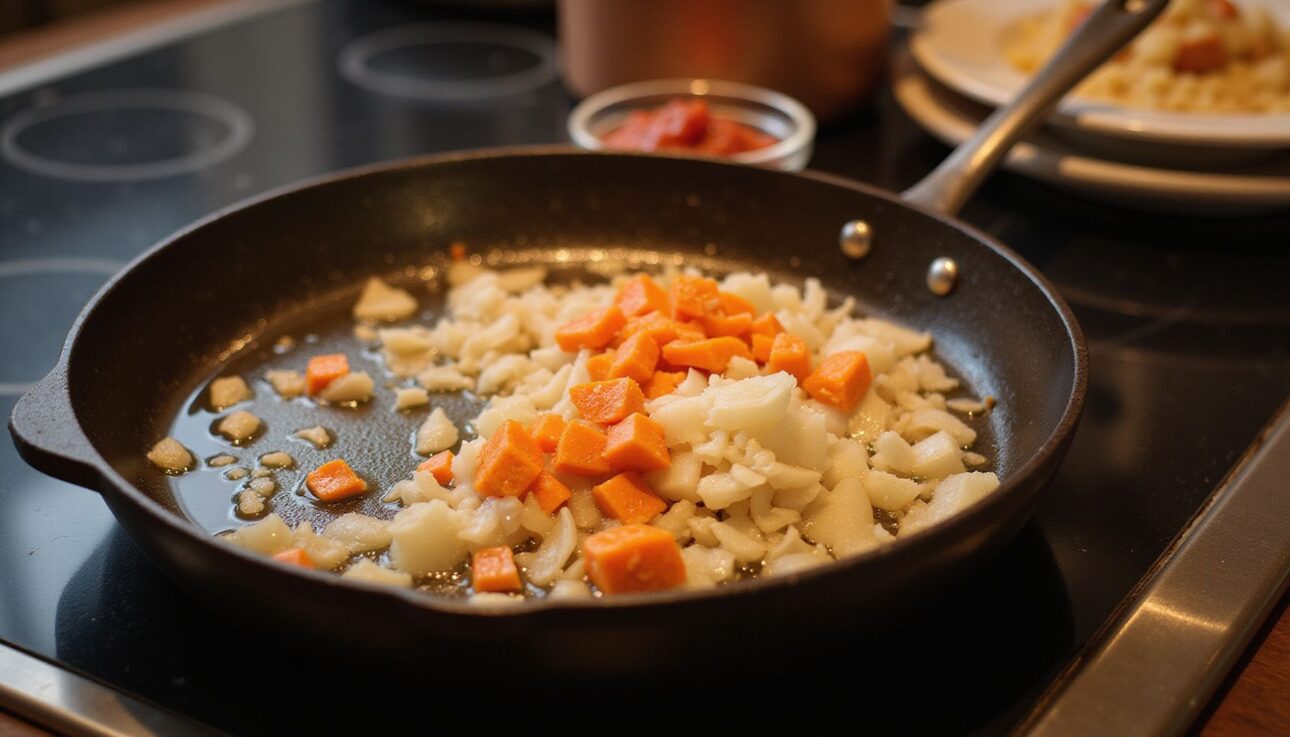
While the stock simmers, build the flavor base. In a large skillet, heat a few tablespoons of neutral oil over medium heat. Add the diced onion and cook for 4-5 minutes until it turns translucent.
Add the grated carrots and cook for another 3-4 minutes, stirring occasionally. The carrots should soften and the mixture should become quite fragrant.
Push the vegetables to the side of the pan, add the tomato paste (or ketchup) to the open space, and fry it for 1-2 minutes. This caramelizes the tomato, deepening its flavor. Stir everything together, add a splash of water, and let it simmer for 5 minutes until it forms a thick, aromatic sauce. This mixture is the flavorful backbone of your borscht.
Step 3: Layering the Vegetables and Beets
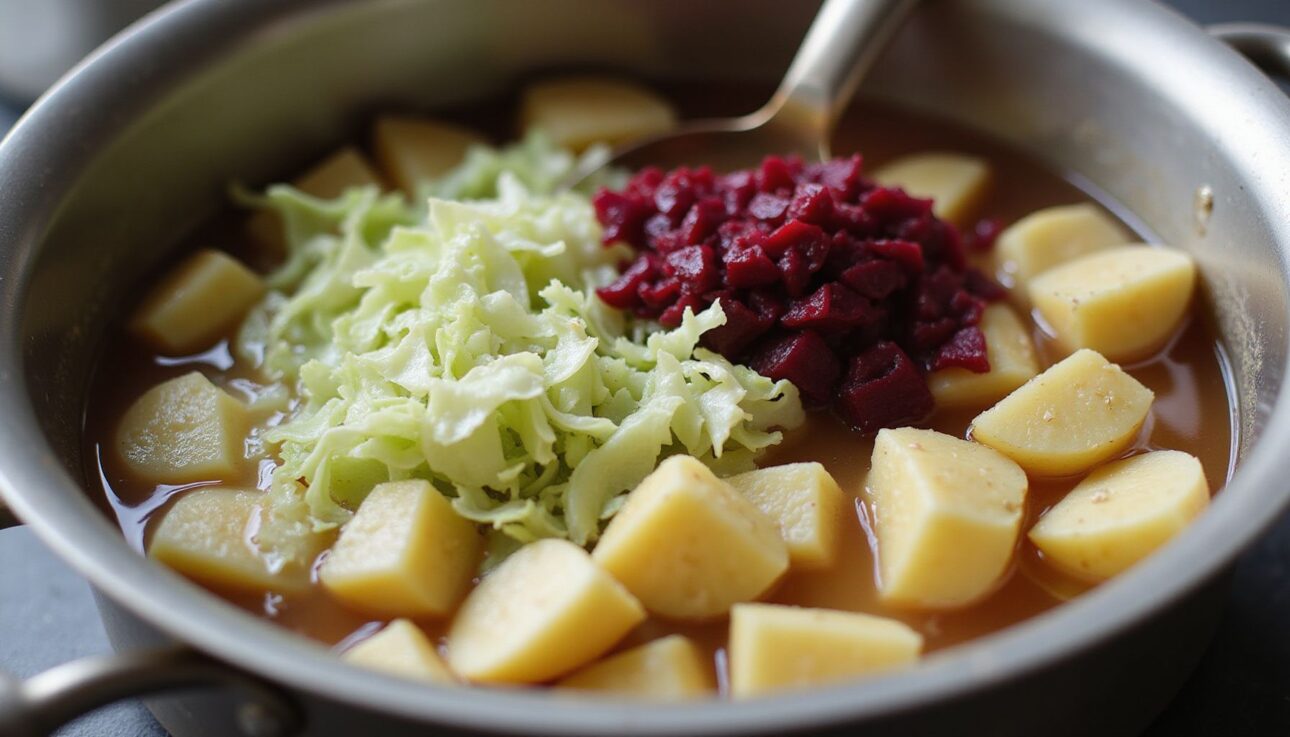
Now, bring the pot of strained broth back to a gentle simmer. Layering the vegetables in the correct order is crucial.
First, add the cubed potatoes. Let them cook for 10-15 minutes.
Next, add the shredded cabbage. Let it simmer for another 10 minutes. The cabbage should be tender but not mushy.
Finally, add the grated beets and the prepared zazharka. This is a critical moment. Adding the beets too early, while the other vegetables are still very hard, can lead to them overcooking and losing their color. The key to that vibrant red is to add the beets later in the process.
Step 4: The Finishing Polish
Immediately after adding the beets, pour in your chosen acidifier — 1 tablespoon of white vinegar or freshly squeezed lemon juice. This step chemically locks in the betalain pigments, ensuring your soup stays a brilliant ruby red instead of turning a dull brown.
Let the soup simmer for another 10-15 minutes so the flavors can meld. Turn off the heat.
Now, add the final touches. Stir in the chopped fresh garlic, a generous handful of chopped fresh dill, and some parsley. Add the shredded meat back into the pot. Season with salt and black pepper, but remember to taste first. The vinegar and tomatoes already add some saltiness. Stir everything together and let it sit for 10 minutes before serving. This resting period allows the flavors to fully develop.
Common Mistakes to Avoid
Over-boiling: A vigorous, rolling boil after the beets are added will destroy their color. Keep the soup at a gentle simmer.
Salting too early: Salt can draw the color out of the beets and turn the soup a murky brown. Always season at the very end.
Skipping the acid: Without an acid (vinegar or lemon juice), the beets will oxidize and turn brown. This is the single most important tip for a red borscht.
Skimping on the stock: A good borscht needs a rich, flavorful base. Don’t just use water. Use a good-quality meat stock or a robust vegetable stock.
Troubleshooting: Getting the Perfect Flavor Profile
The soup tastes flat: This usually means it needs more salt or acid. Add a pinch of salt and a dash of vinegar, stir, and taste again. Sometimes a teaspoon of sugar helps balance the earthiness of the beets.
The soup is too sweet: Beets are naturally sweet. Balance the sweetness with an extra splash of vinegar or a squeeze of lemon juice.
The soup is too thin: Mash a few of the cooked potato cubes against the side of the pot. The natural starches will thicken the broth beautifully.
The color is brown: This happens if the acid was added too late or not at all. It will still taste good, but it won’t have that classic look. Next time, add the vinegar with the beets.
Recipe Card
Classic Beef Borscht
A rich, hearty beet soup with a vibrant red color, tender beef, and a perfect balance of sweet and tangy flavors.
Place beef and cold water in a large pot. Bring to a boil, skimming off any foam. Reduce heat, cover, and simmer for 1.5 hours until meat is tender. Remove meat, strain broth, and shred meat.
While stock simmers, make the zazharka. Sauté onion and carrots in oil until soft. Add tomato paste and cook for 1-2 minutes.
Return broth to a simmer. Add potatoes and cook for 10 minutes. Add cabbage and cook for 10 more minutes.
Add grated beets, zazharka, shredded meat, bay leaves, and vinegar to the pot. Simmer for 15 minutes.
Turn off the heat. Stir in garlic, dill, and parsley. Season with salt and pepper. Let rest for 10 minutes.
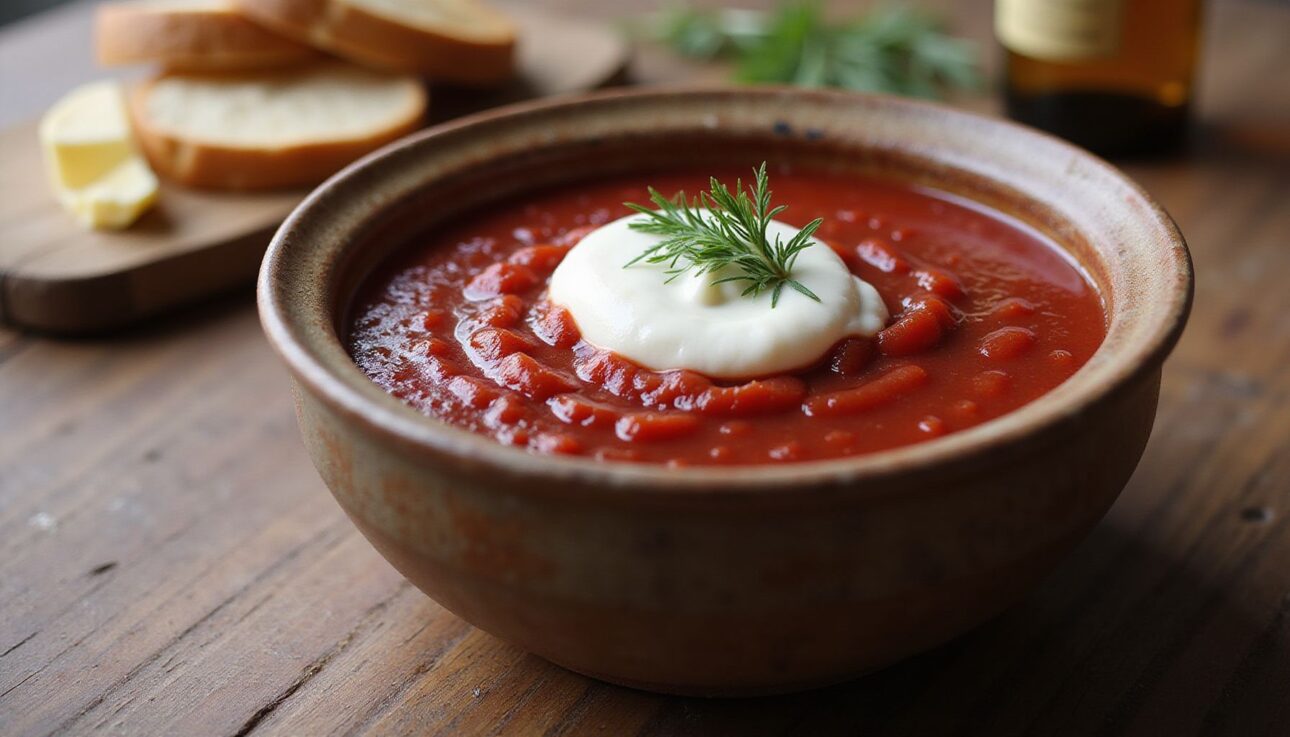
Serve hot with a generous dollop of sour cream.
Nutrition Info (per serving)
Calories
350
Protein
22g
Carbs
35g
Fat
15g
Fiber
5g
Sugar
12g
Sodium
480mg
Notes
Borscht tastes even better the next day after the flavors have melded.
For a vegetarian version, use a rich mushroom or vegetable stock and add a can of drained white beans.
Do not skip the vinegar as it is essential for keeping the soup bright red.
My Experience With Borscht Soup Recipe
I’ll be honest, my first batch of borscht was a sad, beige-brown mess. I added the beets too early, forgot the vinegar, and boiled it into submission. It was edible, but “vibrant” is the last word I would have used.
The real breakthrough came when I learned the science behind the color. That splash of vinegar isn’t just for flavor — it’s a chemical lock for the pigment. Seeing the pot turn a brilliant ruby red right after adding it felt like a magic trick. Now, I always make a double batch. The best part is the second day, when the flavors become so deeply melded and complex. That’s when it truly tastes like home.
Have you ever had a borscht that was a bit disappointing? What do you think went wrong?
FAQ
Q: Are there different types of borscht soup?
A: Yes, there are several regional variations. The most famous is Ukrainian red borscht, which uses beets, meat, and is served hot with sour cream. Russian borscht is similar but often uses beef stock. Cold green borscht, or chłodnik, is a summer soup made with fresh sorrel and served cold.
Q: How long does borscht take to make from scratch?
A: Making borscht from scratch usually takes about 1.5 to 2.5 hours. This includes the time to prepare the meat stock and simmer the vegetables. If you use a pre-made stock, the cook time drops to about 45 minutes to 1 hour, but the flavor won’t be as deep.
Q: Will borscht taste better if stored overnight?
A: Yes, borscht is famous for tasting better the next day. The flavors meld and develop more depth as it rests. The acidity from the vinegar or lemon juice also balances out.
Q: When is fresh dill added to borscht soup?
A: Fresh dill is added at the very end of cooking, after you turn off the heat. This preserves its bright flavor and green color. If you cook it too long, it loses its aroma.
Q: What is the best sour cream to serve with borscht?
A: Full-fat sour cream or crème fraîche is the best choice. It provides a rich, tangy contrast to the sweet and savory soup. A dollop is traditionally placed in each bowl before serving.
Q: Is borscht soup healthy for weight loss?
A: Yes, borscht is generally healthy for weight loss. It is low in calories and high in fiber from the beets, cabbage, and carrots, especially if you use lean meat or make it vegetarian. Beets are packed with nutrients and have been linked to various health benefits, as noted by Healthline.
Q: Which vinegar is best for adding acidity to borscht?
A: White vinegar, apple cider vinegar, and lemon juice are all common choices. White vinegar is neutral and effective. Lemon juice adds a bright citrus note. Apple cider vinegar offers a subtle fruity depth.
I’m the mom behind Wise Mom Blogger, where everyday creativity meets real-life motherhood. I share easy DIY crafts, cozy knitting and crochet projects, beginner-friendly sewing ideas, and family-tested recipes—plus quick baking hacks that make homemade feel doable on busy days.