

If you love bright vegetables, silky sauce, and a comforting plate that still feels light, you’re in the right kitchen. Creamy Pasta Primavera is the kind of dish that sounds fancy but is actually simple enough for a weeknight, and impressive enough for a weekend dinner. The idea is to mix crisp-tender vegetables with a creamy sauce and tender pasta, so every bite has a little burst of color, texture, and flavor. This guide walks you through a friendly, step-by-step approach to making a creamy Pasta Primavera that tastes like a chef’s kitchen but uses easy-to-find ingredients and straightforward techniques. By the end, you’ll know how to balance creaminess with the fresh flavors of vegetables, why timing matters, and how to customize the dish to your taste.
This recipe is flexible. You can swap in your favorites—snap peas, zucchini, cherry tomatoes, asparagus, bell peppers—and you can dial up or down the creaminess. It’s also a great way to use up bits of veggies in your crisper. The result is a comforting, vibrant pasta dish that pairs beautifully with a crisp green salad and a slice of crusty bread. Ready to cook? Let’s get started with a plan that keeps you on track, no guesswork required.
Key Takeaways
- A creamy Pasta Primavera blends fresh vegetables with a smooth, flavorful cream sauce for a comforting yet bright dish.
- Getting the timing right matters: boil pasta until al dente, cook vegetables to crisp-tender, and finish the sauce just before serving.
- Use a mix of colorful vegetables for texture and visual appeal; you can customize the mix to your taste and season.
- Reserve a little pasta water to loosen the sauce and help it cling to the noodles.
- Finish with grated parmesan and fresh herbs for a polished, restaurant-like finish.
Quick Answer
To make creamy Pasta Primavera, cook your pasta until al dente, sauté a colorful mix of vegetables in olive oil and a touch of butter, create a light cream sauce with heavy cream and parmesan (seasoned with garlic and lemon), then toss the pasta with the vegetables and sauce, thinning with reserved pasta water as needed. Serve with extra parmesan and fresh herbs. The dish comes together in about 25-35 minutes and feeds 3-4 people.
What You Need
- Kitchen tools:
– Large pot for pasta, large skillet or sauté pan, zester, knife, cutting board, wooden spoon, measuring cups and spoons, colander.
- Pantry staples:
– Salt, black pepper, olive oil, butter
- Ingredients (serves 3-4):
– Pasta: 12 oz (340 g) fettuccine, linguine, or penne – Vegetables (fresh and colorful): 1 cup snapped broccoli florets, 1 cup sliced bell peppers (mixed colors), 1 cup zucchini or yellow squash, 1 cup asparagus cut into bite-sized pieces, 1 cup cherry tomatoes halved, 1/2 cup peas or snap peas – Aromatics: 3 garlic cloves, minced – Creaminess: 1 cup heavy cream (or half-and-half for a lighter version) – Dairy: 1/2 cup grated parmesan cheese, 2 tablespoons cream cheese (optional, for extra body) – Finishing: Zest of 1 lemon, juice of 1/2 lemon (optional, for brightness), fresh parsley or basil, extra grated parmesan – Seasonings: Salt and black pepper to taste
- Optional add-ins:
– Protein: cooked chicken strips, shrimp, or turkey sausage – Flavor boosters: white wine splash (about 1/4 cup), red pepper flakes for heat
Step 1: Prep Ingredients
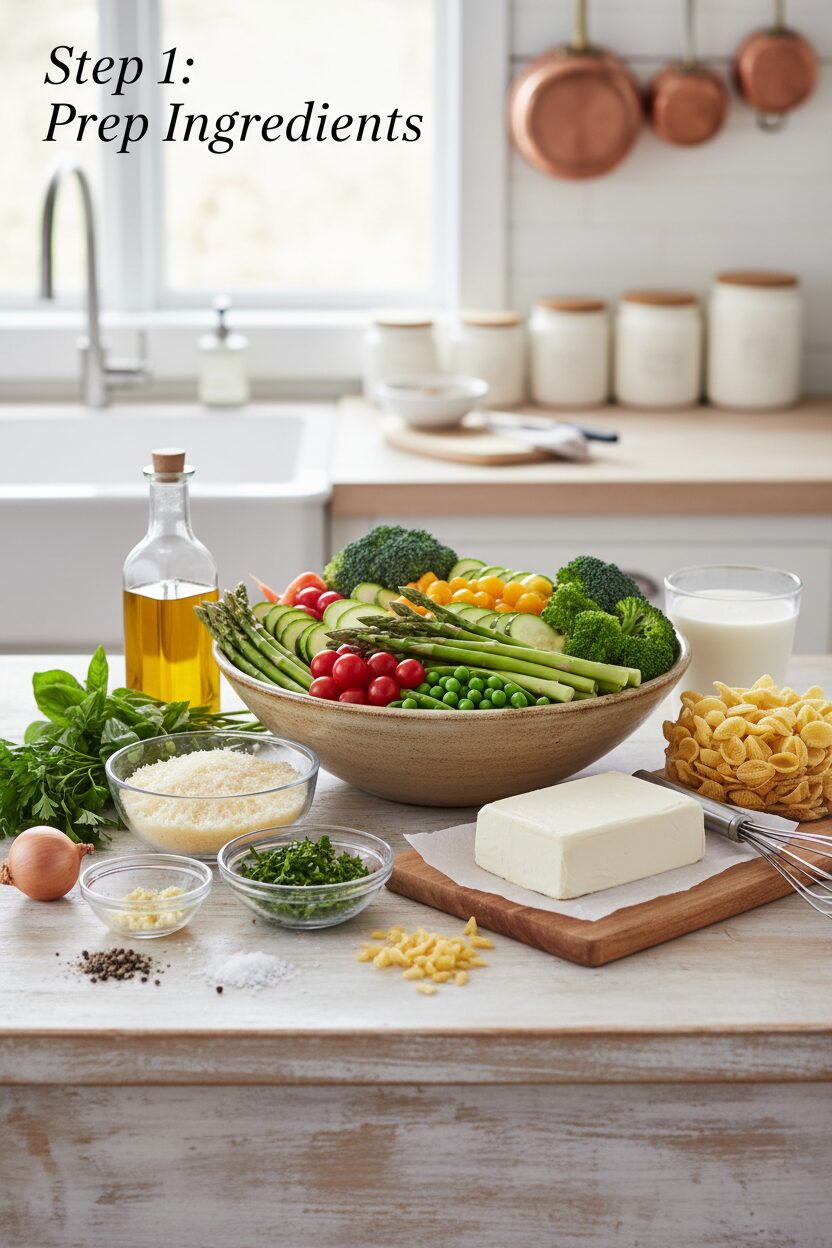
Start with clean, ready-to-cook vegetables and pasta. Wash all fresh produce. Slice vegetables into bite-sized pieces so they cook evenly. Here’s a simple plan:
- Cut broccoli into small florets.
- Slice bell peppers into thin strips or small squares.
- Slice zucchini and/or yellow squash into half-moon pieces or semi-circles.
- Trim woody ends from asparagus and cut into 1-2 inch pieces.
- Halve cherry tomatoes so they soften a bit but don’t turn to mush.
- Mince garlic cloves finely.
- Grate parmesan in advance and have lemon zest ready.
- If you’re adding a protein, prep it now (cook chicken or shrimp until just done and set aside).
Why this matters: even chunk sizes and uniform knife work help every vegetable cook evenly. You’ll avoid having undercooked or overcooked bits, and you’ll keep the dish looking colorful.
What to do while prepping:
- Bag or plate the chopped veggies in order of cooking times. For example, firmer veggies like broccoli and peppers may go in first, while tomatoes go in later to avoid turning to mush.
- Put a big pot of salted water on to boil for the pasta.
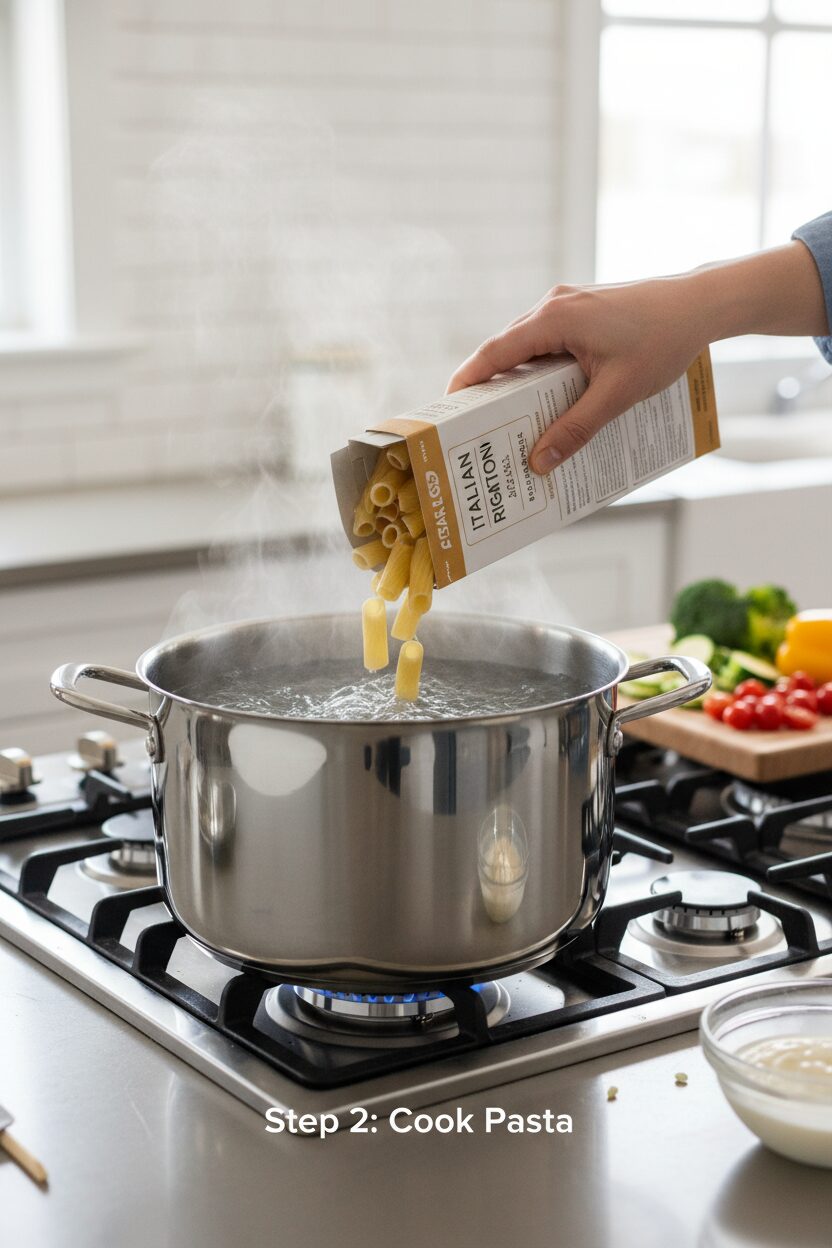
Step 2: Cook Pasta
Pasta is the backbone of the dish, so getting it right is crucial.
- Bring a large pot of salted water to a rolling boil. Salt the water generously; it should taste like the sea.
- Add the pasta and cook until about 1-2 minutes shy of the package’s al dente time. You want it firm but not hard in the middle, because it will finish cooking in the sauce later.
- Reserve about 1/2 to 1 cup of the starchy cooking water before draining. This starchy water is gold for helping the sauce cling to the pasta.
- Drain the pasta and set aside. Do not rinse; the starch helps the sauce adhere.
Tip: If you’re using thinner pasta like angel hair, start checking it closer to the lower end of the time range. For thicker shapes like penne or fettuccine, you’ve got a little more wiggle room.
Step 3: Sauté Veg and Aromatics
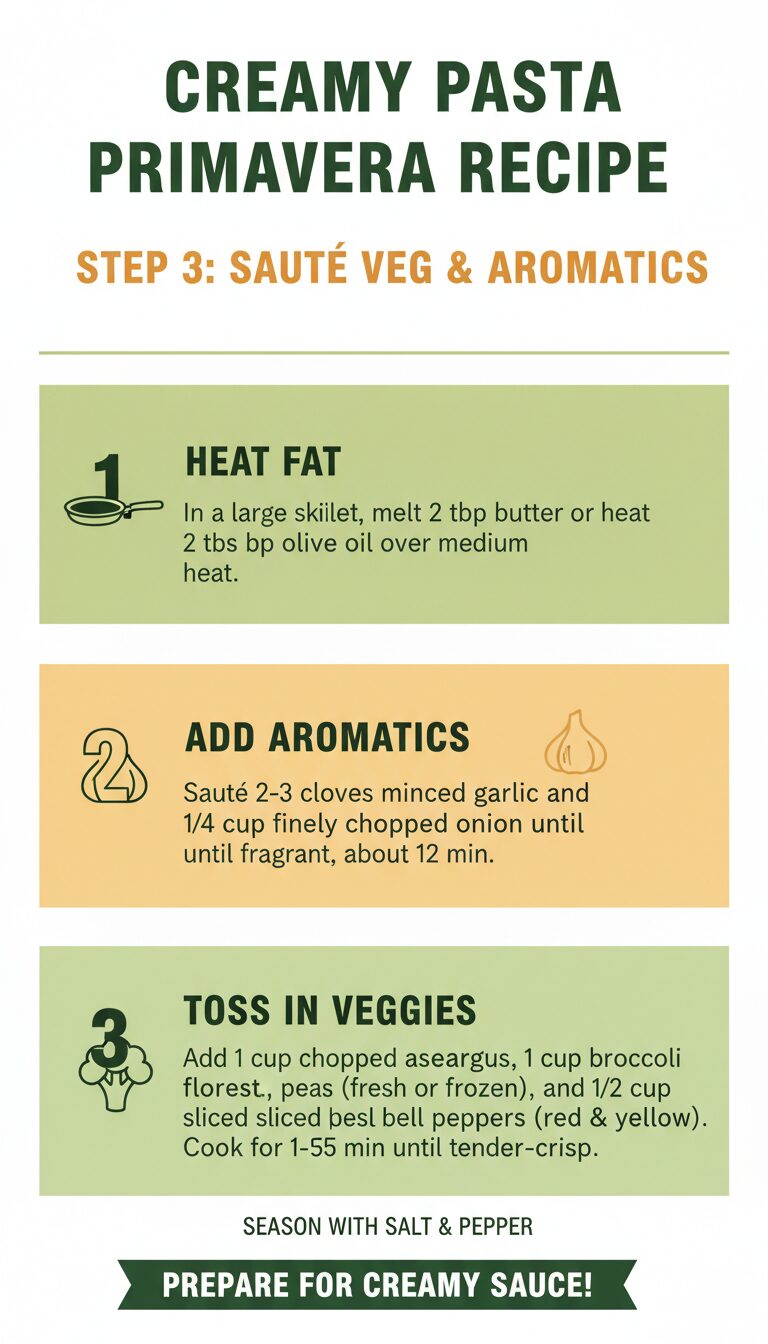
Now for the colorful trio that makes Pasta Primavera so appealing: vegetables and aromatics.
- In a large skillet, heat 1-2 tablespoons olive oil over medium heat. Add 1 tablespoon butter for extra richness if you like.
- Add minced garlic and sauté just until fragrant, about 30 seconds. Don’t let it burn; garlic becomes bitter quickly.
- Add the firmer vegetables first: broccoli, asparagus, and bell peppers. Sauté for about 3-4 minutes, stirring to coat with oil and butter.
- Add zucchini and peas. Continue to sauté for another 2-3 minutes until the vegetables are crisp-tender and vibrant in color.
- Finally, toss in cherry tomatoes and heat briefly until they just begin to soften.
- Season with a pinch of salt and pepper, and if you like a brighter note, a squeeze of lemon juice.
What you’re aiming for: vegetables that stay lively and colorful, with some tenderness but still a bite. Overcooked vegetables will dull the dish and lead to a soggy texture.
Optional pro tip: If you want a bit of extra richness, splash in a small amount of white wine after adding the garlic and before the vegetables. Let it reduce by half to concentrate the flavor.
Step 4: Make Cream Sauce
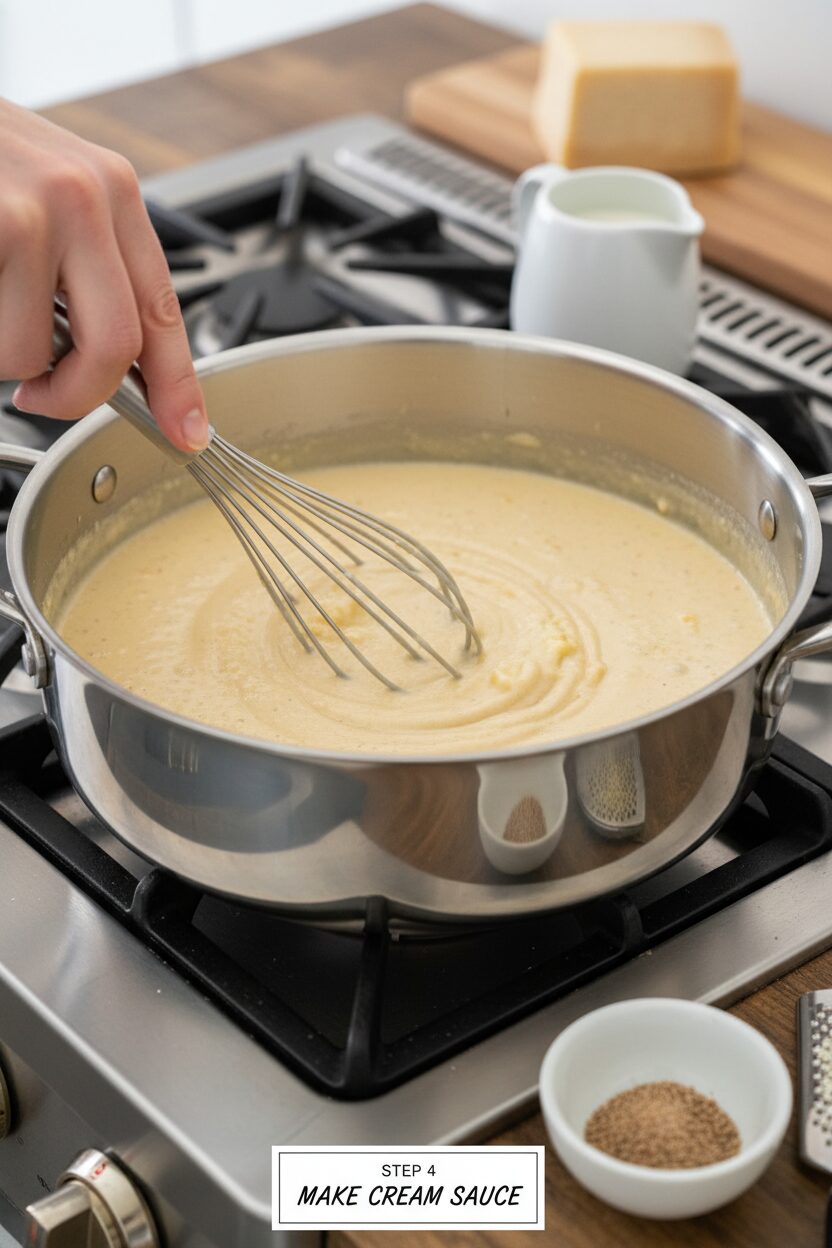
This is where the magic happens—the creamy bed that ties everything together.
- Lower the heat and pour in the heavy cream (or half-and-half for a lighter version). Stir to combine with the vegetables.
- Add the grated parmesan and optional cream cheese. Stir until the cheese melts into the sauce, creating a smooth, velvety texture.
- If the sauce looks too thick, add a splash of the reserved pasta water, a little at a time, until you reach a velvety coat that clings to the pasta.
- Season with salt, pepper, and if you like, a pinch of lemon zest for brightness. A small pinch of red pepper flakes can add a gentle kick.
- Let the sauce simmer for 1-2 minutes to thicken slightly, then taste and adjust.
Important note: Do not boil the sauce too aggressively after adding the dairy. A gentle simmer helps prevent the sauce from separating and keeps it creamy.
Optional step: For a lighter version, swap half of the cream for milk and add a touch of cream cheese to help with creaminess. You’ll lose some richness, but you’ll keep the smooth texture.
Step 5: Combine and Finish
Time to bring it all together.
- Add the drained pasta to the skillet with the creamy vegetable mixture. Toss gently to coat the pasta evenly with the sauce.
- If the sauce seems thick, add a bit more of the reserved pasta water to loosen it to a silky consistency.
- Toss in extra lemon zest or a squeeze of lemon juice for a bright finish. Tear in fresh parsley or basil for color and aroma.
- Taste and adjust seasoning with salt and pepper. You can also add a little more parmesan at this stage for a stronger cheesy note.
- If you’re adding a protein (chicken, shrimp, sausage), mix it in after the pasta has absorbed some sauce and heat through for a minute or two.
Serving suggestion: Plate with a light dusting of parmesan on top and a few herbs for color. A side of crusty bread makes a perfect match to mop up any extra sauce.
Step 6: Serve and Variations
This final step is all about finishing touches and personal twists.
- Serve hot, right away. Creamy sauces thicken as they cool, so timing is key: get your plates ready before you finish tossing.
- Garnish with extra herbs and a final bite of lemon zest. A tiny drizzle of olive oil can add a glossy finish.
- Variations to try:
– Vegetarian/vegan version: Use plant-based cream and vegan parmesan alternatives. You can also make the sauce with cashew cream for a dairy-free option. – Protein add-ins: Add pre-cooked chicken, sautéed shrimp, or turkey sausage to turn this into a heartier main. – Different veggies: Swap in spinach, mushrooms, or snap peas. The idea is to keep a mix of colors and textures. – Spicy kick: A pinch of red pepper flakes or a drizzle of hot sauce can wake up the dish. – Citrus twist: A little lemon juice at the end brightens the flavor and balances the creaminess.
This Step 6 is your chance to tailor the recipe to what you have and what you love. The basic technique remains the same, but the final flavors can be totally personal.
Tips
- Plan ahead: Have all veggies chopped and measured before you start cooking. This makes the process smooth and fast.
- Don’t overcrowd the pan: Cook vegetables in batches if needed. Overcrowding traps steam and makes them soggy.
- Use a high-quality cheese: Freshly grated parmesan melts better and tastes better than pre-grated.
- Pasta water is your friend: The starchy water helps emulsify the sauce and helps it cling to pasta.
- Taste as you go: A little extra salt or pepper can make a big difference once all the elements come together.
FAQ
Q: Can I make this ahead of time? A: Yes, but the sauce may thicken when cooled. Reheat gently on the stove with a splash of pasta water to loosen it. You may need to adjust seasoning.
Q: Can I substitute milk for cream? A: You can, but the sauce will be thinner. If you must, use 1 cup milk and 1/2 cup heavy cream, and a touch of cornstarch slurry (1 teaspoon cornstarch mixed with 1 tablespoon water) to thicken at the end.
Q: What kind of pasta works best? A: Flat pastas like fettuccine or linguine hold the sauce well. Penne, bow-tie, or shells also work nicely.
Q: How do I make it lighter? A: Use half-and-half or milk for the sauce and skip heavy cream. Add more vegetables and use less cheese to keep it lighter.
Q: Can this be vegetarian and gluten-free? A: Yes. Use gluten-free pasta and a dairy-free cream substitute if you need dairy-free. For extra richness, you can use a plant-based cream.
Conclusion
Creamy Pasta Primavera is a celebration of color, texture, and comfort—all in one bowl. With a creamy, cheesy base and a vibrant mix of vegetables, this dish feels special without being complicated. The steps are straightforward, and the beauty of the recipe is in its flexibility. You can customize the veggies, swap in proteins, and adjust the creaminess to match your mood or dietary needs.
If you’re cooking for a family, this recipe scales well. It’s also great for entertaining because you can prep the veggies ahead of time and finish the dish in minutes. The trick is to keep things moving: boil the pasta, sauté the vegetables to crisp-tender, and fold everything into a smooth, glossy sauce just before serving.
Experiment with additions and keep the balance of creamy sauce and bright vegetables. Before you know it, you’ll be making Creamy Pasta Primavera with confidence, turning a simple dinner into a colorful, cozy experience that everyone will love.

Sarah Anderson . J
I’m the mom behind Wise Mom Blogger, where everyday creativity meets real-life motherhood. I share easy DIY crafts, cozy knitting and crochet projects, beginner-friendly sewing ideas, and family-tested recipes—plus quick baking hacks that make homemade feel doable on busy days.
