
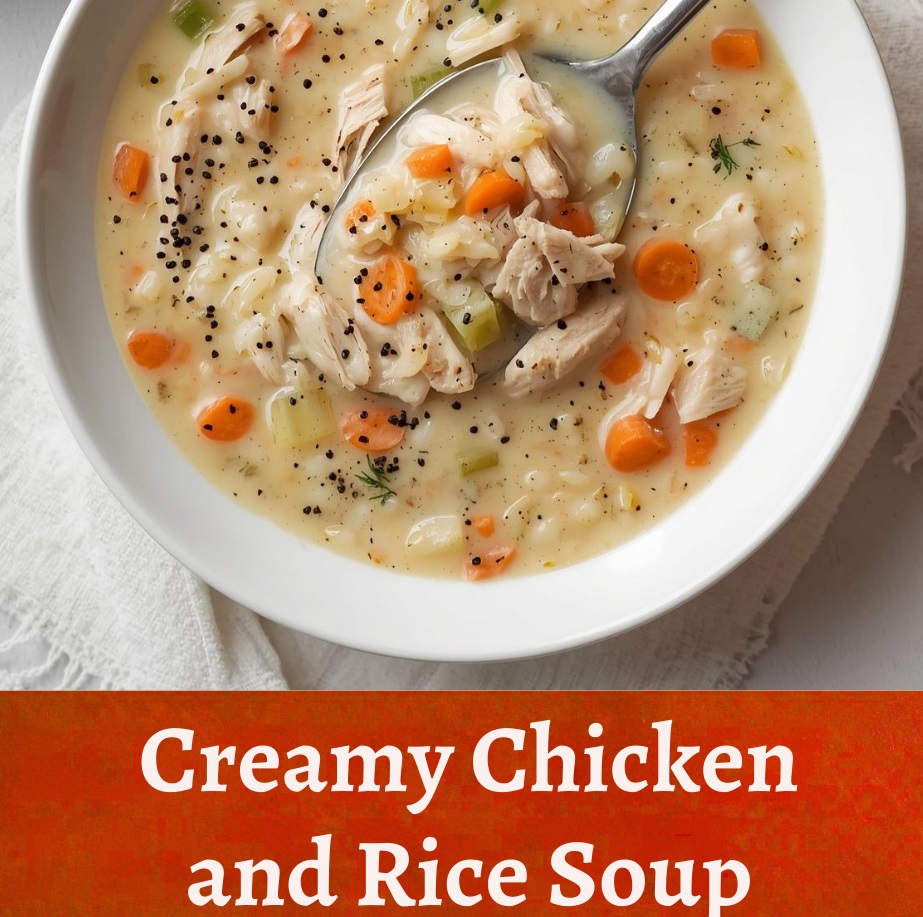

There’s something magical about a bowl of soup that wraps you in warmth from the inside out. Creamy chicken and rice soup delivers exactly that—a velvety, satisfying meal that’s surprisingly simple to make at home, even on a busy weeknight.
Key Takeaways
- Creamy chicken and rice soup combines tender chicken, fluffy rice, and vegetables in a rich, cream-based broth that takes about 45 minutes to prepare
- Using bone-in chicken thighs instead of breasts adds more flavor, though either works well
- The soup thickens as it sits because rice absorbs liquid, so plan to add extra broth when reheating leftovers
- Heavy cream creates the richest texture, but half-and-half or milk work as lighter alternatives
- Season in layers—salt the chicken, season the vegetables, and adjust at the end for balanced flavor
- This soup freezes well for up to 3 months, though the rice texture may soften slightly after thawing
- Add cream at the end of cooking to prevent curdling and maintain smooth consistency
Quick Answer

Creamy chicken and rice soup is a one-pot comfort meal made by cooking chicken and vegetables in broth, adding rice until tender, then finishing with cream for a velvety texture. The entire process takes 45-50 minutes and requires basic ingredients you likely already have: chicken, rice, vegetables, broth, and cream. The result is a restaurant-quality soup that’s perfect for cold days, meal prep, or feeding a hungry family.
What Makes Creamy Chicken and Rice Soup Different from Regular Chicken Soup?
Creamy chicken and rice soup stands apart because it includes a dairy component (cream, milk, or half-and-half) that creates a rich, velvety broth instead of the clear, brothy base of traditional chicken soup. This addition transforms the texture completely, making each spoonful feel more indulgent and satisfying.
The rice also plays a dual role in this soup. It serves as both a hearty ingredient and a natural thickener. As the rice cooks, it releases starch into the liquid, which combines with the cream to create that signature thick, almost chowder-like consistency.
Key differences:
- Texture: Thick and creamy versus clear and brothy
- Richness: Higher fat content from dairy makes it more filling
- Color: Pale, creamy appearance instead of golden or clear
- Serving style: Works as a complete meal rather than just a starter
Choose creamy chicken and rice soup when you want something more substantial than traditional chicken noodle soup, or when you’re craving comfort food that feels like a warm hug.
What Ingredients Do You Need for Creamy Chicken and Rice Soup?
The beauty of this soup lies in its simple, accessible ingredient list. You need chicken (1.5 to 2 pounds), long-grain white rice (3/4 cup uncooked), aromatics (1 onion, 2-3 carrots, 2-3 celery stalks), garlic (3-4 cloves), chicken broth (6 cups), heavy cream (1 cup), butter (3 tablespoons), and seasonings (salt, pepper, thyme, bay leaves).
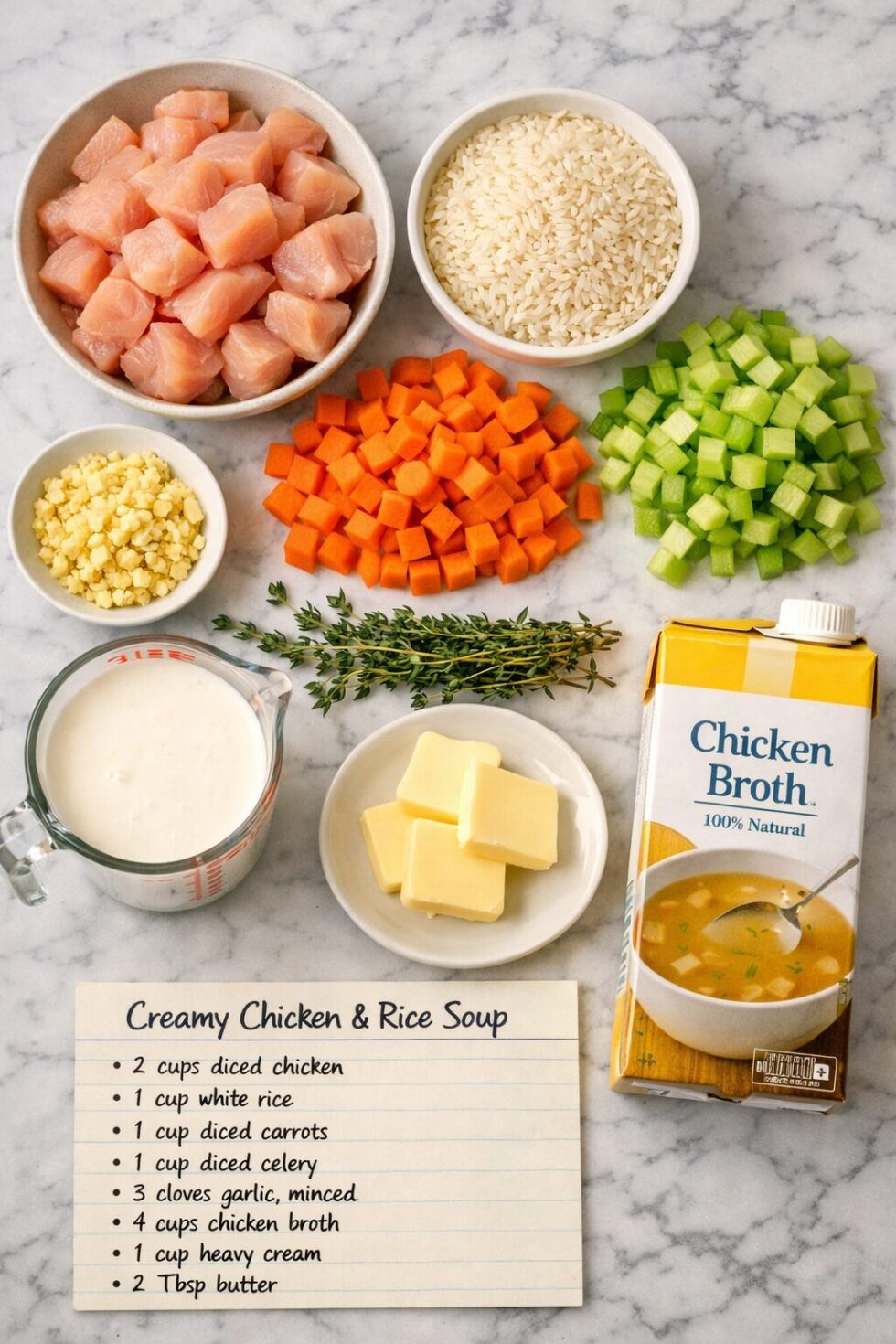
Protein options:
- Boneless, skinless chicken breasts (cook faster, leaner)
- Boneless, skinless chicken thighs (more flavorful, harder to overcook)
- Rotisserie chicken (biggest time-saver, add at the end)
- Bone-in chicken pieces (maximum flavor, requires more prep)
Rice choices:
- Long-grain white rice (classic choice, stays fluffy)
- Jasmine rice (adds subtle fragrance)
- Basmati rice (holds shape well)
- Avoid instant rice (gets mushy) and brown rice (takes too long and throws off timing)
Cream alternatives:
- Heavy cream (richest, most stable)
- Half-and-half (lighter but still creamy)
- Whole milk (least rich, may need flour to thicken)
- Coconut cream (dairy-free option with slight coconut flavor)
A common mistake is using pre-cooked or instant rice. These varieties turn to mush in soup because they’ve already been partially cooked. Stick with regular uncooked rice for the best texture.
How Do You Make Creamy Chicken and Rice Soup from Scratch?
Making creamy chicken and rice soup from scratch follows a simple build-and-simmer method that takes about 45-50 minutes total. Start by cooking the chicken, then build flavor with vegetables, add rice and broth, and finish with cream.
Step-by-step process:
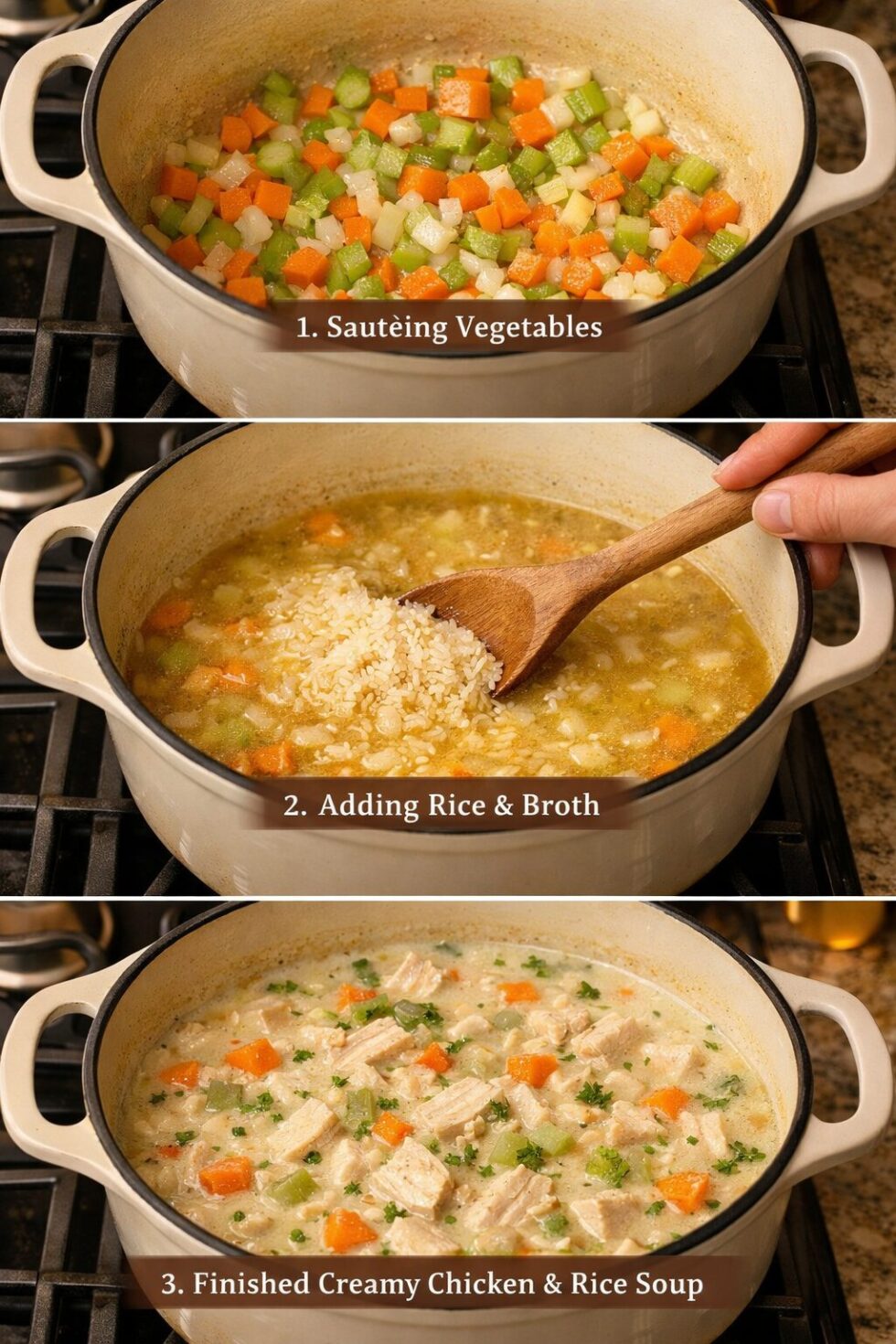
Prep your ingredients (10 minutes): Cut chicken into bite-sized pieces, dice vegetables into similar sizes, mince garlic, and measure out rice and liquids.
Cook the chicken (5-7 minutes): Melt butter in a large pot or Dutch oven over medium-high heat. Season chicken pieces with salt and pepper, then cook until golden on the outside (doesn’t need to be fully cooked through). Remove and set aside.
Build the flavor base (5 minutes): In the same pot, add diced onion, carrots, and celery. Cook until softened, about 5 minutes, scraping up any browned bits from the chicken. Add garlic and cook 1 minute more.
Add rice and broth (20-25 minutes): Pour in chicken broth, add rice, thyme, and bay leaves. Bring to a boil, then reduce heat and simmer uncovered for 15 minutes.
Return chicken and finish cooking (5-10 minutes): Add the chicken back to the pot and continue simmering until rice is tender and chicken is cooked through, about 5-10 more minutes.
Add cream and season (2 minutes): Reduce heat to low, stir in heavy cream, and heat through without boiling. Taste and adjust salt and pepper. Remove bay leaves before serving.
The most critical step is adding the cream at the end on low heat. If you add it too early or let the soup boil after adding cream, it can curdle and separate, ruining the smooth texture you’re after.
How Do You Get the Perfect Creamy Texture in Chicken and Rice Soup?
The perfect creamy texture comes from three factors working together: the starch released by the rice, the fat from the cream, and gentle heat management. Each element contributes to that smooth, velvety consistency that makes this soup so satisfying.
Texture-building techniques:
- Don’t rinse your rice: The surface starch helps thicken the soup naturally
- Simmer, don’t boil: Aggressive boiling breaks down the rice too much and can cause cream to separate
- Add cream at the end: This prevents curdling and maintains smooth consistency
- Use enough fat: Butter for cooking vegetables plus cream creates richness
- Consider a roux: For extra-thick soup, make a roux with 2 tablespoons flour and butter before adding broth
If your soup turns out too thin, you have several fixes. Simmer it uncovered for 10-15 minutes to reduce and concentrate. Mix 2 tablespoons cornstarch with 2 tablespoons cold water, then stir into the soup and simmer for 5 minutes. Or mash some of the rice against the side of the pot to release more starch.
If it’s too thick (common with leftovers), simply add more broth or cream when reheating, stirring until you reach your desired consistency. The rice continues absorbing liquid as the soup sits, so leftovers almost always need thinning.
What Are Common Mistakes When Making Creamy Chicken and Rice Soup?
The biggest mistake is overcooking the rice, which turns it mushy and makes the soup gluey instead of creamy. Rice should be tender but still have individual grains visible. This happens when you cook it too long or use instant rice varieties.
Other mistakes to avoid:
- Adding cream too early: Causes curdling and separation when the soup boils
- Using too little liquid: Rice absorbs a lot of broth, so you need the full 6 cups for proper consistency
- Cutting vegetables too small: They’ll disintegrate during the long simmer time
- Not seasoning in layers: Season the chicken, then the vegetables, then taste at the end
- Boiling instead of simmering: Breaks down ingredients and can curdle dairy
- Skipping the sauté step: Browning chicken and vegetables builds essential flavor
One edge case to watch for: if you’re using rotisserie chicken or pre-cooked chicken, add it in the last 5 minutes just to heat through. Otherwise, it becomes dry and stringy from overcooking.
Choose bone-in chicken pieces if you want maximum flavor and don’t mind the extra step of removing bones. Choose boneless cuts if you’re short on time or cooking for kids who might struggle with bones.
How Do You Store and Reheat Creamy Chicken and Rice Soup?
Store creamy chicken and rice soup in airtight containers in the refrigerator for up to 4 days. The soup will thicken considerably as it cools because the rice continues absorbing liquid, so expect to add extra broth or cream when reheating.
Storage best practices:
| Method | Duration | Notes |
|---|---|---|
| Refrigerator | 4 days | Store in airtight container, soup will thicken |
| Freezer | 3 months | Texture changes slightly, rice may soften |
| Room temperature | 2 hours max | Discard if left out longer (food safety) |
Reheating instructions:
- Stovetop (best method): Pour soup into a pot, add 1/2 to 1 cup broth or cream, heat over medium-low, stirring occasionally until warmed through (about 10 minutes)
- Microwave: Place in microwave-safe bowl, add a splash of broth, cover loosely, heat in 2-minute intervals, stirring between each
- Slow cooker: Add extra liquid, heat on low for 1-2 hours, stirring occasionally
A common issue is the soup separating after freezing and reheating. This happens because freezing changes the emulsion of fats and liquids. To fix it, whisk vigorously while reheating or blend a small portion of the soup, then stir it back in to re-emulsify.
For meal prep, consider freezing the soup base without the cream, then adding fresh cream when you reheat. This maintains better texture and prevents separation issues.
Can You Make Creamy Chicken and Rice Soup Healthier?
You can absolutely make a lighter version of creamy chicken and rice soup without sacrificing too much of that comforting richness. The main modifications involve reducing fat content and adding more vegetables for nutrition and volume.
Healthier substitutions:
- Replace heavy cream with 2% milk plus 2 tablespoons flour (reduces calories by about 400 per batch)
- Use chicken breast instead of thighs (saves about 100 calories and 10g fat per pound)
- Add extra vegetables like spinach, kale, or peas (increases fiber and nutrients)
- Use brown rice instead of white (adds fiber, but increase cooking time by 15-20 minutes)
- Reduce butter to 1 tablespoon and use cooking spray (cuts about 200 calories)
- Use low-sodium broth and control salt yourself (reduces sodium significantly)
The trade-off is texture and richness. Milk-based versions are noticeably thinner and less velvety than cream-based ones. If you go this route, the flour is essential—it helps thicken the soup and prevents the milk from separating.
Choose the lighter version if you’re watching calories or fat intake but still want comfort food. Choose the full-fat version if you’re serving it as a special occasion meal or need something truly satisfying on a cold day.
One trick I use is splitting the difference: use half-and-half instead of heavy cream, add an extra cup of vegetables, and use a mix of breast and thigh meat. You get decent richness with better nutrition.
What Variations Can You Try with Creamy Chicken and Rice Soup?
Once you master the basic recipe, creamy chicken and rice soup becomes a flexible template for countless variations. The core technique stays the same, but you can change flavors dramatically by swapping a few ingredients.
Popular variations:
- Wild rice chicken soup: Replace white rice with wild rice blend (increase cooking time to 40-45 minutes)
- Lemon chicken and rice: Add zest and juice of 2 lemons with the cream for bright, tangy flavor
- Mushroom chicken and rice: Sauté 8 oz sliced mushrooms with the vegetables, use cremini or shiitake for depth
- Italian-style: Add Italian seasoning, diced tomatoes, and finish with parmesan instead of just cream
- Curry chicken and rice: Stir in 2 tablespoons curry powder with the vegetables, use coconut cream instead of dairy
- Southwestern: Add cumin, chili powder, corn, black beans, and finish with a squeeze of lime
Vegetable additions:
- Spinach or kale (stir in during last 2 minutes)
- Frozen peas (add with cream at the end)
- Diced potatoes (add with rice, cut small so they cook in time)
- Butternut squash cubes (add with vegetables, sweet and savory combo)
A common question is whether you can make this soup vegetarian. Yes, but you’ll need to replace the chicken with chickpeas, white beans, or extra-firm tofu, and use vegetable broth. The texture and protein content work well, though the flavor profile changes significantly.
Conclusion
Creamy chicken and rice soup is one of those recipes that proves comfort food doesn’t have to be complicated. With basic ingredients, one pot, and less than an hour, you can create a restaurant-quality soup that satisfies on every level—rich, creamy, hearty, and deeply flavorful.
The keys to success are simple: build flavor in layers by browning your chicken and sautéing vegetables, use regular (not instant) rice, add cream at the end on low heat, and don’t be afraid to adjust consistency with extra broth or cream. Master these basics, and you’ll have a reliable recipe you can adapt to whatever ingredients you have on hand or flavors you’re craving.
Your next steps:
- Gather your ingredients and prep everything before you start cooking
- Follow the basic recipe once to get familiar with the technique
- Try one variation that appeals to your taste preferences
- Make a double batch and freeze half for an easy future meal
The best part? This soup actually tastes better the next day as the flavors meld together. So go ahead and make a big pot—you’ll be glad you did when you have creamy, comforting soup ready to go on a busy evening. Now grab your biggest pot and get cooking.
FAQ
How long does creamy chicken and rice soup last in the fridge? Creamy chicken and rice soup lasts 4 days in the refrigerator when stored in an airtight container. The soup will thicken as it sits, so add extra broth or cream when reheating.
Can you freeze creamy chicken and rice soup? Yes, you can freeze creamy chicken and rice soup for up to 3 months. The rice texture may soften slightly after thawing, and the soup might separate, but whisking while reheating usually fixes this. For best results, freeze the base without cream and add fresh cream when reheating.
Why is my creamy chicken and rice soup too thick? Your soup is too thick because the rice continues absorbing liquid as it sits. This is normal and easy to fix—simply add 1/2 to 1 cup of chicken broth or cream when reheating, stirring until you reach your desired consistency.
Can I use instant rice in creamy chicken and rice soup? No, avoid instant rice in this soup. Instant rice has been pre-cooked and will turn mushy and break down during the simmering time. Use regular long-grain white rice, jasmine, or basmati for best texture.
What’s the best rice for creamy chicken and rice soup? Long-grain white rice is the best choice for creamy chicken and rice soup because it stays fluffy and holds its shape during cooking. Jasmine and basmati rice also work well. Avoid instant rice and be aware that brown rice requires 15-20 minutes longer cooking time.
How do you keep cream from curdling in soup? Keep cream from curdling by adding it at the end of cooking when you’ve reduced the heat to low, and never let the soup boil after adding cream. The high heat and acid in the soup can cause dairy to separate, so gentle heating is essential.
Can you make creamy chicken and rice soup in a slow cooker? Yes, you can make this soup in a slow cooker. Cook chicken, broth, vegetables, and rice on low for 4-6 hours or high for 2-3 hours, then stir in cream during the last 15 minutes. The texture will be slightly different but still delicious.
What can I substitute for heavy cream in chicken and rice soup? You can substitute half-and-half, whole milk (add 2 tablespoons flour to thicken), or coconut cream for a dairy-free option. Each alternative creates a lighter soup than heavy cream, with milk being the least rich option.
How do you make creamy chicken and rice soup thicker? Make the soup thicker by simmering uncovered for 10-15 minutes to reduce liquid, mixing 2 tablespoons cornstarch with cold water and stirring it in, or mashing some rice against the pot to release more starch. You can also add a roux made from flour and butter.
Is creamy chicken and rice soup gluten-free? Basic creamy chicken and rice soup is naturally gluten-free as long as you use gluten-free chicken broth and don’t add flour for thickening. Always check broth labels, as some brands contain gluten-containing additives.
Can you add vegetables to creamy chicken and rice soup? Yes, you can add many vegetables to this soup. Carrots, celery, and onions are traditional, but spinach, kale, peas, corn, mushrooms, and potatoes all work well. Add hardy vegetables with the rice and delicate greens during the last few minutes of cooking.
What’s the difference between chicken and rice soup and cream of chicken and rice soup? Cream of chicken and rice soup includes dairy (cream, milk, or half-and-half) for a thick, velvety texture and pale color, while regular chicken and rice soup has a clear, brothy base. The creamy version is richer, more filling, and has a chowder-like consistency.

Sarah Anderson . J
I’m the mom behind Wise Mom Blogger, where everyday creativity meets real-life motherhood. I share easy DIY crafts, cozy knitting and crochet projects, beginner-friendly sewing ideas, and family-tested recipes—plus quick baking hacks that make homemade feel doable on busy days.
