
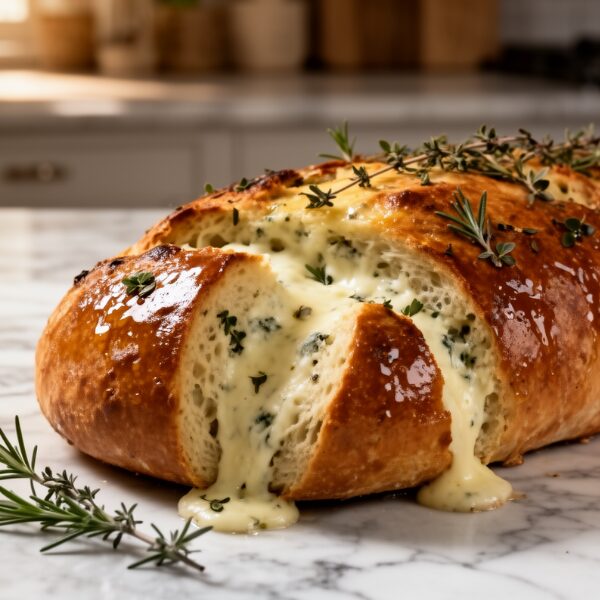
Have you ever walked into a sandwich shop, taken one sniff of that warm, herby, cheesy bread fresh out of the oven, and thought, “I need to make this at home”? That was me. I couldn’t stop thinking about that golden loaf with the melted cheese on top and the smell of oregano and garlic floating through the air. So one afternoon, I rolled up my sleeves, cleared off the kitchen counter, and decided to try making Italian herb and cheese bread from scratch.
And let me tell you — it was one of the best decisions I have ever made in my life.
I did a ton of research first. By the end of my research session, I felt like I could open my own little bread shop. Today, I want to share everything I learned with you — the ingredients, the steps, the tips, and all the little tricks that make this bread come out perfectly every time.
🌿 What Is Italian Herb and Cheese Bread, Anyway?
Before we get into the recipe, let me explain what makes this bread so special. Italian herb and cheese bread is a soft, fluffy loaf (or roll) that has herbs like oregano, basil, and parsley baked right into it. On the outside, it has a golden crust sprinkled with melted cheese — usually cheddar or Parmesan — and more herbs on top. When you bite into it, you get this amazing combo of fluffy bread, cheesy goodness, and savory herbs all at once.
It is the kind of bread that is great as a sandwich roll, a side dish with pasta, or honestly just eaten plain because it is THAT good. According to BreadDad.com, this bread is perfect for “mopping up” the tomato sauce from your favorite Italian dish. And honestly? They are so right.
🛒 What You Need: The Ingredients
Here is the cool thing about Italian herb and cheese bread — you probably already have most of these ingredients in your kitchen. Let me break it down for you.
For the Dough:
- 3 cups of warm water (between 105°F and 110°F — think warm bath water, not boiling hot)
- 4 tablespoons of dry active yeast
- ¼ cup of granulated sugar
- ⅓ cup of oil (vegetable oil or olive oil both work great)
- 1 tablespoon of salt
- 2 eggs
- ⅓ cup of instant mashed potato flakes (yes, really! This is a secret weapon for super soft bread)
- About 7½ to 8½ cups of bread flour (you will add this slowly — more on that in a second)
For the Herb and Cheese Topping:
- 1 tablespoon of dried oregano
- 1 tablespoon of dried parsley
- 2 tablespoons of garlic powder
- 2 tablespoons of Parmesan cheese (grated)
- About 1 cup of shredded sharp cheddar cheese
Pro Tip: Use a strong-tasting cheese like extra sharp cheddar. Mild cheese gets lost in the bread and you can barely taste it. Go bold with your cheese choice!
🧑🍳 Step-by-Step: How to Make It
Okay, let’s get into it. Follow these steps and you will be pulling a beautiful loaf out of the oven before you know it.
Step 1: Wake Up the Yeast
Pour your 3 cups of warm water into a large mixing bowl. Add the 4 tablespoons of yeast and give it a gentle stir. The water needs to be warm — not cold, not scalding hot. Cold water will put the yeast to sleep and hot water will kill it. Think of yeast as a tiny living thing that needs just the right conditions to wake up and do its job.
Let the yeast mixture sit for about 10 minutes. You should see it start to get bubbly and foamy. That foam means your yeast is alive and ready to make your bread rise!
Step 2: Mix in the Wet Ingredients
Add the sugar, eggs, oil, salt, and instant mashed potato flakes to your yeast mixture. Mix everything together until it’s combined. Those potato flakes might seem weird, but trust the process — they make the inside of the bread incredibly soft and pillowy.
Step 3: Add the Flour (This Is Where the Magic Happens)
Now comes the part that I was most nervous about. Adding flour. Here is an important tip : do not dump all the flour in at once. Add it slowly, about ¼ cup at a time, until the dough comes together but is still just a little bit sticky.
The baker in the video said something that really stuck with me: “The amount of flour you put in all depends on the type of weather you’re having and the humidity in your kitchen.” So there is no exact number. You just go by feel. If your dough is super wet and gloppy, add more flour. If it’s a little tacky but pulls away from the bowl, you’re in great shape. And whatever you do — do not pack your flour into the measuring cup. Spoon it in gently and level it off, or your bread will come out dense like a brick.
Step 4: Knead, Knead, Knead
Once your dough comes together, it is time to knead it. Turn the dough out onto a floured surface and push, fold, and turn it for about 7 minutes. This is the fun, workout part! Kneading builds the gluten in the dough, which gives bread its chewy, stretchy texture. Don’t be scared if the dough sticks to your hands at first — just keep flouring your hands and your surface a little bit.
After 7 minutes, let the dough rest for 10 minutes. It needs a little nap before the next step.
Step 5: Let the Dough Rise
Shape the kneaded dough into a ball, place it in a lightly oiled bowl, and cover it with plastic wrap and a clean kitchen towel. Now find a warm spot in your home and let the dough rise for 1 to 2 hours. It should roughly double in size. I like to put mine near a warm oven or on top of the fridge.
▶ Watch: Homemade Italian Herb Bread Recipe by Recipes with Jay
Step 6: Shape Your Bread
Once the dough has puffed up beautifully, punch it down gently to release the air bubbles. Then move it to a floured cutting board. You can shape the dough into one big loaf or divide it into 6 to 8 sub rolls — whichever you prefer!
To shape a roll, flatten the dough into a rectangle, then roll it up tightly like a sleeping bag. Place each roll on a baking tray lined with parchment paper, leaving some space between them.
Step 7: Add the Herb and Cheese Topping
Here’s where this bread goes from good to AMAZING. In a small bowl, mix together the oregano, parsley, garlic powder, and Parmesan cheese. Grab a spray bottle filled with warm water and lightly mist the tops of your rolls. Then sprinkle the herb and cheese mixture right on top. The water acts like glue and helps everything stick.
Hold off on the shredded cheddar for now — we’ll add that during baking so it melts perfectly without burning. Softer cheeses can burn when put on too early, so timing matters!
Step 8: Score the Tops and Do the Second Rise
Use a sharp knife to make 4 shallow cuts across the top of each roll — about ¼ inch deep. These cuts are called “scoring,” and they help the bread expand nicely in the oven without cracking in weird places. Then cover your rolls loosely and let them rise again for another hour. They will nearly triple in size — it’s honestly amazing to watch!
Step 9: Bake to Golden Perfection
Preheat your oven to 375°F. Slide your rolls into the oven and bake for 15 to 18 minutes. About 10 minutes in, sprinkle the shredded cheddar cheese on top so it has just enough time to melt and get golden. The result? Melted, bubbly, golden cheese sitting on top of a gorgeous herby roll.
▶ Watch: Make Subway’s Famous Bread at Home (Better Than Original) — Mennonite Farmhouse
Step 10: Cool and Enjoy
This part is so hard, but so important: let the bread cool completely before you slice into it. I know it smells incredible and you want to eat it right away, but cutting it too early will make the inside gummy and dense. Give it at least an hour on a wire cooling rack, and the texture will be perfect.
🏆 My Favorite Tips for Success
Over the course of my bread-making adventures, I picked up some super helpful tips that I wish someone had told me sooner:
Tip 1: Warm water is everything. Your water should be between 105°F and 110°F. Too cold and the yeast won’t activate. Too hot and you’ll kill it. If you don’t have a thermometer, just test it on your wrist — it should feel pleasantly warm, like bath water for a baby.
Tip 2: Don’t rush the rise. I know waiting is boring, but bread dough needs time to develop flavor and texture. Rushing the rise means flatter, less flavorful bread. Be patient — it’s worth it!
Tip 3: Use bread flour if you can. All-purpose flour works fine in a pinch, but bread flour makes the loaf fluffier and airier. It has more protein, which helps build better structure.
Tip 4: Store leftovers the right way. If you can’t finish the bread in a couple of days, slice the rolls in half, put them in ziplock bags, squeeze out the air without squashing them, and freeze them. They reheat perfectly in the toaster or oven!
Tip 5: Customize your herbs. Italian seasoning is usually a blend of basil, oregano, thyme, rosemary, and marjoram. If you don’t have the pre-mixed blend, just use what you have. You can even throw in some red pepper flakes if you want a tiny kick of heat!
🤩 Why I Love This Bread So Much
Making Italian herb and cheese bread from scratch is one of those experiences that makes you feel really proud of yourself. The moment that bread comes out of the oven — golden, cheesy, smelling like a five-star Italian restaurant — it feels like a total win. My whole family came running to the kitchen when they smelled it baking. And when we finally sat down to eat it, everyone got very quiet. You know, that good kind of quiet when people are just really enjoying their food.
The best part? This bread is super flexible. I have used it as a sandwich roll with turkey and veggies. I have served it on the side of a big bowl of spaghetti. I have even toasted slices and made grilled cheese with it. Every single time, it is delicious.
So the next time you’re standing in line at a sandwich shop, staring at that Italian herb and cheese bread behind the glass, remember: you can make that at home. And it might just be even better.
Happy baking! 🍞🧀🌿
Video Resources Used:
- Make Subway’s Famous Bread at Home — Mennonite Farmhouse
- How To Make SUBWAY Style Italian Herb & Cheese Bread — Let’s Cook With Honey
- Homemade Italian Herb Bread Recipe — Recipes with Jay
- Better than Subway! Italian Herbs and Cheese Bread — The Food Kooky

Sarah Anderson . J
I’m the mom behind Wise Mom Blogger, where everyday creativity meets real-life motherhood. I share easy DIY crafts, cozy knitting and crochet projects, beginner-friendly sewing ideas, and family-tested recipes—plus quick baking hacks that make homemade feel doable on busy days.