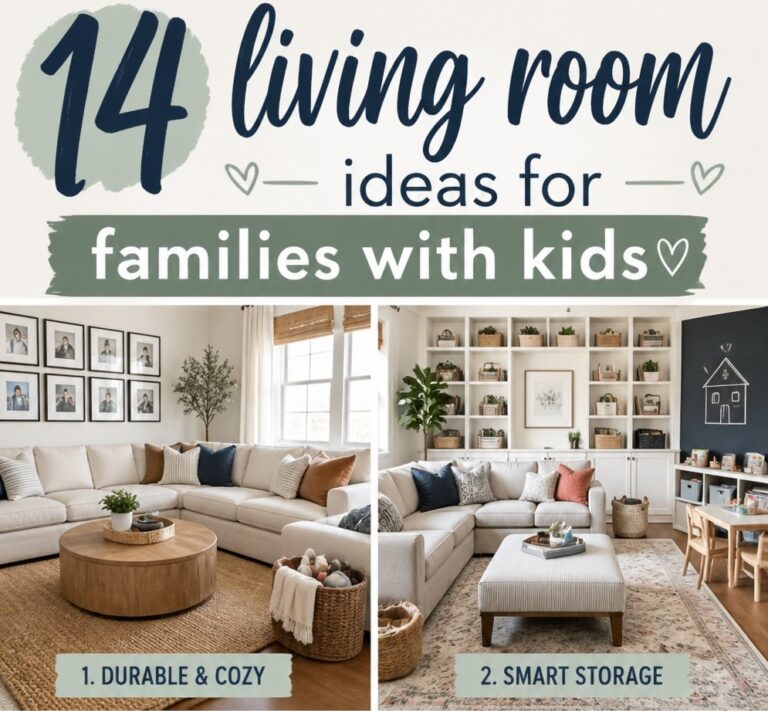

Dreaming of a living room that flows beautifully into the rest of your home? These open floor plan living room ideas and smart layout strategies are exactly what you need to pull it all together. Whether you’re refreshing your space for a cozy winter gathering or prepping for a summer party, a well-designed open plan room makes every occasion feel special. The right living room ideas for open floor plan layouts can transform a large, awkward space into something warm and intentional. Let’s dive into the creative, easy, and beginner-friendly ideas that actually work.
Quick Answer
The best creative living room ideas for open floor plans use area rugs, furniture groupings, half-walls, statement lighting, and smart color zoning to define spaces without closing them off. These strategies keep your home feeling open while giving each zone its own identity and purpose.
Key Takeaways
- Area rugs are the fastest way to anchor a living zone in an open floor plan
- Consistent color palettes tie connected spaces together visually
- Furniture placement does the heavy lifting when there are no walls to separate rooms
- Lighting layers help define mood and function in each zone
- Vertical design elements like tall shelves and pendants draw the eye up and add structure
- A mix of textures prevents large open spaces from feeling cold or sterile
1. Use Area Rugs to Define Your Living Zone
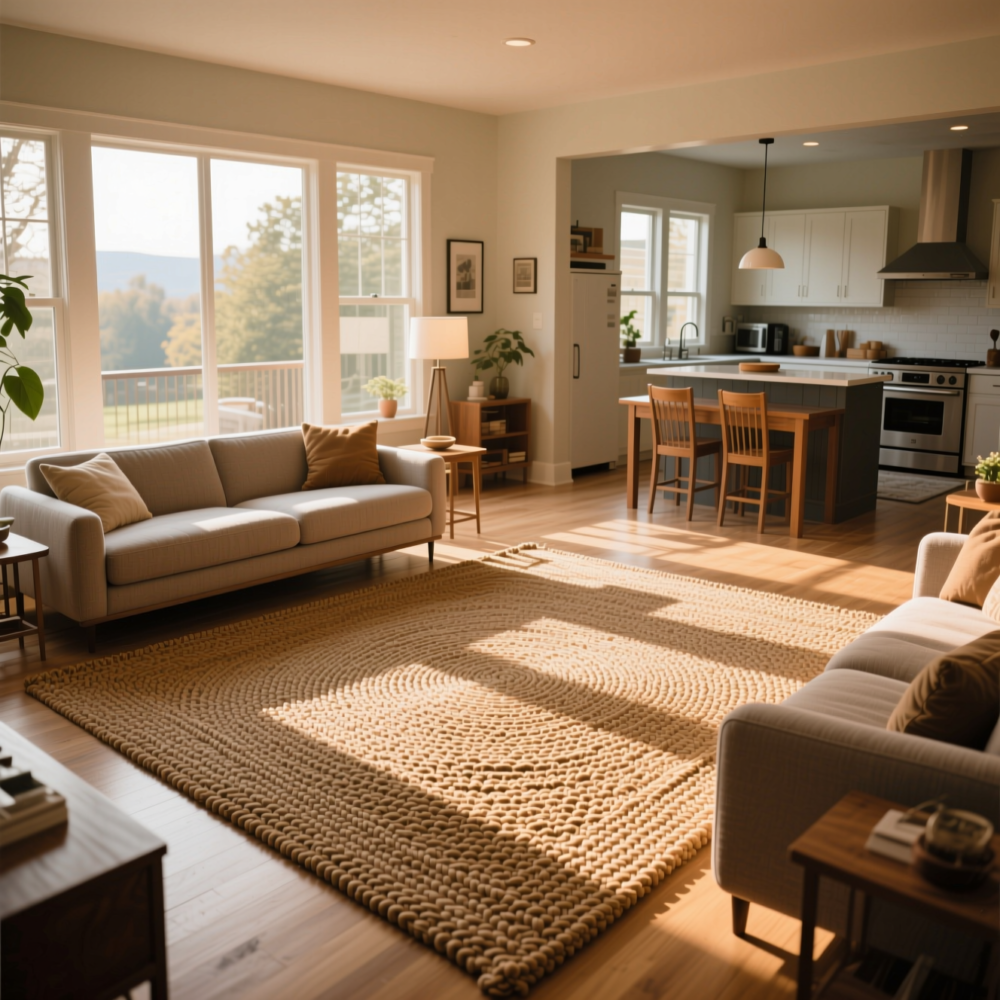
One of the simplest and most effective open floor plan living room ideas is placing a large area rug under your main seating arrangement. This single move instantly signals where the living area begins and ends — no wall required.
Choosing the Right Rug Size
Most designers recommend that all four legs of your sofa and chairs sit on the rug, or at least the front legs. A rug that is too small will make your furniture look like it is floating in the middle of nowhere.
- Go for at least an 8×10 foot rug in most open living areas
- Choose a pattern or texture that contrasts subtly with your flooring
- Layer two rugs for a bohemian or eclectic look
According to interior design platform Houzz, area rugs consistently rank among the top purchases homeowners make when redesigning open plan living spaces.
2. Create Conversation Clusters With Furniture
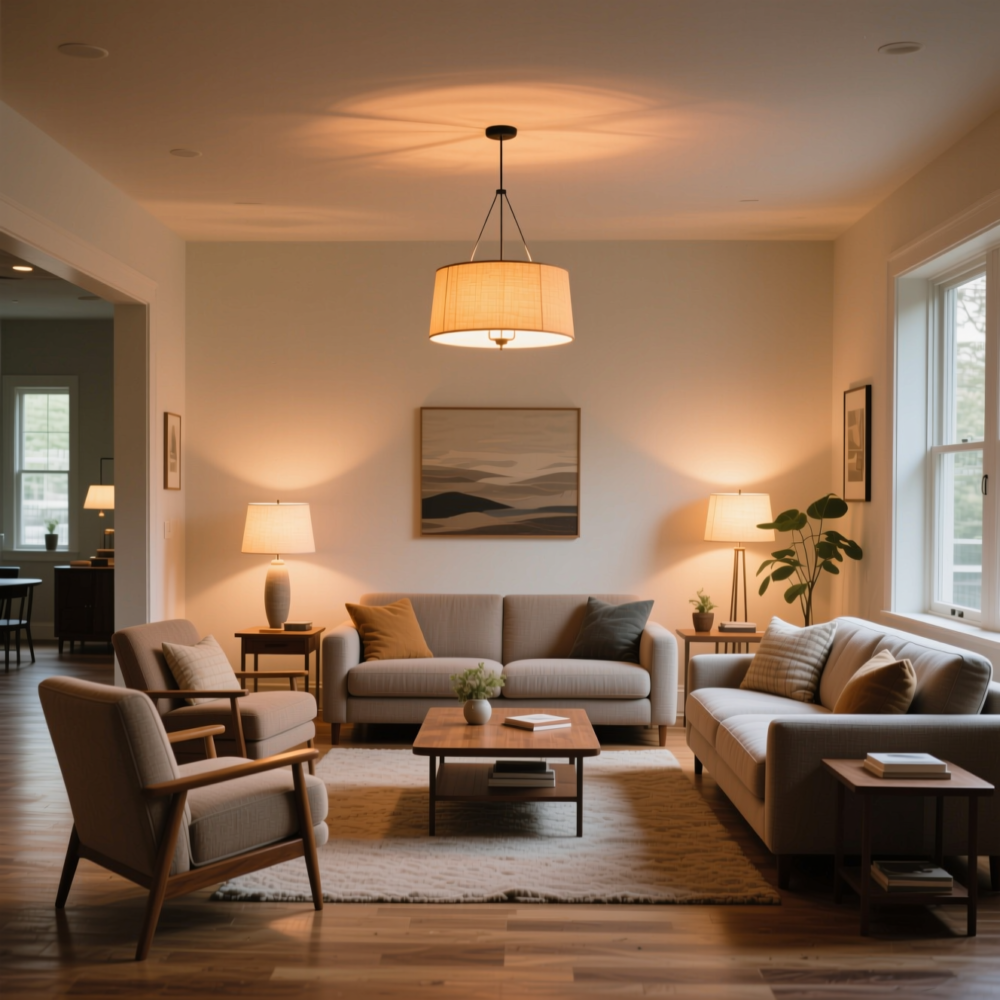
Forget lining every piece of furniture against the wall. In an open floor plan, furniture groupings — where sofas and chairs face each other — create an intimate, purposeful living zone that feels cozy rather than cavernous.
Floating Your Furniture
Floating means pulling your sofa away from the wall and letting it act as a soft divider between your living and dining areas. This works incredibly well in large open spaces.
- Anchor a sofa with its back facing the kitchen or dining zone
- Add an accent chair angled toward the main seating group
- Use a console table behind the sofa to add storage and visual definition
This approach is especially useful during holiday gatherings, when you need clear traffic flow and comfortable seating for guests.
3. Play With a Cohesive Color Palette
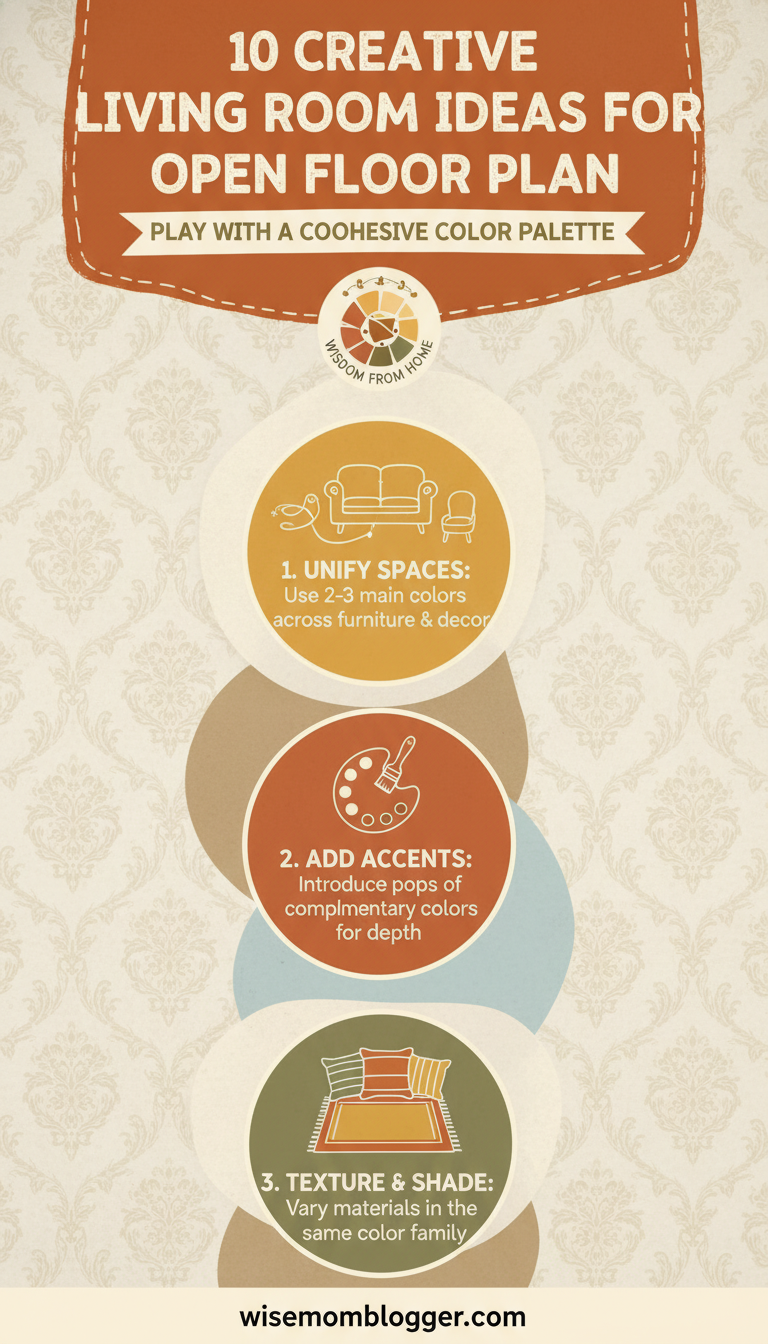
Color is one of the most powerful tools in any open floor plan living room design. Using a consistent palette across connected zones ties everything together so the space feels planned rather than patchy.
The 60-30-10 Rule
A reliable interior design formula suggests using 60% of a dominant color, 30% of a secondary color, and 10% of an accent color throughout the space.
| Zone | Dominant Color | Accent |
|---|---|---|
| Living Area | Warm white or greige | Deep navy or forest green |
| Dining Area | Same warm white | Brass or matte black |
| Kitchen | Matching cabinetry tone | Same accent repeated |
Repeating the same accent color across all zones — say, through a vase, a chair cushion, and a pendant light — creates visual harmony across the open plan.
4. Use a Statement Ceiling Light to Anchor the Living Room
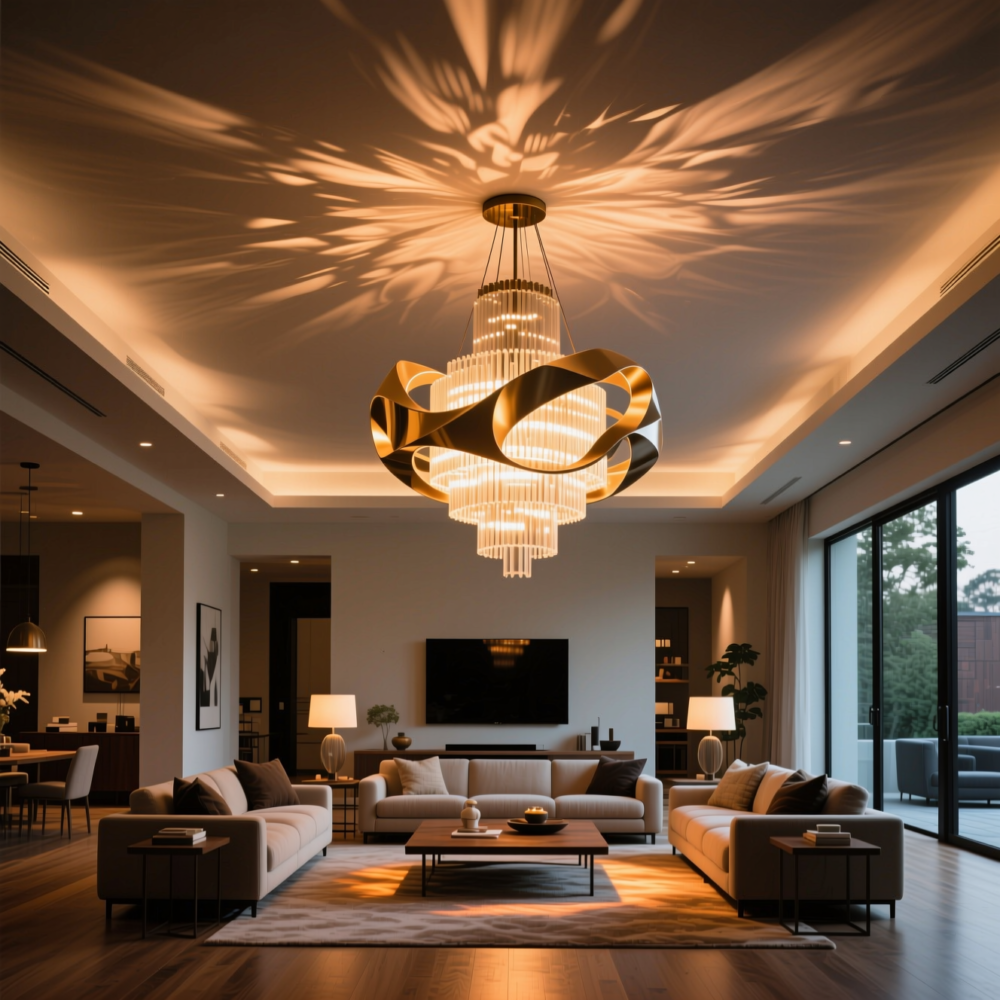
Lighting does serious design work in open spaces. A bold pendant light or chandelier positioned over your main seating area signals: “this is the living room.” It draws the eye down and gives the zone a clear center point.
Layering Your Lighting
Relying on one overhead light is a common mistake. Layering creates depth and makes large open spaces feel warm rather than institutional.
- Use floor lamps beside sofas for ambient reading light
- Add table lamps on consoles or side tables for warmth
- Install dimmer switches to control mood during movie nights or dinner parties
As lighting brand Philips Hue explains in its home design guides, layered lighting in open plan homes dramatically improves how zones feel at different times of day.
5. Add a Half-Wall or Open Shelving Unit as a Soft Divider
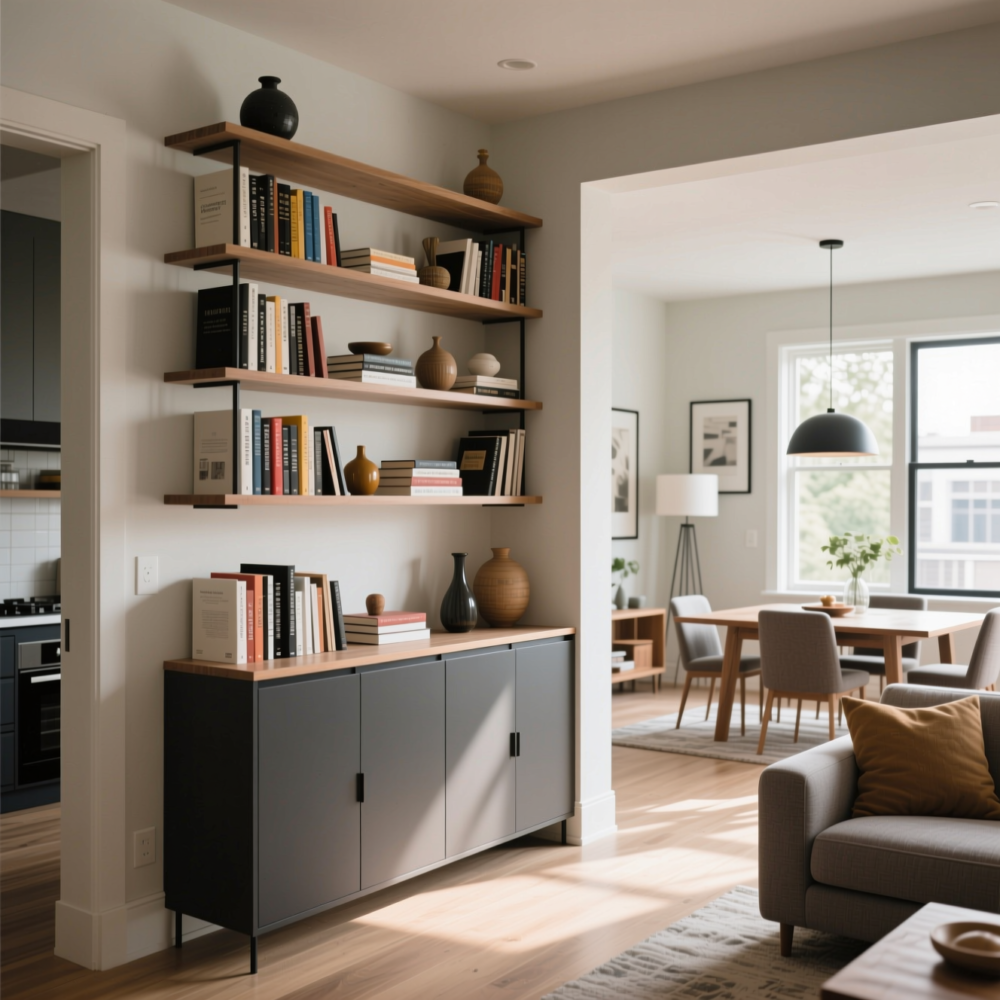
You do not need to build a full wall to create separation. A half-wall, bookcase, or open shelving unit placed strategically between your living room and another zone adds visual division while keeping the space open and airy.
Bookcase Dividers That Double as Storage
A tall bookcase placed with its back facing the dining area does two jobs at once — it provides storage for your living room and acts as a soft wall between zones.
- Style open shelves with books, plants, and decorative objects
- Leave some shelves empty to avoid a cluttered look
- Choose a bookcase that matches your furniture finish for cohesion
This idea works beautifully in smaller open plan apartments where every piece of furniture needs to earn its place.
6. Use Contrasting Textures to Add Warmth and Depth
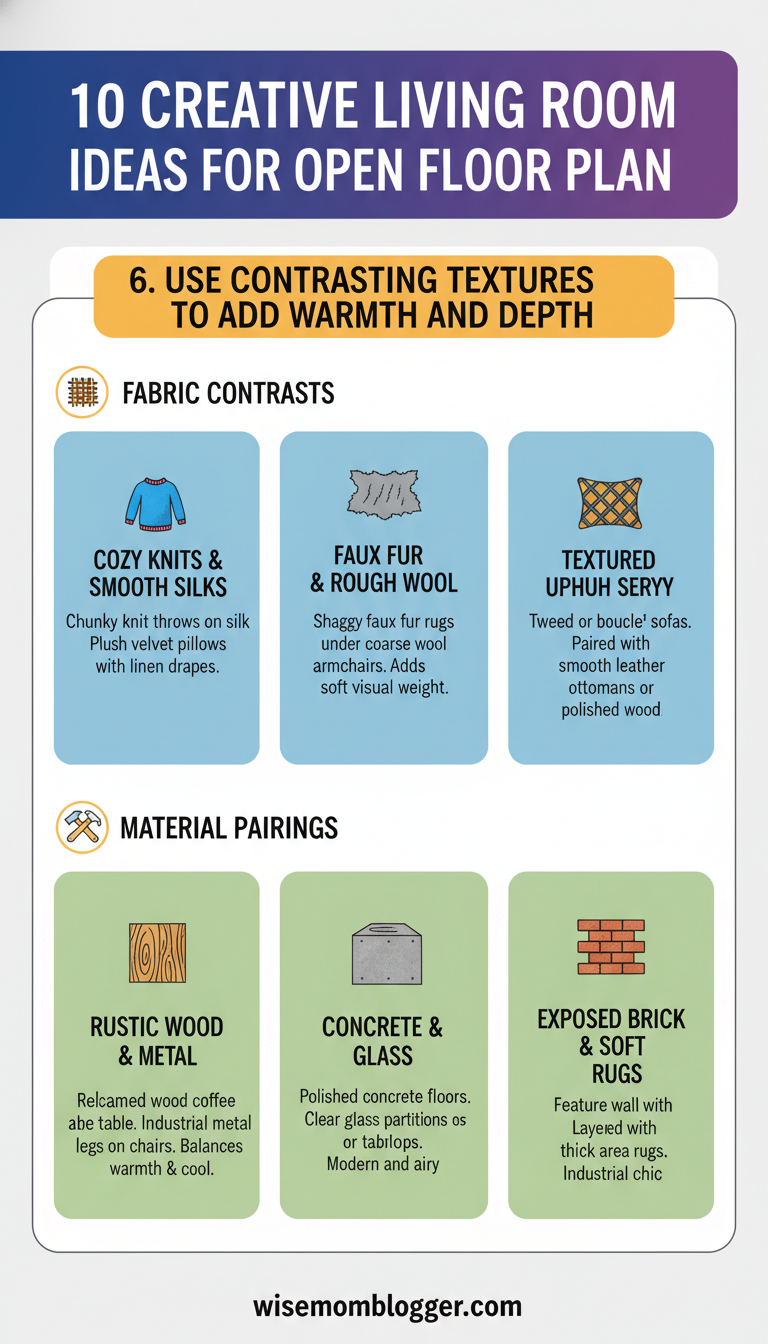
Large open spaces can feel cold and impersonal without enough texture. Mixing materials — velvet cushions, linen curtains, a jute rug, and a wood coffee table — adds warmth and keeps the eye engaged.
Texture Combinations That Work
- Smooth leather sofa plus chunky knit throw blanket
- Polished concrete floors softened by a plush area rug
- Matte walls with glossy ceramic or brass accents
Research from the American Society of Interior Designers suggests that texture variety significantly influences how comfortable and inviting a room feels to the people who use it.
7. Define Zones With Paint or Wallpaper Accents
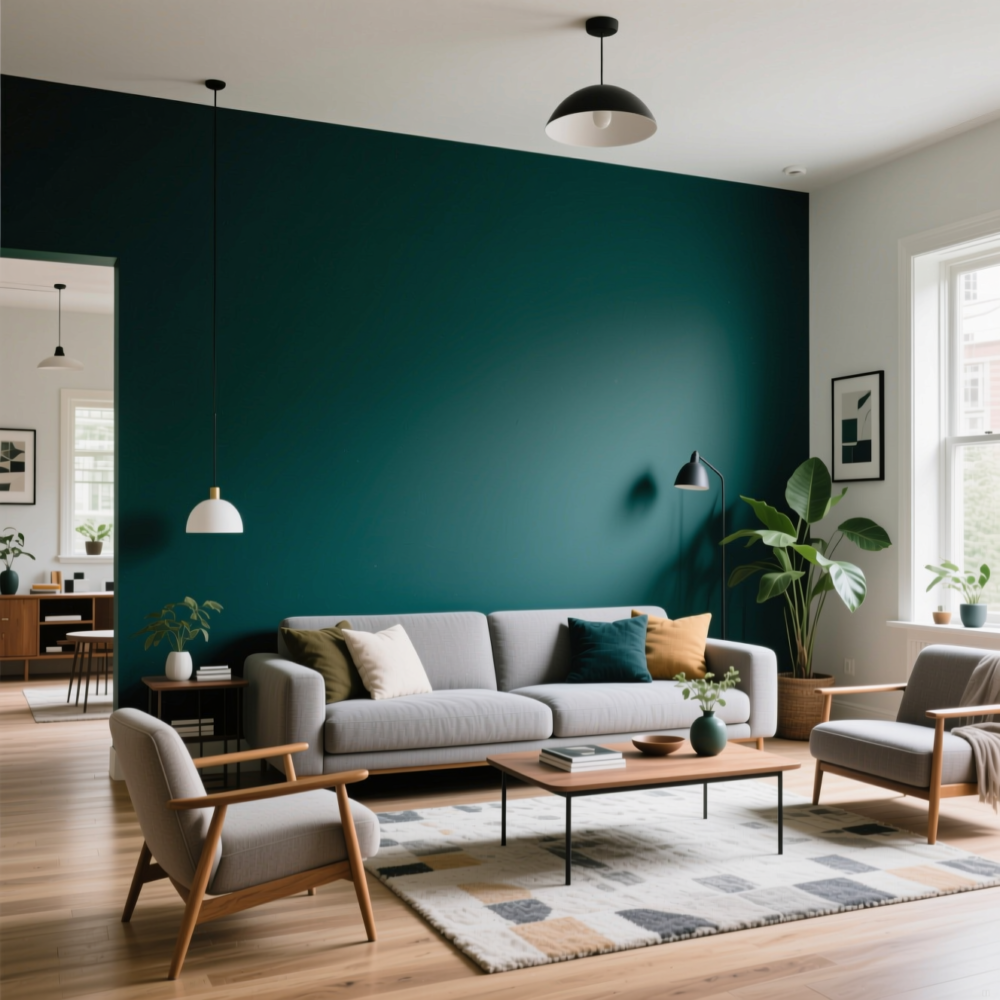
Even in a fully open floor plan, you can use paint strategically to hint at where one zone ends and another begins. A painted accent wall, a ceiling color, or a wallpaper panel in the living room area visually separates it from the kitchen or dining zone without adding physical barriers.
Ceiling Colors Are Underused
Painting the ceiling of your living zone a slightly different shade than the rest of the room is a clever designer trick that grounds the space. Even a barely-there tint can do the work.
- Choose a tone one shade deeper than your walls for a cozy effect
- Use a bold wallpaper panel behind your sofa as a feature wall
- Repeat the wall color in a cushion or throw in the adjacent zone for continuity
8. Incorporate Indoor Plants as Natural Room Dividers
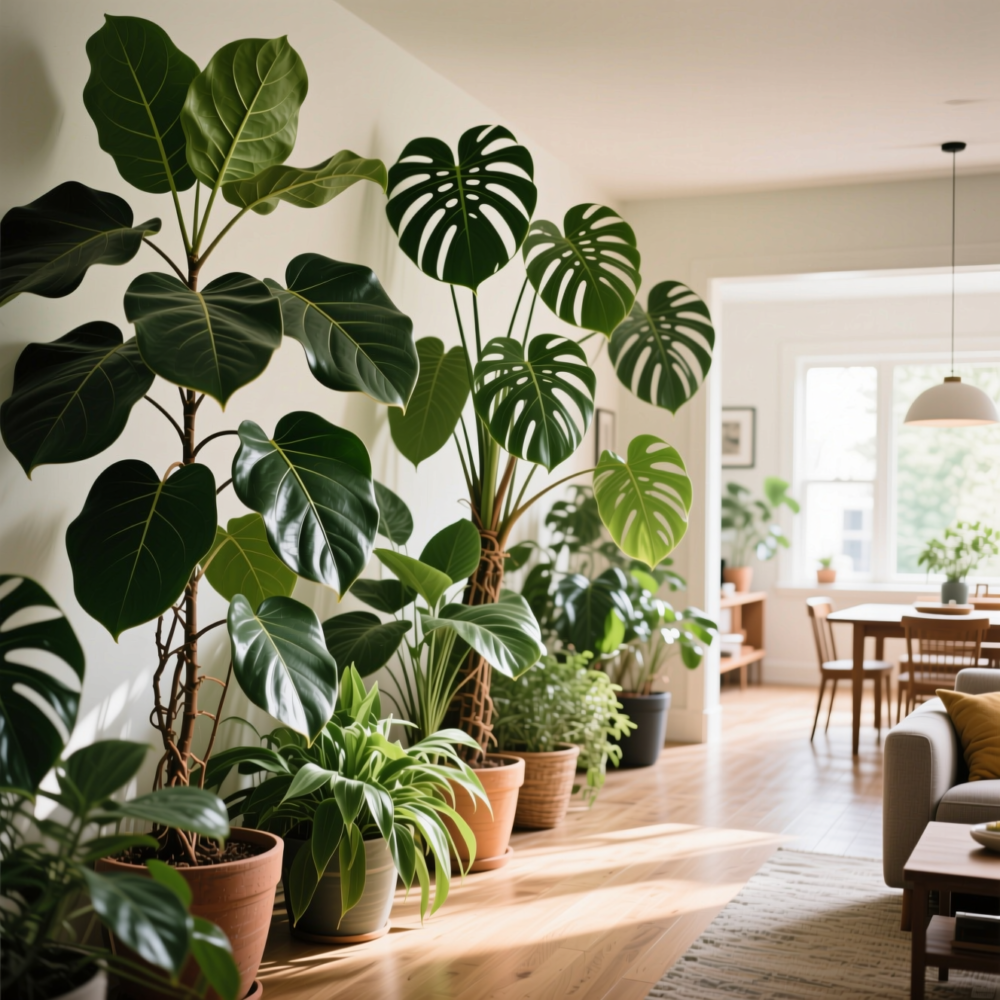
Plants are one of the most underrated open floor plan living room ideas. A row of tall plants — like fiddle leaf figs, snake plants, or indoor olive trees — can act as a living, breathing room divider that adds color and life to your space.
Plants That Work as Dividers
- Fiddle leaf fig: tall, architectural, and sculptural
- Snake plant: low maintenance and grows vertically
- Bamboo in a planter: creates a soft screen between zones
Beyond aesthetics, NASA’s Clean Air Study identified several common indoor plants as contributors to improved indoor air quality — a bonus benefit of using them as design elements.
9. Use Consistent Flooring or Strategic Rugs to Signal Zone Changes
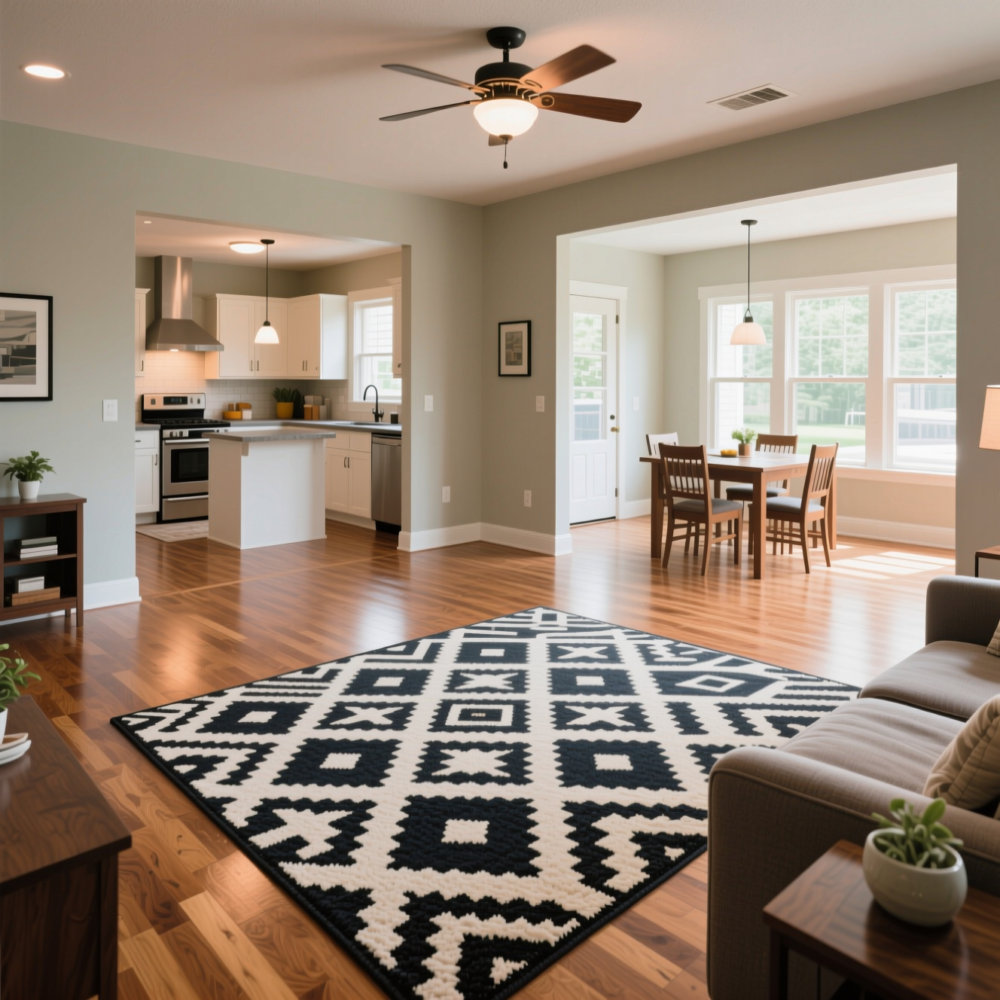
Consistent flooring across an open plan helps the space feel unified. When you want to signal a zone change without walls, area rugs layered over the same base floor are your best tool.
When to Use Different Flooring
Sometimes a material change — like tile in the kitchen area and hardwood in the living zone — is built into the architecture. In that case, embrace it rather than fight it.
- Use a rug to soften the transition where materials meet
- Choose flooring tones that complement each other rather than compete
- Keep grout or flooring borders clean and intentional
10. Invest in Multifunctional Furniture
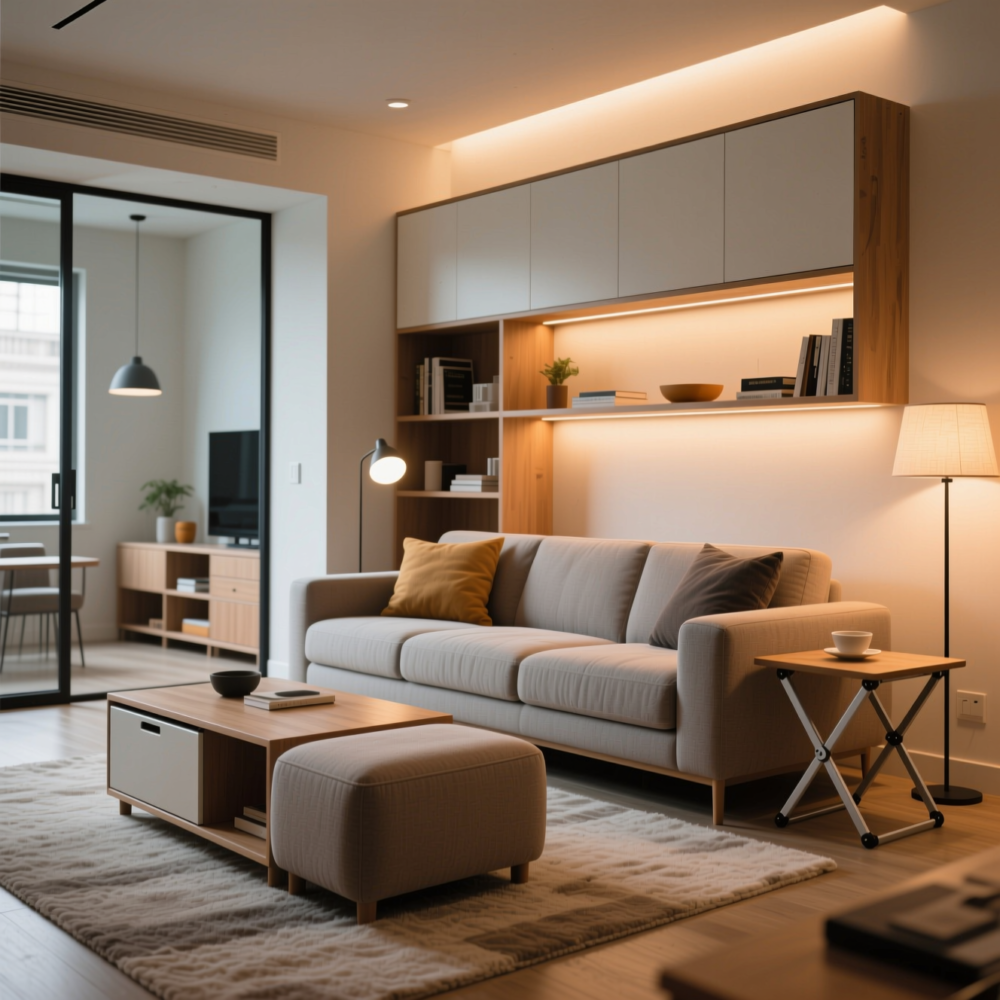
In an open floor plan, every piece of furniture needs to do more than one job. Ottomans that double as coffee tables, storage benches that seat extra guests, and nesting tables that tuck away are all smart choices.
Best Multifunctional Pieces for Open Plans
- Storage ottoman: acts as a coffee table, footrest, and hidden storage
- Extendable dining table: useful for everyday dining and big holiday gatherings
- Sofa with built-in chaise: defines the living zone while providing extra seating
- Console table with shelves: fills the space behind a floating sofa and adds display space
Furniture brand IKEA has long championed multifunctional design, and many of their open-plan living solutions are specifically engineered for homes without traditional room divisions.
2026 Trends
Open floor plan living rooms are evolving in some exciting directions heading into 2026:
- Biophilic design is growing fast — more homeowners are incorporating natural materials like rattan, stone, and wood alongside indoor greenery
- Japandi aesthetics (a blend of Japanese and Scandinavian design) are dominating open plan interiors with their clean lines, neutral palettes, and functional minimalism
- Curved furniture is replacing the boxy, linear pieces that dominated the 2010s — round sofas and arched chairs soften large open spaces beautifully
- Smart lighting systems integrated with open plan zones allow each area to have its own programmable lighting mood
- Sustainable materials are being prioritized in furniture choices, with recycled and upcycled pieces becoming mainstream rather than niche
Common Mistakes
Avoid these common errors when designing an open floor plan living room:
- Using furniture that is too small: Undersized sofas and tiny accent chairs get swallowed in a large open space
- Neglecting the ceiling: Leaving the ceiling plain and unlit makes open spaces feel like warehouses
- Over-decorating with too many styles: Mixing too many design languages creates visual noise rather than personality
- Ignoring acoustics: Open plans can get echoey. Soft furnishings like curtains, rugs, and upholstered chairs all help absorb sound
- Forgetting traffic flow: Furniture placement needs to account for how people move through the space, not just how it looks in a photo
FAQ
What is the best way to define a living room in an open floor plan? Area rugs, furniture groupings, and statement lighting are the three fastest ways to anchor a living zone without building walls.
Can I use different paint colors in an open floor plan? Yes, but keep the palette cohesive. Use accent walls or ceiling colors rather than entirely different color schemes, which can make the space feel choppy.
What size rug works best in an open plan living room? Most open plan living rooms need at least an 8×10 foot rug. Go larger if your space allows — a bigger rug almost always looks better than one that is too small.
How do I make an open floor plan feel cozy? Layer textures, use warm lighting, group furniture intimately, and add plants and soft furnishings to prevent the space from feeling cold or empty.
Is open floor plan still popular in 2025 and 2026? Yes, though there is a growing trend toward “broken plan” layouts that use partial walls, built-in shelving, and level changes to add definition without closing off spaces entirely.
Conclusion
Designing a living room in an open floor plan is genuinely one of the most creative challenges a homeowner can take on — and one of the most rewarding when it comes together. From anchoring your seating with the perfect area rug to using plants as natural dividers, these ten ideas give you a strong toolkit to work with. The best open floor plan living rooms feel intentional without feeling rigid. Start with one or two of these ideas, see what works for your space, and build from there. Your ideal open plan living room is closer than you think.
References
- Houzz. (2024). State of Home Renovation. Houzz Inc. https://www.houzz.com/magazine/state-of-home-renovation
- American Society of Interior Designers. (2023). Design Trends and Research. ASID. https://www.asid.org/resources
- NASA. (1989). Interior Landscape Plants for Indoor Air Pollution Abatement. NASA Technical Reports Server. https://ntrs.nasa.gov/citations/19930073077
- Philips Hue. (2024). Lighting in Open Plan Homes. Signify. https://www.philips-hue.com/en-us/explore-hue/articles/lighting-open-plan
- IKEA. (2024). Open Plan Living Solutions. Inter IKEA Systems B.V. https://www.ikea.com/us/en/ideas/open-plan-living

Sarah Anderson . J
I’m the mom behind Wise Mom Blogger, where everyday creativity meets real-life motherhood. I share easy DIY crafts, cozy knitting and crochet projects, beginner-friendly sewing ideas, and family-tested recipes—plus quick baking hacks that make homemade feel doable on busy days.