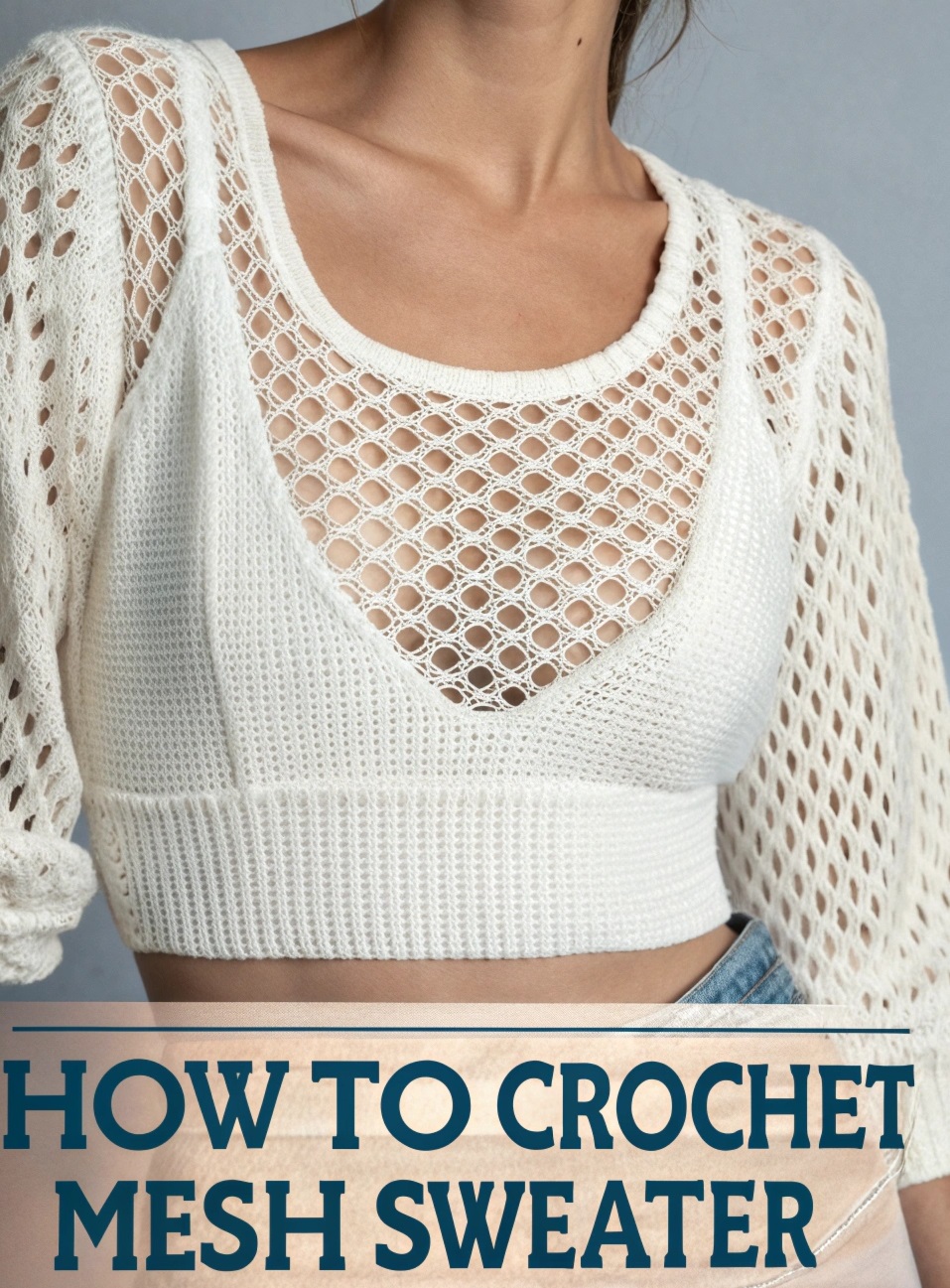
Creating a crochet mesh sweater using neon yarn projects has become one of the most popular crochet tops free patterns trends in 2026. This comprehensive guide will walk you through everything you need to know about making your own crochet sweater free pattern, from selecting the perfect neon yarn to mastering the mesh stitch technique.
Key Takeaways
- Mesh sweaters use open stitch patterns that create breathable, lightweight garments perfect for layering
- Neon yarns work exceptionally well for mesh patterns because the bright colors highlight the geometric openwork design
- Free crochet sweater patterns are widely available and can be customized for any skill level
- Proper gauge and tension control are crucial for achieving the right drape and fit in mesh garments
- Basic mesh stitches include chain spaces, double crochet clusters, and strategic skip patterns
Quick Answer
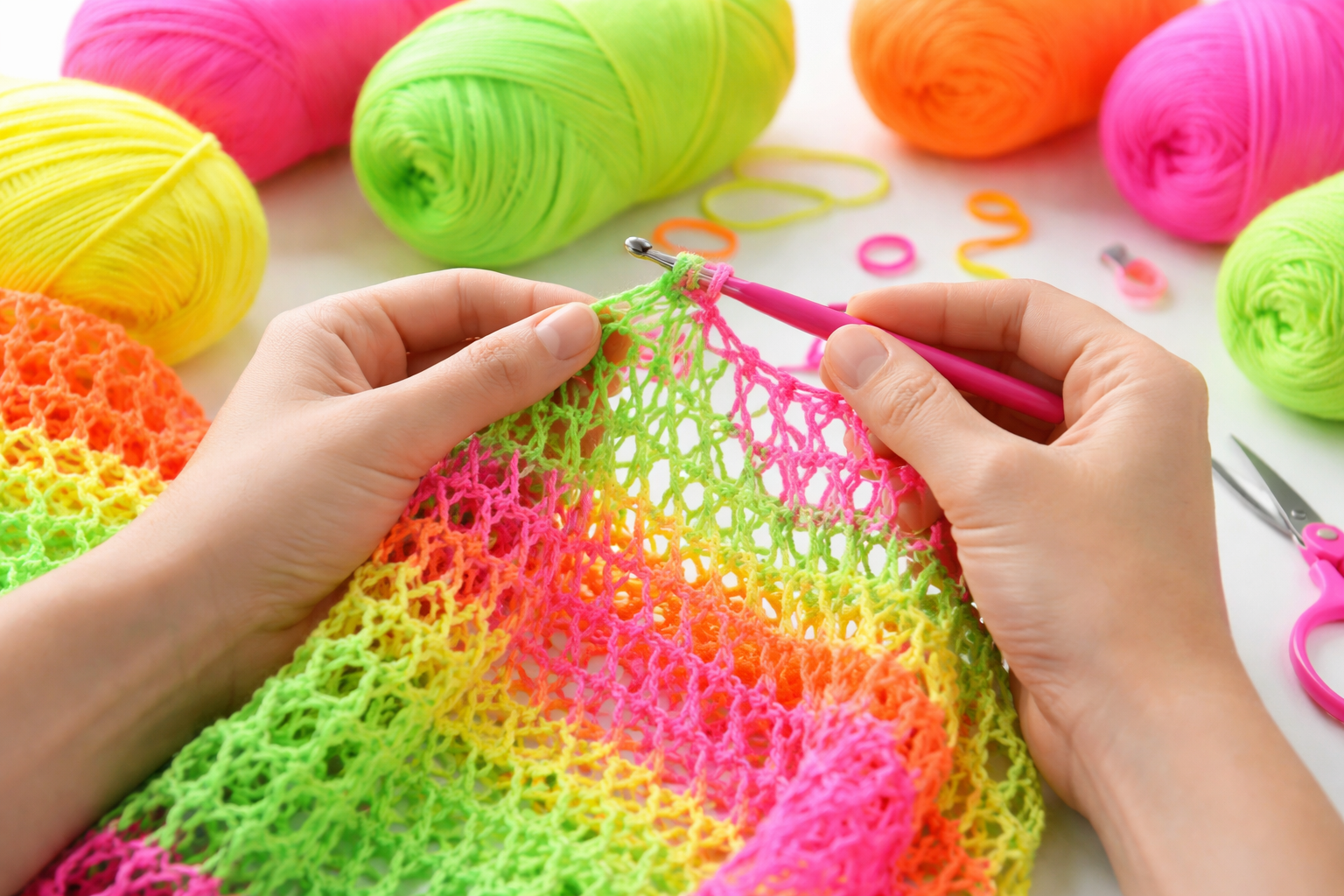
To crochet a neon mesh sweater, you’ll work with open stitch patterns that create deliberate holes and spaces in the fabric. Start with a crochet sweater pattern free download, choose vibrant neon yarn, and master the basic mesh stitch (typically chains and double crochets with skipped stitches). The key is maintaining consistent tension while creating the openwork design that makes mesh sweaters both stylish and breathable.
What Makes Neon Yarn Perfect for Crochet Mesh Sweater Patterns?
Neon yarns enhance mesh patterns because their vibrant colors create striking contrast against the open spaces in the fabric. The bright hues make each stitch pop visually, turning the geometric openwork into a design feature rather than just texture.
When working with neon yarn projects, consider these advantages for mesh sweaters:
- High visibility of stitch definition – Neon colors make it easier to see your work and catch mistakes early
- Modern aesthetic appeal – Bright colors align with current fashion trends favoring bold, statement pieces
- Layering versatility – Neon mesh sweaters work as eye-catching overlays or standalone summer tops
- Photography-friendly – Vibrant colors photograph well for social media sharing of your finished projects
Choose neon yarns in cotton or cotton blends for mesh sweaters. These fibers provide the structure needed for open stitchwork while maintaining breathability. Avoid stretchy fibers like pure acrylic, which can distort the mesh pattern over time.
Pro tip: Start with one bold neon color before attempting color-change patterns. Solid neon colors help you focus on perfecting your mesh technique without the added complexity of managing multiple yarn strands.
Essential Supplies for Your Free Crochet Sweater Pattern
You’ll need specific tools and materials to successfully complete any crochet tops free patterns project, especially mesh designs that require precision and consistency.
Required Crochet Tools
- Crochet hook (size H/8 or 5.0mm works for most worsted weight neon yarns)
- Measuring tape for checking gauge and garment measurements
- Stitch markers to mark pattern repeats and construction points
- Yarn needle for seaming and weaving in ends
- Sharp scissors for clean yarn cuts
Yarn Requirements
For a mesh sweater in adult medium size, purchase:
- 800-1200 yards of worsted weight neon yarn (exact amount depends on pattern and size)
- Cotton or cotton-blend fibers for best structure and drape
- Consistent dye lots if using multiple skeins of the same color
Optional But Helpful Supplies
- Row counter to track your progress through pattern repeats
- Blocking mats and pins for professional finishing
- Pattern holder or magnetic board to keep your place in written instructions
Choose your yarn weight carefully – worsted weight (#4) yarn works best for beginners because it’s forgiving and creates clearly visible stitches. Lighter weight yarns require more advanced tension control.
Understanding Basic Mesh Stitch Patterns for Beginners
Mesh stitches create deliberate openwork by combining chains, skipped stitches, and strategic placement of double crochets or other tall stitches. The most common mesh pattern alternates between solid stitches and chain spaces.
The Foundation Mesh Stitch
The basic mesh stitch follows this pattern:
- Chain 1, skip 1 stitch in the previous row
- Double crochet in the next stitch
- Repeat across the row
- Turn and work into both chain spaces and double crochets from the previous row
This creates a checkerboard effect of solid stitches and open spaces. Each chain-1 space from the previous row receives a double crochet, while each double crochet from the previous row gets skipped with a chain-1.
Mesh Pattern Variations
Larger mesh openings use chain-2 or chain-3 spaces instead of chain-1. This creates more dramatic openwork but requires careful attention to maintaining the correct stitch count.
Smaller mesh patterns might use single crochets with chain spaces, creating a tighter, more structured fabric suitable for fitted sweaters.
Common beginner mistake: Forgetting to maintain stitch count when working into chain spaces. Always count your stitches at the end of each row to catch errors early.
Step-by-Step Guide to Crocheting Your First Mesh Sweater
Start with a simple rectangular construction for your first crochet sweater free project. This approach uses basic shapes that you’ll seam together, making it much easier than working in the round or shaping as you go.
Step 1: Create Your Foundation Chain
Calculate your foundation chain based on your gauge swatch and desired sweater width. For mesh patterns, your foundation chain should be a multiple of 2 plus 1 for basic mesh, or follow your specific pattern’s requirements.
Chain your foundation, then work one row of double crochets to establish your base. This solid row provides stability for the mesh pattern that follows.
Step 2: Establish the Mesh Pattern
Begin your mesh pattern on row 2:
- Chain 3 to turn (counts as first double crochet)
- Chain 1, skip next double crochet, double crochet in following stitch
- Repeat across the row
- End with double crochet in the turning chain
Step 3: Continue the Mesh Pattern
For subsequent rows:
- Work double crochet into each chain-1 space from the previous row
- Chain 1 over each double crochet from the previous row
- Maintain consistent tension to keep openings uniform
Step 4: Shape and Construct
Most crochet sweater pattern free designs use simple rectangles:
- Front panel – work to desired length
- Back panel – usually identical to front
- Sleeves – smaller rectangles or work directly onto the body
Seaming tip: Use mattress stitch or single crochet seams to join pieces. The open mesh structure can make seaming tricky, so work slowly and maintain even tension.
Choosing the Right Free Crochet Sweater Pattern for Your Skill Level
Match your pattern complexity to your current abilities to ensure a successful project. Crochet tops free patterns range from beginner-friendly rectangles to advanced shaped constructions.
Beginner-Friendly Mesh Patterns
Look for patterns featuring:
- Rectangular construction with minimal shaping
- Basic mesh stitch using only chains and double crochets
- Seamed assembly rather than working in the round
- Worsted weight yarn specifications for easier handling
Intermediate Mesh Projects
Step up to patterns with:
- Simple increases and decreases for waist shaping
- Multiple mesh stitch patterns within one garment
- Sleeve construction worked from the body
- Basic colorwork using two neon colors
Advanced Mesh Techniques
Challenge yourself with:
- Seamless construction worked in the round
- Complex mesh patterns with varying opening sizes
- Integrated sleeves shaped as you work
- Advanced colorwork creating geometric designs within the mesh
Pattern selection tip: Read through the entire pattern before starting. Look for techniques you haven’t tried before and practice them on swatches first.
Troubleshooting Common Mesh Sweater Problems
Mesh patterns can be forgiving, but certain issues require immediate attention to prevent major problems later in your project.
Uneven Mesh Openings
This happens when tension varies between chain spaces and solid stitches. The openings should be uniform in size across your work.
Solution: Practice maintaining consistent yarn tension. Work more slowly until the motion becomes automatic. Block your finished pieces to even out minor irregularities.
Stitch Count Problems
Mesh patterns make it easy to accidentally gain or lose stitches because of the open spaces. Count your stitches every few rows, especially when learning.
Solution: Use stitch markers to mark pattern repeats. If you find an error, fix it immediately rather than hoping it will work out later.
Curling Edges
Mesh fabric can curl at the edges due to the difference in tension between open and solid areas.
Solution: Add a border of single crochet or half double crochet around the finished edges. This creates stability and a professional appearance.
Yarn Splitting
Neon yarns sometimes have loosely twisted plies that can split when working with the hook.
Solution: Use a hook with a smooth throat and work more gently. Consider switching yarn brands if splitting continues to be a problem.
Customizing Your Neon Mesh Sweater Design
**Personalize your *mesh sweater* by adjusting colors, stitch patterns, and construction details** to match your style preferences and body measurements.
Color Customization Options
Single neon color – Choose one vibrant shade for maximum impact and easier construction
Gradient effects – Use multiple shades of the same color family for subtle variation
High contrast – Combine complementary neon colors like electric blue and bright orange
Neutral accents – Add white or gray borders to tone down intense neon combinations
Adjusting Pattern Size
Most crochet sweater pattern free downloads include multiple sizes, but you can customize further:
- Measure your bust, waist, and hip circumferences
- Add 2-4 inches of ease for comfortable fit (mesh sweaters look best with some positive ease)
- Adjust pattern width by adding or subtracting pattern repeats
- Modify length by working more or fewer rows
Sleeve and Neckline Variations
Sleeveless version – Omit sleeves entirely for a summer tank top
Cap sleeves – Work short sleeves for modest arm coverage
Three-quarter sleeves – Stop sleeves at the elbow for a modern look
Boat neck – Create a wide, shallow neckline by adjusting the neck opening
Fit tip: Always make a gauge swatch and measure it after blocking. Mesh patterns can behave differently than solid crochet when blocked.
Finishing Techniques for Professional Results
Proper finishing transforms a handmade mesh sweater from obviously homemade to professionally crafted. These techniques are especially important for crochet tops free patterns that you want to wear confidently.
Blocking Your Mesh Sweater
Wet blocking works best for mesh patterns because it allows you to adjust the size and shape of the openings while the yarn is pliable.
- Soak pieces in cool water with wool wash for 15-20 minutes
- Gently squeeze out excess water – never wring or twist
- Pin pieces to blocking mats according to pattern measurements
- Allow to dry completely before removing pins (usually 24-48 hours)
Seaming Techniques
Mattress stitch creates invisible seams that won’t interfere with the mesh pattern’s drape.
Single crochet seams add stability but create visible seam lines – use this technique when you want the seams to be a design element.
Whipstitch seaming works quickly but can create bulky seams that show through the open mesh.
Adding Borders and Edging
Single crochet borders stabilize edges and prevent curling
Picot edging adds decorative detail that complements the open mesh pattern
Ribbed borders using alternating front and back post stitches create professional-looking hems and cuffs
Professional tip: Work borders in a slightly smaller hook size to ensure they lay flat and don’t flare out from the body of the sweater.
FAQ
Q: How much yarn do I need for a mesh sweater?
A: Most adult mesh sweaters require 800-1200 yards of worsted weight yarn, depending on size and sleeve length. Mesh patterns use less yarn than solid crochet because of the open spaces.
Q: Can I use acrylic yarn for mesh sweaters?
A: Cotton or cotton blends work better for mesh sweaters because they provide structure and breathability. Pure acrylic can stretch out of shape over time with the open mesh construction.
Q: How do I fix a hole in my mesh pattern?
A: Small holes can be darned with matching yarn using a yarn needle. Larger holes may require unraveling back to the error and re-working that section.
Q: Should mesh sweaters be fitted or loose?
A: Mesh sweaters look best with 2-4 inches of positive ease. Too tight and the mesh openings distort; too loose and the garment loses its shape.
Q: How do I wash a neon mesh sweater?
A: Hand wash in cool water with gentle detergent. Lay flat to dry to maintain the mesh pattern’s shape and prevent stretching.
Q: Can I add pockets to a mesh sweater?
A: Yes, but work pockets in a solid stitch pattern and attach them as separate pieces. Mesh fabric won’t provide enough structure for functional pockets.
Q: What’s the best neckline for a mesh sweater?
A: Crew necks and boat necks work well because they’re easy to construct and complement the geometric nature of mesh patterns.
Q: How do I prevent my mesh sweater from snagging?
A: Store carefully away from rough surfaces, and consider adding a solid crochet border around high-wear areas like armholes and necklines.
Q: Can I make a mesh sweater without seaming?
A: Advanced crocheters can work mesh sweaters in the round, but seamed construction is more beginner-friendly and often results in better fit.
Q: How do I adjust a pattern for different yarn weights?
A: Make a gauge swatch first, then calculate how many pattern repeats you need for your desired measurements. Lighter weight yarns will create smaller mesh openings.
Q: What’s the difference between mesh and lace crochet?
A: Mesh patterns focus on geometric openwork with regular spacing, while lace patterns often include decorative motifs and irregular spacing for artistic effect.
Q: Can I wear a mesh sweater as outerwear?
A: Mesh sweaters work best as layering pieces or warm-weather tops. The open construction doesn’t provide much warmth on its own.
Key Takeaways
- Start with simple rectangular construction and basic mesh stitches before attempting complex shaping or advanced techniques
- Neon yarns highlight mesh patterns beautifully but require consistent tension control to maintain even openings throughout your work
- Cotton or cotton-blend yarns provide the best structure for mesh sweaters, offering breathability while maintaining shape over time
- Gauge swatches are essential for mesh patterns because the open construction can behave differently than expected during blocking
- Proper blocking transforms your finished pieces from handmade to professional-looking garments worthy of your wardrobe
- Free patterns are widely available but should be matched to your current skill level to ensure successful completion
- Seaming and finishing techniques are especially important for mesh garments because poor construction shows through the open fabric
- Customization options are endless – adjust colors, sizes, and construction details to create a truly personalized garment
- Common problems like uneven tension and stitch count errors can be prevented with careful attention and regular checking during construction
- Mesh sweaters work best with positive ease and benefit from thoughtful styling as layering pieces or statement summer tops
Creating your own neon yarn projects using crochet mesh sweater patterns opens up a world of creative possibilities. Whether you’re following crochet tops free patterns or designing your own variations, the key to success lies in mastering basic techniques before moving on to complex constructions. Take your time, practice your gauge, and don’t be afraid to customize patterns to suit your personal style and fit preferences.
Conclusion
Crocheting a vibrant neon mesh sweater combines the satisfaction of learning new techniques with the joy of creating a truly unique wardrobe piece. By starting with crochet sweater free patterns and focusing on proper technique, you’ll develop the skills needed to tackle more complex projects in the future.
Your next steps: Download a beginner-friendly crochet sweater pattern free, purchase your neon yarn and supplies, and start with a gauge swatch to familiarize yourself with the mesh stitch. Remember that every expert crocheter started with basic stitches and simple patterns – your mesh sweater journey begins with that first foundation chain.
The beauty of mesh sweater construction lies in its forgiving nature and endless customization possibilities. Whether you create a bold statement piece in electric pink or a subtle summer top in soft neon mint, you’ll have a handmade garment that reflects your personal style and showcases your growing crochet skills.

Sarah Anderson . J
I’m the mom behind Wise Mom Blogger, where everyday creativity meets real-life motherhood. I share easy DIY crafts, cozy knitting and crochet projects, beginner-friendly sewing ideas, and family-tested recipes—plus quick baking hacks that make homemade feel doable on busy days.