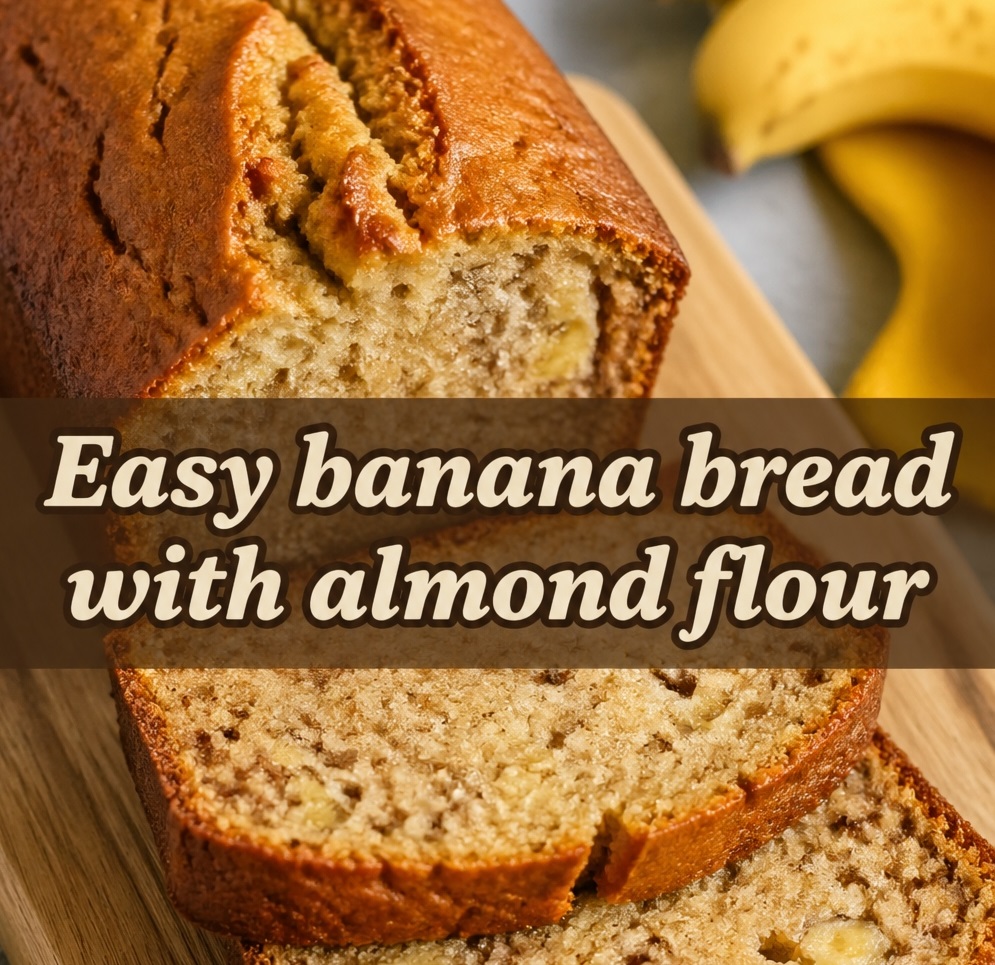
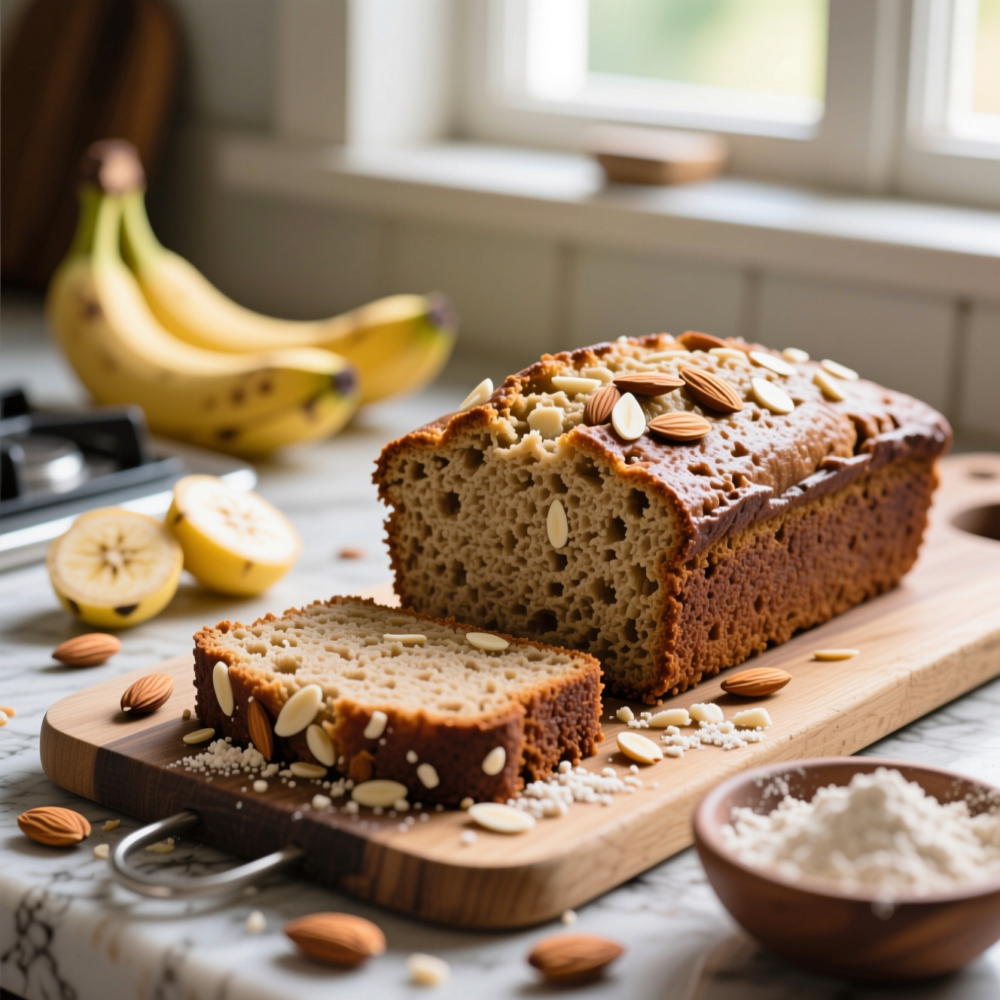
Banana bread with almond flour is one of those “feels like a treat” bakes that can also fit real life—busy mornings, quick snacks, and even gluten-free needs.
In my kitchen, it’s the go-to when I want something moist, tender, and not fussy, while still keeping the ingredient list simple.
Almond flour helps me get a naturally gluten-free, grain-free quick bread texture, especially when I choose fine, blanched almond flour.
Ripe bananas bring natural sweetness and moisture, so I don’t have to rely on lots of added sugar.
And because the best versions use a clear sweetener strategy (honey, maple syrup, or date syrup), the color and doneness turn out better, not worse.
If you love banana bread but want a modern, almond-flour approach that’s easy to repeat, you’re in the right place.
Quick Answer
Banana bread with almond flour is a naturally gluten-free and grain-free quick bread where ripe bananas provide flavor and moisture, eggs help with structure, and fine/blanched almond flour creates a smoother, more tender crumb. For the best results, I bake with ripe bananas and choose a sweetener (maple syrup is common; date syrup can help control browning; one approach warns honey may brown/burn faster).
Key Takeaways
Almond flour makes banana bread naturally gluten-free and grain-free, and fine/blanched almond flour helps create a smoother crumb.
Ripe bananas are the flavor base and a key moisture source, so they strongly affect the final texture.
Eggs provide structure in gluten-free baking, helping the slice hold together.
Sweetener choice matters: it affects sweetness, color, and how quickly the loaf browns.
Mix gently to keep the crumb tender, and check doneness by using a center set “bread test” (toothpick or knife).
You can make it chocolatey, dairy-free (depending on your choices), and adaptable with add-ins like nuts or cocoa.
1. What Makes Almond Flour Different?
Almond flour changes everything about banana bread because it replaces wheat flour with ground almonds. That means the bake is naturally gluten-free and grain-free, and it has a different crumb—often more tender and cohesive than some other gluten-free flours.
Why it works in quick breads
Almond flour helps create a moist, sliceable loaf without needing wheat flour.
Many almond-flour banana bread recipes aim for a smoother crumb by using fine, blanched almond flour (rather than coarse almond meal).
Because almond flour has natural fats and protein from almonds, it can contribute to a rich, “bakery-style” feel.
What texture to expect
If you’ve tried wheat banana bread before, almond flour versions usually feel:
Moist (thanks to banana)
Tender (less “chewy,” more “soft crumb”)
Often fudgier (especially in chocolate variations)
2. The Almond Flour Choice That Matters Most
Not all almond flour is the same, and I’ve learned that the “right” choice can be the difference between a loaf that’s silky and one that’s a little gritty.
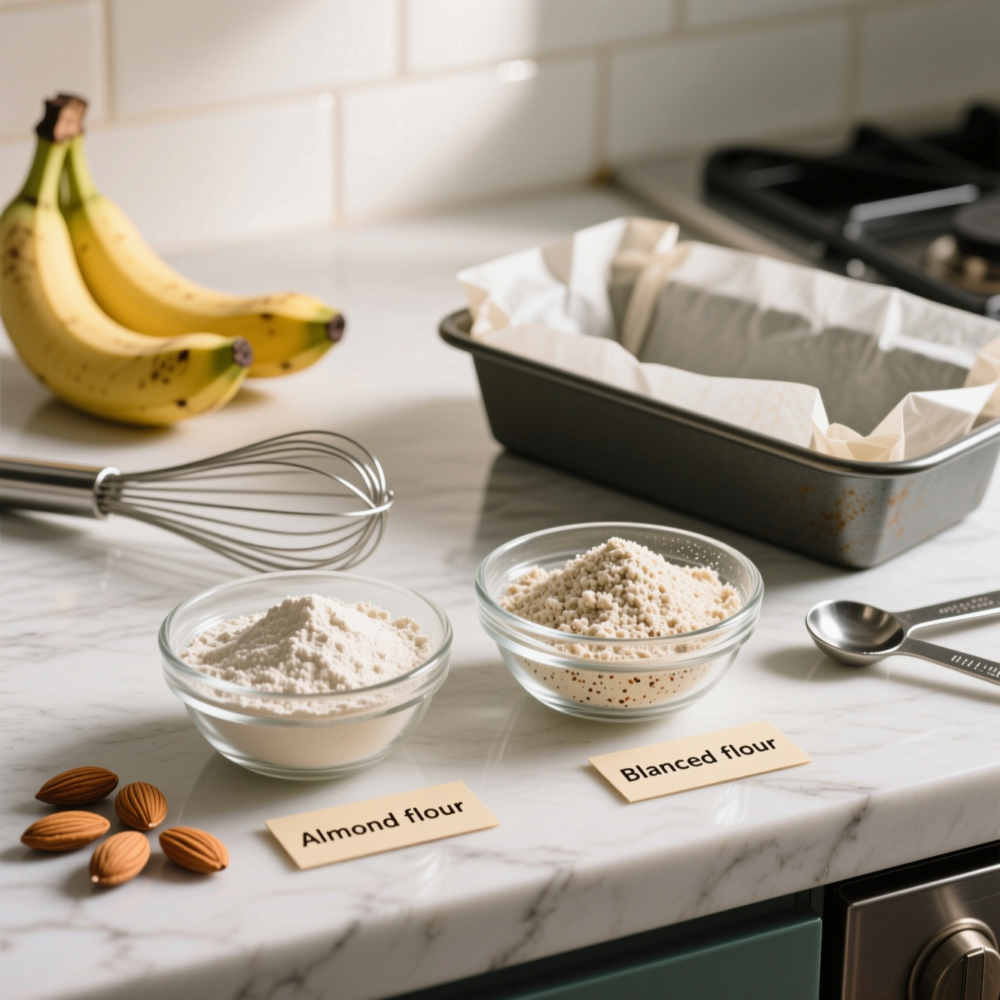
Fine, blanched almond flour = smoother crumb
Several almond-flour banana bread approaches specifically call for fine, blanched almond flour to keep the crumb from feeling rough. That’s the secret I look for on the label.
Almond meal vs. almond flour (simple rule)
Almond flour (fine/blanched): smoother texture, more tender slice.
Almond meal (more coarse): can be great, but may create a slightly denser or more textured crumb.
Practical buying tip
When I’m shopping, I check whether the bag says:
“fine” and/or
“blanched”
That small detail lines up with the way many popular almond-flour banana bread recipes are written.
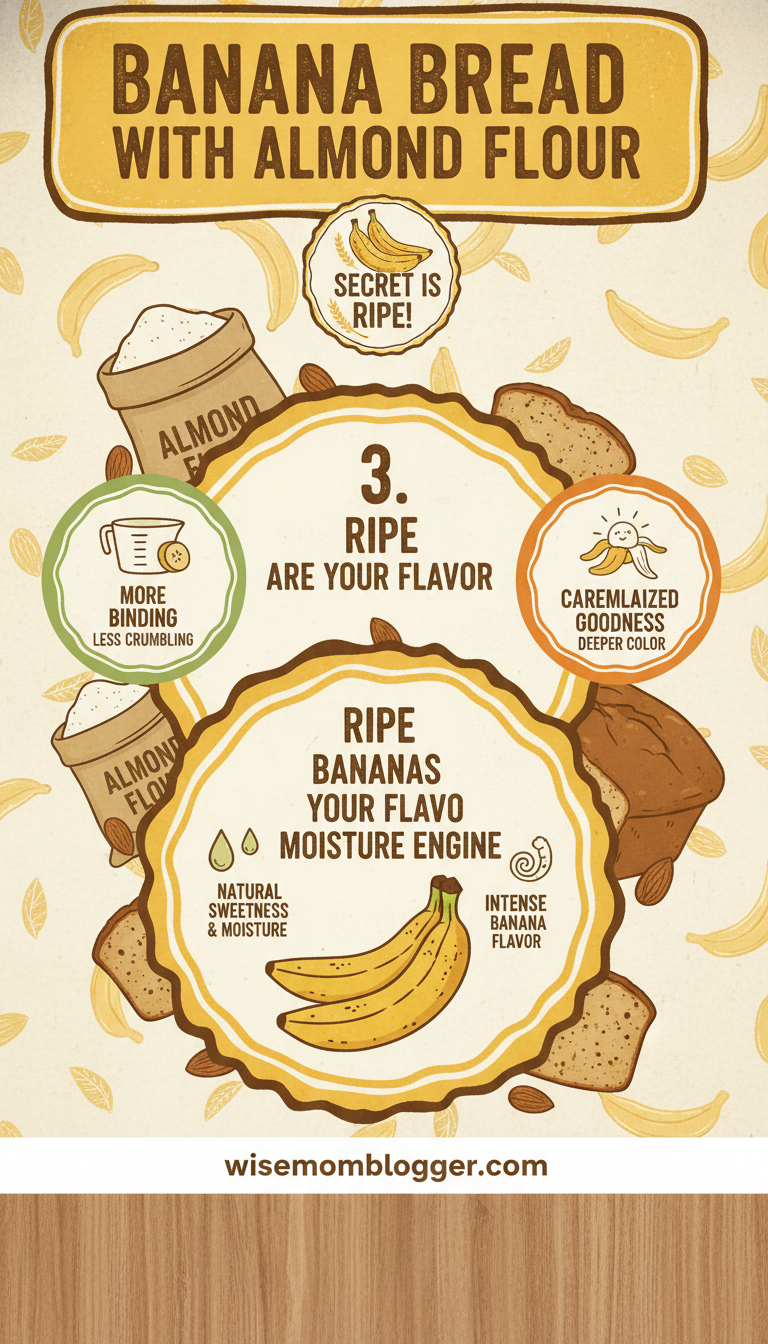
3. Ripe Bananas Are Your Flavor and Moisture Engine
In banana bread, bananas aren’t just flavor—they’re also the binding and moisture backbone.
What “ripe” means in real life
I use bananas that are:
Deep yellow with lots of brown spots
Soft enough that they mash easily with a fork
Why ripeness matters
More ripe bananas are sweeter and more flavorful.
They also add more natural moisture, which helps compensate for the lack of wheat gluten.
Quick banana mash strategy
I mash bananas well before mixing so the batter stays smooth and bakes evenly.
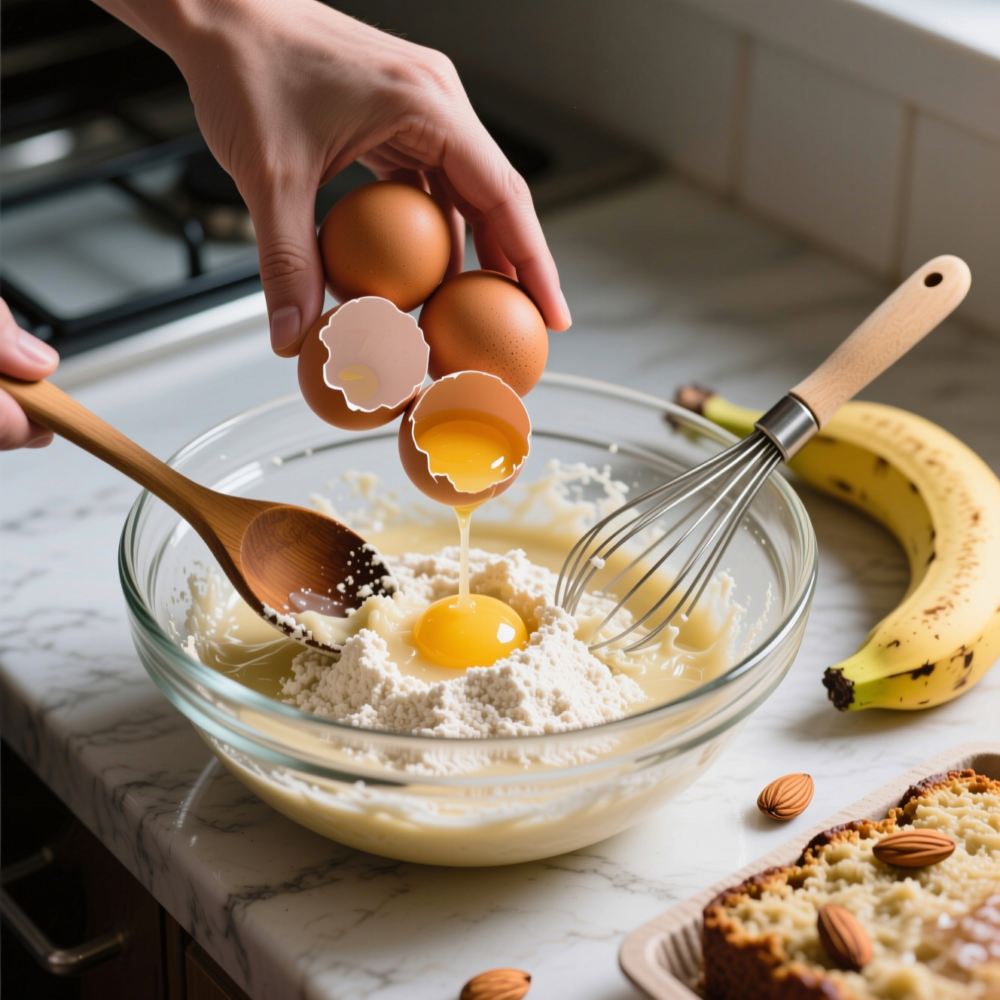
4. Eggs Help Structure Hold (Especially Without Wheat Flour)
In gluten-based baking, gluten does a lot of structure work. In almond-flour baking, eggs step in for that job.
What eggs do
They help the loaf set so slices don’t crumble.
They provide a gentle lift and a tender crumb.
How I keep the texture tender
I whisk wet ingredients just enough to combine.
I avoid overmixing once the batter gets thick—overmixing can make gluten-free bakes tough.
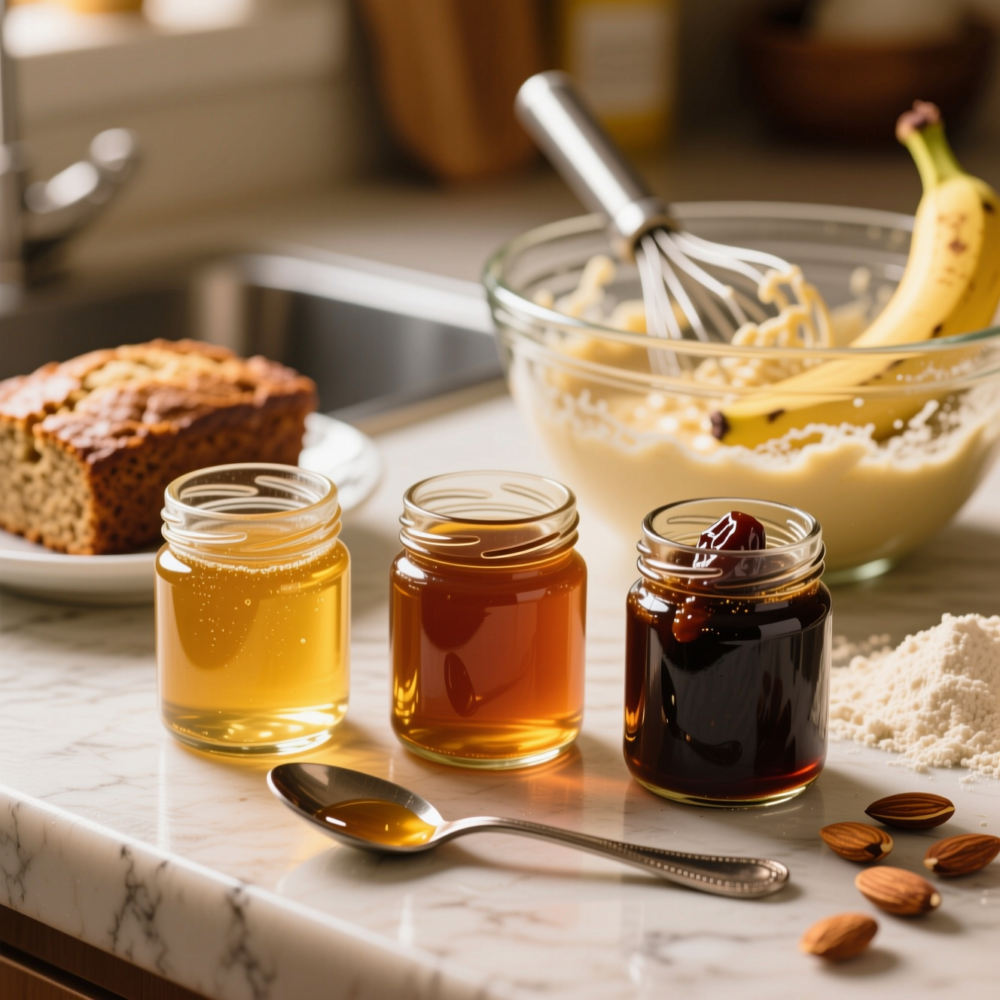
5. Sweetener Strategy: Honey vs. Maple Syrup vs. Date Syrup
This is one of the biggest “small choice, big outcome” factors for banana bread with almond flour.
Honey: great flavor, watch browning
One popular chocolate banana bread approach notes that honey may cause faster browning and suggests avoiding it if you’re seeing burn risk. That doesn’t mean honey is “bad”—it means I pay attention to color and doneness.
Maple syrup: a common, reliable pairing
Many almond-flour banana bread recipes use maple syrup with ripe bananas for natural sweetness. In my experience, it’s a friendly option for consistent results.
Date syrup: an option for browning control
Some recipes suggest date syrup as an alternative sweetener, particularly when you want the loaf to brown less aggressively than honey.
Quick chooser guide (how I decide)
Want classic sweetness + familiar bake behavior? Maple syrup
Want deeper, caramel-like sweetness? Date syrup
Love honey but tend to get darker edges? Lower heat or bake carefully and watch the loaf
6. Chocolate Variation That Still Works with Almond Flour
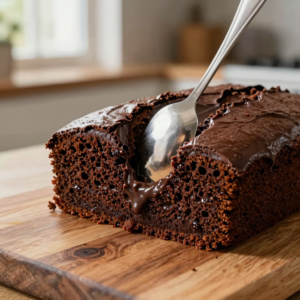
If you love chocolate banana bread, almond flour can still deliver a fudgy, rich loaf—especially when you add cocoa thoughtfully.
What to add for a chocolate twist
Cocoa powder (unsweetened)
Optional chocolate chips or chunks
A sweetener that matches the chocolate vibe (many recipes use honey/maple/date depending on preferences)
Why it often turns out “fudgier”
Chocolate versions can feel more dense and cake-like in a good way because cocoa adds body, and the batter remains tender without wheat flour.
7. My High-Level Step-by-Step Baking Approach (No Stress Version)
You don’t need a complicated method. With almond flour banana bread, the process is mostly about combining correctly and baking long enough.
Batter prep: combine wet first
Mash ripe bananas.
Mix bananas with wet ingredients (like eggs and your chosen sweetener).
Stir in almond flour gradually so the batter becomes thick and uniform.
Mixing technique for tenderness
Mix until you stop seeing dry almond flour.
Don’t keep stirring “just because.” Once combined, stop.
Pan preparation
I line the pan or grease it well.
Quick breads can stick, especially gluten-free loaves with almond flour.
Doneness check (how I confirm it’s ready)
I test the center—the loaf should be set.
A toothpick should come out mostly clean or with a few moist crumbs (not wet batter).
8. How to Get Moist, “Fudgy” Slices Every Time
Moisture is the goal in almost every almond-flour banana bread recipe I’ve made or tested, and banana ripeness is the main lever.
Why bananas create moisture without wheat flour
Bananas hold water and dissolve into the batter.
That moisture helps the loaf stay soft even without wheat gluten.
What else affects moisture
Banana ripeness (most important)
Sweetener choice (honey vs. maple/date can change browning and bake feel)
Bake time (underbake = gooey center; overbake = dry loaf)
A simple fix if it’s not moist enough
If your loaf comes out a bit dry:
Check your oven temperature (oven swings are common).
Reduce bake time slightly next round and re-check at the lower end.
9. Dietary and Allergen Notes (Gluten-Free, Grain-Free, Sometimes Paleo/Dairy-Free)
Many almond-flour banana bread recipes position themselves as gluten-free and grain-free, and some also fit Paleo or dairy-free needs depending on substitutions.
What’s commonly true
Naturally gluten-free and grain-free: because almond flour replaces wheat flour.
Paleo framing: some recipes describe the loaf as Paleo by using almond flour and natural sweeteners.
Dairy-free: look for ingredient choices
Some recipes claim dairy-free, usually by:
Using no butter
Using a dairy-free oil instead (or a dairy-free option for any milk-based ingredient)
What I check before baking
The recipe’s ingredient list (no hidden butter or milk)
Any add-ins (chocolate chips can vary by brand)
10. Serving, Storage, and Reheating Tips That Preserve Texture
The best part is eating it—but the second best part is making sure it stays good for days.
Serving: warm vs. room temperature
Warm slices taste extra cozy and bring out banana flavor.
Room temperature slices slice cleanly and feel more “sliceable.”
Storage (my go-to method)
Let it cool fully first.
I wrap it well to keep moisture in and dryness out.
Reheating without drying it out
I reheat briefly (small bursts).
If you use a microwave, I do it gently and stop as soon as it’s warmed—overheating can dry almond flour loaves faster.
11. Variation Ideas You’ll Actually Use
Once you have the base down, you’ll want flexible add-ins and sweetener tweaks.
Chocolate banana bread version
Add cocoa and/or chocolate pieces.
Consider that sweetener choice can affect browning—watch the loaf near the end.
Sweetener swaps to change color and flavor
Swap honey with maple syrup if you want steadier browning.
Use date syrup if you’re trying to control how dark the loaf gets.
Add-ins that pair well
Chopped nuts (for crunch)
Cinnamon (for warmth)
Extra banana slices on top (for a pretty, classic look)
12. Summary: A Reliable Almond-Flour Banana Bread Framework
When I make banana bread with almond flour, I keep it simple: the core is the same every time.
My repeatable formula
Ripe bananas (for moisture + sweetness)
Fine, blanched almond flour (for smoother crumb)
Eggs (for structure in gluten-free baking)
Your chosen sweetener (honey, maple syrup, or date syrup)
The one “research-backed” reminder I don’t skip
Different recipes emphasize that sweetener choice can affect browning and doneness, and that almond flour texture depends on using fine/blanched flour for a better crumb. That’s why I treat those as non-negotiables.
Common Mistakes
Using bananas that aren’t ripe enough (the loaf can turn out less sweet and less moist).
Choosing coarse almond meal when you want a smoother crumb (your texture may feel gritty).
Overmixing after adding almond flour (can make the loaf feel tougher than you want).
Not checking doneness in the center (gluten-free loaves often need accurate timing).
Browning too fast without adjusting for sweetener (honey can be an issue in some approaches).
Skipping cooling time (slicing too early can cause crumble or mushy texture).
Storing uncovered (almond flour loaves dry out faster than you’d expect).
FAQ
Is banana bread with almond flour naturally gluten-free?
Yes—when it’s made with almond flour instead of wheat flour, it’s naturally gluten-free. Many almond-flour banana bread recipes also describe the loaf as gluten-free and grain-free.
Is almond flour banana bread also grain-free?
Often, yes. Almond flour is made from almonds, not grains, so many recipes position it as grain-free as well.
What sweetener is best: honey or maple syrup?
Both are commonly used, but they can behave differently in the oven. Some recipe approaches warn that honey may brown/burn faster, while maple syrup is widely used for a classic, reliable result with ripe bananas.
Can I use date syrup instead?
Many recipes suggest date syrup as an alternative, especially if you want help with browning control. It can also add a deeper, caramel-like flavor.
How do I keep it moist?
Use ripe bananas, mix gently, and bake until the center is set. Then cool and store it well so moisture stays in.
Why did my loaf turn out dense?
Dense almond-flour banana bread can happen if:
bananas were under-ripe
the batter was overmixed
it was underbaked (or baked too long, drying it out)
Can I make it dairy-free?
Often you can, but it depends on the recipe. If a recipe uses butter or dairy, you’ll need a dairy-free swap (like oil) and keep an eye on how it changes texture.
Latest Updates or ## 2026 Trends
In 2024–2026, I’m seeing more people search for “naturally gluten-free” quick breads that still taste like comfort food. Almond flour banana bread fits that trend because it’s ingredient-simple and can be made to match different diets (gluten-free, grain-free, and sometimes Paleo-style or dairy-free).
I also notice a bigger focus on texture quality—especially smoother crumbs—so fine, blanched almond flour is becoming the default choice in many recipe write-ups. And because online bakers share results fast, sweetener “behavior” (how quickly a loaf browns) is getting more attention—so more people are choosing maple or date when they want predictable color.
Facebook group post (as provided). (n.d.). Gluten-free banana bread recipe using almond flour. https://www.facebook.com/groups/889353747753893/posts/25160865686842694/
Sarah Anderson . J
I’m the mom behind Wise Mom Blogger, where everyday creativity meets real-life motherhood. I share easy DIY crafts, cozy knitting and crochet projects, beginner-friendly sewing ideas, and family-tested recipes—plus quick baking hacks that make homemade feel doable on busy days.