
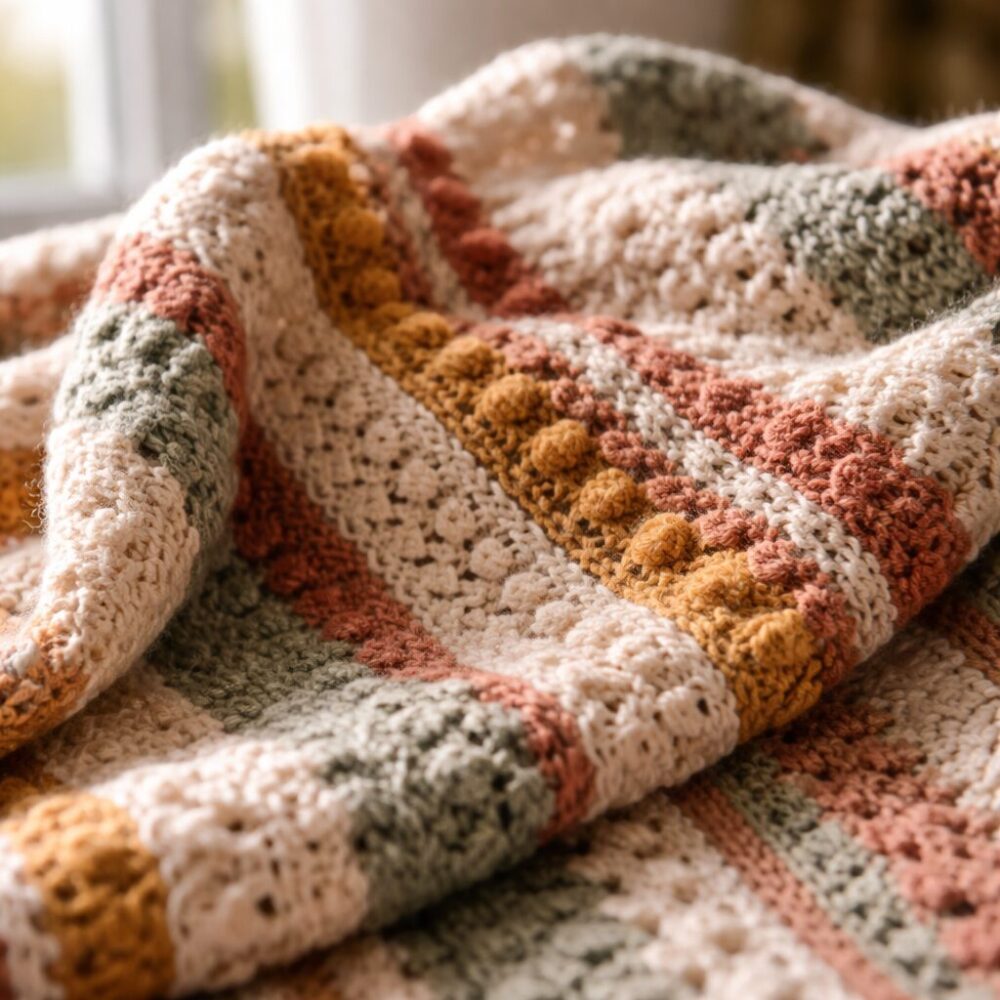

Key Takeaways
- Simple stitches work best: Basic single crochet, double crochet, and granny squares create beautiful beginner blankets
- Free patterns are abundant: Many designers offer quality beginner patterns at no cost through blogs and craft sites
- Start small: Baby blankets or lap throws let you practice without overwhelming time commitments
- Choose forgiving yarns: Medium-weight acrylic or cotton blends hide mistakes and wash easily
- Build skills gradually: Progress from single-stitch rectangles to textured patterns as confidence grows
Quick Answer
The best beginner crochet blankets use simple stitches like single crochet, double crochet, or granny squares in medium-weight yarn. Start with smaller projects like baby blankets (30×36 inches) or lap throws (36×48 inches) to build confidence before attempting full-size afghans. Free patterns from reputable designers provide clear instructions and stitch guides perfect for learning.
What Makes a Crochet Blanket Pattern Beginner-Friendly?
Beginner-friendly crochet blanket patterns focus on basic stitches and simple construction methods. These patterns typically use single crochet, double crochet, half double crochet, or basic granny square techniques without complex stitch combinations or intricate shaping.
Key characteristics of beginner patterns include:
- Repetitive stitch patterns that build muscle memory
- Clear, detailed instructions with stitch counts
- Minimal color changes or simple stripe sequences
- Rectangular construction without shaping requirements
- Medium-weight yarn recommendations (worsted weight/size 4)
Choose patterns labeled as “easy” or “beginner” that specify skill level. Avoid patterns with terms like “front post double crochet,” “cable stitches,” or “tapestry crochet” until you’ve mastered basic techniques.
Common mistake to avoid: Don’t start with intricate colorwork patterns, even if they look simple. Changing colors frequently adds complexity that can frustrate new crocheters.
Essential Supplies for Beginner Crochet Blanket Projects
Before diving into these 15 cozy crochet blanket patterns for beginners, gather the right supplies to ensure success. Basic crochet tools are affordable and widely available at craft stores or online retailers.
Must-have supplies:
- Crochet hooks: Size H/8 (5.0mm) and I/9 (5.5mm) work for most worsted weight yarns
- Yarn: 1,200-2,000 yards for baby blankets, 2,500-4,000 yards for throws
- Scissors: Sharp fabric scissors for clean cuts
- Tapestry needle: For weaving in ends and seaming
- Stitch markers: Help track pattern repeats and turning chains
- Row counter: Prevents losing track of progress
Yarn selection tips: Choose machine-washable acrylic or cotton blends in light to medium colors. Dark colors make it harder to see individual stitches, while novelty yarns hide stitch definition that helps beginners learn proper tension.
15 Free Beginner-Friendly Crochet Blanket Patterns
1. Simple Single Crochet Rectangle Blanket
This basic pattern teaches fundamental skills every crocheter needs. Work in single crochet across each row, turning and chaining one at the end. The repetitive motion builds consistent tension while creating a dense, warm fabric perfect for baby blankets or lap throws.
Best for: Complete beginners learning basic stitches Finished size: 30×36 inches (baby) or 45×60 inches (throw) Yarn needed: 1,200 yards (baby) or 3,000 yards (throw)
2. Classic Granny Square Afghan
Traditional granny squares connect to form timeless blankets with vintage appeal. Each square uses double crochet clusters worked in rounds, then squares join with slip stitches or single crochet borders.
Skills practiced: Working in rounds, joining squares, basic color changes Typical square size: 4×4 inches or 6×6 inches Assembly tip: Block squares to identical sizes before joining for professional results
3. Striped Double Crochet Throw
Alternate colors every few rows to create cheerful stripes using basic double crochet stitches. This pattern introduces color changes while maintaining simple stitch work that builds confidence.
Color change frequency: Every 2, 4, or 6 rows depending on desired stripe width Yarn management: Carry unused colors up the side rather than cutting and rejoining
4. Corner-to-Corner (C2C) Baby Blanket
Work diagonally from one corner, increasing until reaching the desired width, then decreasing to the opposite corner. Uses basic double crochet clusters in a unique construction method.
Why beginners love it: Fast progress and interesting construction keep projects engaging Common sizes: Start with 30×30 inches for baby blankets
5. Ripple Stitch Afghan
Create gentle waves using increases and decreases within double crochet rows. The undulating pattern adds visual interest while practicing basic stitch manipulation.
Stitch pattern: Typically 3 double crochets in one stitch for peaks, skip stitches for valleys Color options: Solid colors show stitch definition best for learning
6. Moss Stitch Lap Blanket
Alternate single crochet and chain spaces to create subtle texture resembling moss or seed stitches in knitting. The pattern uses only two basic techniques but creates sophisticated-looking fabric.
Texture benefit: Slight stretch and drape make finished blankets extra cozy Yarn recommendation: Cotton or cotton blends showcase the stitch pattern beautifully
7. Shell Stitch Baby Afghan
Work groups of double crochet stitches in the same space to form shell shapes. Skip stitches between shells to create an airy, decorative pattern perfect for baby blankets.
Shell formation: Typically 5 double crochets in one stitch, skip 2 stitches, single crochet, repeat Blocking importance: Steam blocking opens up the shell pattern for best appearance
8. V-Stitch Throw
Create V-shapes using double crochet, chain, double crochet combinations worked in chain spaces from previous rows. The open pattern works up quickly and uses minimal yarn.
Stitch pattern: (Double crochet, chain 1, double crochet) in chain space Best yarn choice: Smooth yarns show the V-pattern clearly
9. Basketweave Blanket
Alternate front post and back post double crochet stitches to create the illusion of woven fabric. This pattern introduces textural stitches while maintaining beginner-friendly techniques.
Post stitch basics: Work around the vertical post of stitches from previous rows rather than through the top Pattern repeat: Usually 4 stitches wide by 4 rows tall for classic basketweave appearance
10. Half Double Crochet Stripes
Use half double crochet stitches throughout with regular color changes for simple striped patterns. Half double crochet creates medium-height stitches between single and double crochet.
Stitch benefits: Faster than single crochet, more stable than double crochet Stripe variations: Random stripes, graduated colors, or planned color sequences
11. Bobble Stitch Afghan
Create raised bobbles by working multiple double crochet stitches in one space, then pulling through all loops at once. Space bobbles evenly across a single crochet background.
Bobble technique: Usually 5 double crochet stitches worked together Pattern spacing: Every 3rd stitch and every 4th row for balanced bobble placement
12. Cluster Stitch Throw
Work double crochet clusters by partially completing several stitches, then pulling through all loops together. Creates textured fabric with interesting stitch definition.
Cluster formation: Start 2-3 double crochet stitches, yarn over and pull through all loops Visual effect: Creates diagonal texture lines across the blanket surface
13. Waffle Stitch Baby Blanket
Combine front post and back post double crochet stitches in a grid pattern to create deep texture resembling breakfast waffles. The three-dimensional effect adds warmth and visual interest.
Stitch sequence: Alternate front post and back post stitches in both directions Yarn choice: Medium-weight smooth yarns show waffle texture best
14. Lemon Peel Stitch Afghan
Alternate single crochet and double crochet stitches within the same row, offsetting the pattern in subsequent rows. Creates subtle texture with minimal complexity.
Stitch pattern: Single crochet, double crochet across, offset on return rows Finished texture: Slightly bumpy surface with good stitch definition
15. Simple Chevron Blanket
Create zigzag patterns using increases and decreases within rows of double crochet stitches. The geometric pattern adds modern appeal while practicing basic stitch manipulation.
Chevron formation: Increase 3 stitches at peaks, decrease 2 stitches at valleys Point spacing: Typically 12-15 stitches between chevron points
How to Choose the Right Pattern for Your Skill Level
Selecting appropriate patterns prevents frustration and builds confidence as you work through these 15 cozy crochet blanket patterns for beginners. Consider your current abilities honestly and choose projects that challenge you slightly without overwhelming your skills.
For absolute beginners:
- Start with single crochet rectangle blankets
- Practice consistent tension before attempting pattern stitches
- Choose solid colors to focus on stitch formation
For beginners with basic stitch knowledge:
- Try granny squares or simple stripe patterns
- Experiment with half double crochet and double crochet stitches
- Add one new technique per project
For advancing beginners:
- Attempt textured stitches like moss stitch or shells
- Try corner-to-corner construction methods
- Practice post stitches for basketweave patterns
Decision rule: If a pattern requires more than two new techniques, save it for your next project. Master one skill thoroughly before adding complexity.
Common Beginner Mistakes and How to Avoid Them
Learning to crochet blankets involves typical mistakes that every beginner makes. Recognizing these issues early helps you develop better habits and create more polished finished projects.
Tension problems:
- Too tight: Stitches become difficult to work into
- Too loose: Fabric looks sloppy and lacks structure
- Solution: Practice maintaining consistent yarn tension through your fingers
Edge issues:
- Slanted edges: Missing or adding stitches changes stitch count
- Tight edges: Turning chains too short pull edges inward
- Solution: Count stitches regularly and adjust turning chain height as needed
Yarn management:
- Tangled yarn: Working from wrong end of skein creates knots
- Color changes: Loose ends not secured properly
- Solution: Always pull yarn from center of skein, weave in ends as you go
Pattern reading:
- Skipping instructions: Abbreviations and special techniques get overlooked
- Gauge ignored: Finished size differs significantly from pattern specifications
- Solution: Read entire pattern before starting, make gauge swatches for larger projects
Tips for Success with Beginner Crochet Blanket Patterns
Successful blanket projects require patience, planning, and realistic expectations. These strategies help ensure your finished blankets meet your vision while building skills for future projects.
Project planning:
- Choose appropriate sizes: Baby blankets finish faster than full-size afghans
- Calculate yarn needs: Buy extra yarn from the same dye lot to avoid color variations
- Set realistic timelines: Blankets take weeks or months, not days
Work habits:
- Maintain consistent lighting: Good lighting prevents eye strain and stitch mistakes
- Take regular breaks: Prevent hand fatigue that leads to tension problems
- Keep projects portable: Work on blankets during commutes or waiting periods
Quality control:
- Count stitches regularly: Catch mistakes before they compound
- Block finished sections: Proper blocking improves stitch appearance dramatically
- Finish properly: Weave in all ends securely for professional results
Yarn Selection Guide for Beginner Blanket Projects
Choosing appropriate yarn significantly impacts your success with these 15 cozy crochet blanket patterns for beginners. Different fiber types, weights, and textures affect both the crocheting experience and finished blanket characteristics.
Recommended yarn weights:
- Worsted weight (size 4): Most versatile for beginner blankets
- DK weight (size 3): Good for baby blankets and lightweight throws
- Chunky weight (size 5): Fast progress but requires larger hooks
Fiber content considerations:
| Fiber Type | Pros | Cons | Best For |
|---|---|---|---|
| Acrylic | Machine washable, affordable, consistent | Less breathable | Everyday blankets, baby items |
| Cotton | Breathable, natural, gets softer with washing | Can be heavy when wet | Summer throws, kitchen items |
| Wool blends | Warm, elastic, forgiving of tension issues | Requires special care | Winter afghans, decorative throws |
Color selection tips:
- Light colors: Show stitch definition clearly for learning
- Solid colors: Highlight texture patterns without distraction
- Variegated yarns: Hide minor tension inconsistencies but can obscure stitch patterns
Finishing Techniques for Professional Results
Proper finishing transforms homemade blankets into professional-looking pieces worthy of gift-giving or home display. These techniques apply to all 15 cozy crochet blanket patterns for beginners with free patterns.
Blocking basics:
- Wet blocking: Soak finished pieces, reshape while damp, let dry flat
- Steam blocking: Use steam iron held above fabric to relax stitches
- Pin blocking: Pin pieces to desired measurements on blocking mats
Border options:
- Single crochet border: Simple, clean edge that prevents curling
- Shell border: Decorative scalloped edge for feminine appeal
- Picot border: Tiny loops add delicate finishing touch
Seaming methods:
- Slip stitch seaming: Strong, flat seams for joining squares or panels
- Single crochet seaming: Creates slight ridge that can be decorative
- Whip stitch seaming: Nearly invisible seams for smooth joins
Edge case: If your blanket edges curl despite blocking, add a border with different stitch height to counteract the curl tendency.
Troubleshooting Common Blanket Problems
Even with careful attention, blanket projects sometimes develop issues that need correction. Identifying problems early prevents major rework later in your project.
Size problems:
- Blanket too narrow: Check stitch count, add border to increase width
- Blanket too wide: Verify hook size matches pattern recommendations
- Uneven dimensions: Block aggressively or add borders to square up edges
Stitch issues:
- Holes in fabric: Increase hook size or loosen tension
- Fabric too dense: Decrease hook size or work more loosely
- Stitches hard to work: Yarn may be too thick for hook size
Construction problems:
- Seams puckering: Block pieces before joining, check seaming tension
- Colors bleeding: Test wash small swatch before washing entire blanket
- Ends coming loose: Use longer tails when weaving in ends, work through more stitches
Frequently Asked Questions
How long does it take to crochet a beginner blanket? Baby blankets typically take 20-40 hours of work time, while throw-size blankets require 40-80 hours. Working 1-2 hours daily, expect 2-6 weeks for completion depending on pattern complexity and blanket size.
What’s the best yarn for a first blanket project? Medium-weight acrylic yarn in light colors offers the best beginner experience. Brands like Red Heart Super Saver or Lion Brand Vanna’s Choice provide consistent quality, clear stitch definition, and machine washability.
How much yarn do I need for different blanket sizes? Baby blankets (30×36 inches) need 1,200-1,500 yards. Lap throws (36×48 inches) require 2,000-2,500 yards. Full-size afghans (50×60 inches) need 3,500-4,500 yards depending on stitch pattern density.
Should I make a gauge swatch for blanket projects? Yes, especially for larger blankets. A 4×4 inch gauge swatch helps predict finished size and yarn requirements. If your gauge differs from the pattern, adjust hook size rather than changing your tension.
How do I fix mistakes without starting over? For minor mistakes within a few stitches, carefully unravel to the error point and re-crochet. For major mistakes discovered later, consider incorporating them as design elements or adding decorative borders to camouflage issues.
What’s the difference between Afghan and blanket patterns? Afghans traditionally refer to decorative throws with intricate patterns, while blankets emphasize warmth and functionality. For beginners, the terms are often interchangeable, with pattern complexity being more important than terminology.
Can I modify pattern colors or sizes easily? Color changes are simple – just substitute different colors in the same yarn weight. Size modifications require calculating stitch multiples and adjusting yarn quantities. Start with exact pattern specifications for first attempts.
How do I care for handmade crochet blankets? Follow yarn label care instructions. Most acrylic blankets machine wash in cool water and tumble dry on low heat. Natural fibers may require hand washing or gentle cycles with air drying.
What if my blanket edges curl or won’t lay flat? Curling usually indicates tension issues or stitch pattern characteristics. Block the finished blanket aggressively, or add a border with different stitch heights to counteract curling tendencies.
Are free patterns as good as paid patterns? Many free patterns from established designers offer excellent quality and clear instructions. Look for patterns with good reviews, clear photos, and detailed stitch explanations regardless of whether they’re free or paid.
How do I know if a pattern is truly beginner-friendly? Beginner patterns use basic stitches (single crochet, double crochet, half double crochet), include detailed instructions with stitch counts, and avoid complex techniques like cables, tapestry crochet, or intricate colorwork.
What tools make blanket projects easier for beginners? Essential tools include appropriate hook sizes, sharp scissors, tapestry needles for finishing, and stitch markers for tracking pattern repeats. Row counters help track progress on large projects.
Key Takeaways
- Start with simple stitches: Master single crochet and double crochet before attempting textured patterns
- Choose appropriate yarn: Medium-weight acrylic in light colors provides the best learning experience
- Size matters for success: Begin with baby blankets or lap throws rather than full-size afghans
- Free patterns offer quality: Many excellent beginner patterns are available at no cost from reputable designers
- Proper finishing is crucial: Blocking and borders transform homemade projects into professional-looking blankets
- Practice builds confidence: Each completed project improves your skills for more complex future patterns
- Gauge swatches prevent problems: Small test squares help predict finished size and yarn requirements
- Consistent tension improves results: Focus on maintaining even yarn tension throughout your project
- Mistakes are learning opportunities: Every crocheter makes errors – use them to improve your techniques
- Patience creates beautiful results: Blankets take time, but the finished product provides years of warmth and satisfaction
Conclusion
These 15 cozy crochet blanket patterns for beginners offer excellent starting points for your crochet journey. From simple single crochet rectangles to textured granny squares, each pattern builds essential skills while creating beautiful, functional blankets perfect for gifts or personal use.
Your next steps:
- Choose your first pattern based on your current skill level and available time
- Gather appropriate supplies including medium-weight yarn and correct hook sizes
- Start with a small project like a baby blanket to build confidence
- Practice consistently to develop muscle memory and even tension
- Join online communities for support, inspiration, and troubleshooting help
Remember that every expert crocheter started as a beginner. These free patterns provide the foundation for developing skills that will serve you throughout your crafting journey. Take your time, enjoy the process, and celebrate each completed project as a step toward mastering this rewarding craft.
The cozy blankets you create will provide warmth and comfort for years to come, making every stitch worthwhile. Start with one pattern that appeals to you, and soon you’ll be ready to tackle more complex projects with confidence and skill.

Sarah Anderson . J
I’m the mom behind Wise Mom Blogger, where everyday creativity meets real-life motherhood. I share easy DIY crafts, cozy knitting and crochet projects, beginner-friendly sewing ideas, and family-tested recipes—plus quick baking hacks that make homemade feel doable on busy days.
